
Recently, if you are active on Instagram, X, or YouTube shorts, you have likely seen the mute “Masked Bride of Himachal.” This is in relation to social media posts of the “Mystery Bride from Himachal.” This is a bride dressed in jewels, flowers, and a red veil, eerily walking through snowy villages in the Himalayas.
There were lots of saved videos and the same question kept coming;
“Who is this bride, and what is this festival?”
This has created a whole new awareness of one of the most secret folk traditions of Himachal—the Raulane festival of Kinnaur, which has occurred quietly and privately as a tradition for many decades in the villages around Kalpa.
Here is the story behind the viral sensation, the masked figure, and the talk of the internet in 2025.
What Is the Raulane Festival? A Simple Explanation
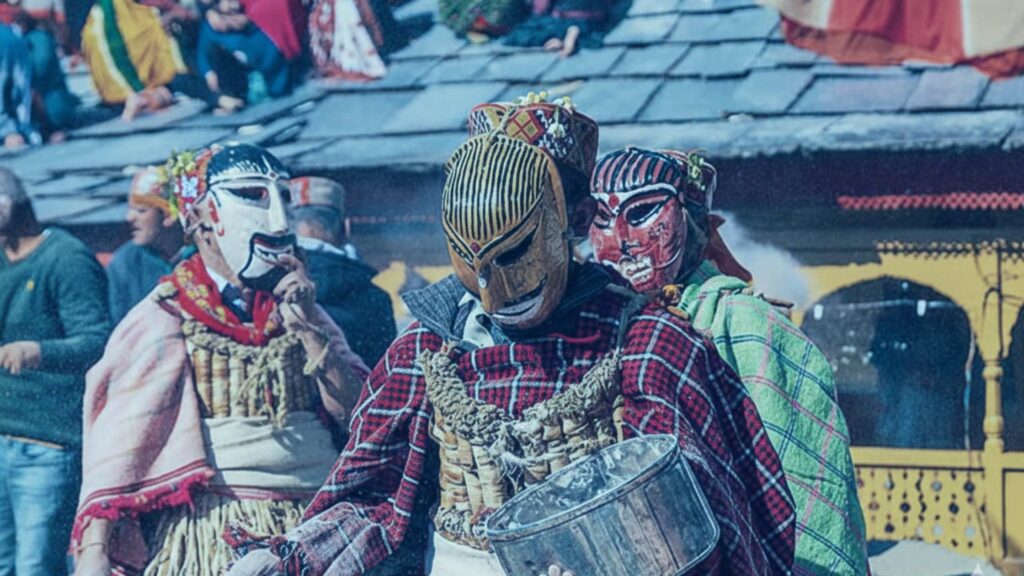
With this renewed interest in Raulane, I want to be explicit, Raulane is not a tourist attraction and it is not a wedding. Raulane is one of many ancient customs of the Kinnaur town, which celebrates spring coupled with snow melt. Raulane is celebrated by a select few people every spring.
Every inch of this folk cultural custom Raulane shows significance and meaning. For spring, villagers have a symbolic groom whose name for the custom is the “Raula”, but uses a man as the bride.
This role is the bride of the town, or Raulane. These figures usually symbolize the transition of winter to spring and they symbolize the congruency of the community. Furthermore, in their traditional dancing they ask for protection, blessings from the elders of the whole village.
The Raulane ceremony uses:
- Traditional attire
- Silver ornaments
- Flower crowns
- Processions
- A final ceremony in a temple
This way of participating is one of the top culturally significant traditions in Kinnaur, but only normally initiated by locals.
How the “Masked Bride” Went Viral in 2025
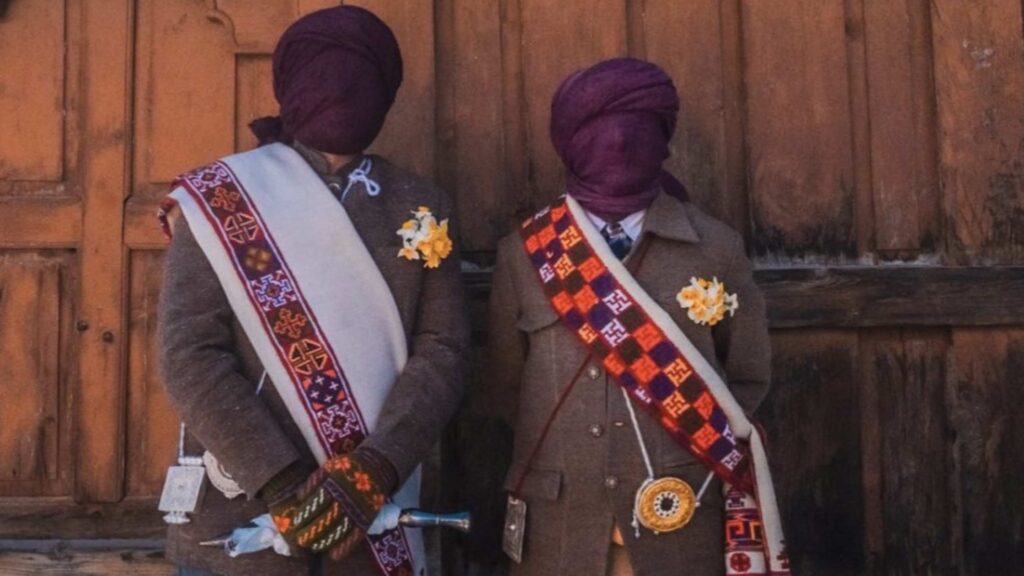
The Photographs That Became the Beginning
The original content focused on travelers capturing:
- Close-ups of the completely covered Raulane
- Slow-motion footage of her walking
- And aerial shots of the snow-covered village of Kalpa
Adding high-contrast filters and dramatic music made the festival feel like a movie.
Why People Thought It Could Be a Movie or a Myth
Some people thought it was:
- A shot from the movie of the story from the Himalayas
- The bride was a goddess
- A wedding was happening, but it was a performance
- People were witnessing a tribal dance for tourists
The secrecy made it feel dramatically great.
The “Man Bride” Questions
People had questions about why a man was getting dressed in a bridal costume. Since it was not explained as a rare and culturally significant practice, it drew a lot of attention.
That is how Raulane was known internationally.
The Real Meaning Behind the “Masked Bride

Why a Man Plays the Bride
In Kinnauri tradition, there is the selection of Raulane as a placeholder, without gender specification. The fact it would be a male villager conducting the role is an indication of a faded past balancing purity, symbolism and continuity.
Why the Face is Completely Veiled
This is probably the most misunderstood issue. The face is covered to provide:
• Ritual purity
• Emphasis on symbol instead of the individual
• Devotion to local deities
• Protection against ill will
This is more about respect than hiding, or secrecy.
Costume Elements
Raulane wear is comprised of:
• Large, silver ornamentation
• Several, multi-tiered crowns of flowers
• Woolen robes to keep warm
• Some detailing on fabric and veils, which may be elaborated upon
These garments have been made and handed down through generations of families.
What Actually Happens During the Raulane Festival

Many online videos only show the march. However, this is only part of the ceremony.
Selection of Raula & Raulane
The selection is either done by the village elders, or by tradition of the family.
Dress-Up & Preparation
This takes several hours, and often with the help of extra villagers.
The March
Raula and Raulane march down the streets of the village while accompanied by musicians, the elders, and other villagers.
Temple Ritual
The final part of the ritual is at the Nagin Narayan Temple or at a shrine in different villages.
Gathering of Community
All relatives and people from the community will gather and take place in the ritual where they pray, give offerings, and receive blessings.
Raulane is not an occasion; it is a living continuation of a culture.
Why the Festival Went Viral in 2025
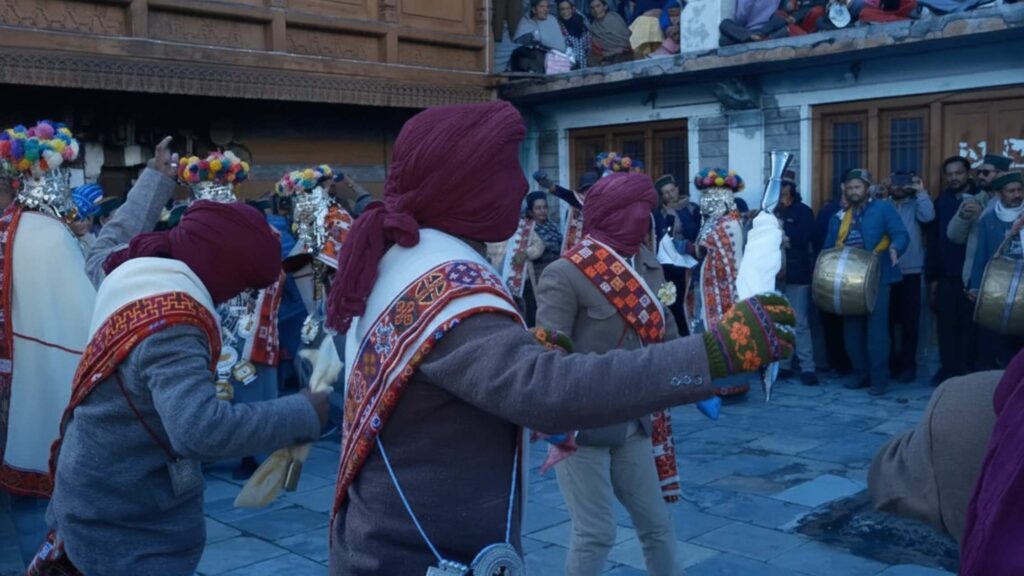
Instead of being a fluke, the virality stemmed from the confluence of a number of things.
Visual Aesthetic
The snow, the costumes, and the masks had a cinematic quality–the first thought was a scene from some film based upon fantasy folklore.
Rarely Photographed Ritual
Most people outside of the Kinnaur district had not seen this ritual, let alone the photos.
Emergence of Offbeat Tourism
Travelers had begun looking for experiences like these and were seeking out unique cultural experiences that were not seen by many.
Social Media Story
The visuals were uploaded on different social media platforms already, but the editing and transitions of short video RPGs made it go viral.
Mysterious and Misrepresented
Since there was nothing to connect the video with a cultural context, people wanted to find out more, investigate, and then they continued that search all while triggering attendee share-reaction and commentary.
Why the Internet Misunderstood the Festival

The spread of misinformation extends with Raulane content the same as it does with every viral trend.
Misleading Titles
Pages designated for travel near Kinnaur also called it “Himachal’s ghost bride,” “fairy wedding,” or “secret ritual,” which is inaccurate.
No Context
Many viewers thought it was a staged performance intended for tourists.
Fairy-Mask Myth
People thought their imaginations could run wild and conceptualized a connection between the mask, Kinnauri fairytales, rather than the dancing within a cultural performance
This did not happen.
The Truth
Raulane is more of a cultural performance than a theatrical one.
Voices from Kinnaur: What Locals Feel
Locals express that Kinnaur’s culture is getting the recognition it deserves.
However, there are primary concerns:
• Overcrowding
• Misinterpretation
• Disrespectful photography
• Disruption of rituals
Raulane is a sensitive event for them, meaning that it is not to be commercialized.
Should Tourists Attend the Raulane Festival?

Yes, tourists can witness it, but only if they behave responsibly.
Do’s
• Observe quietly
• Maintain distance
• Ask before taking photos
• Respect temple boundaries
• Follow local instructions
Don’ts
• Do not interrupt the procession
• Do not touch costumes or props
• Do not fly drones without permission
• Do not push for close-up photos
• Do not treat it like entertainment
Watching Raulane is a privilege, not a right.
Why Indigenous Festivals Like Raulane Matter
The Raulane Festival serves as a reminder to all of us why keeping local traditions alive is paramount:
• They encompass centuries of heritage
• They express an association with local spirituality
• They keep community identity alive
• They instill a respect for diversity
The viral phenomenon has opened a global window now it is up to travellers to responsibly engage.
Final Thoughts
The Raulane Festival has gone viral, not because of its flamboyance, but because of its authenticity — it’s ‘realness’ — that is framed within the context of Himalayan and Tibetan history.
The masked bride is not a performance.
There is no cosplay.
There is no act.
This is tradition — the history of living culture — and it needs to be told correctly.
So those folks who have ambitions of visiting Kinnaur in the spring, be respectful, be humble, and be patient.
You are there as a guest — not a spectator.