
Thinking of booking Spiti Valley packages with a toddler in tow? Read this honest guide before you commit. We’re going to be straight with you about what this trip really involves for a young child.
There is a growing wave of parents on Instagram showing off family trips to Spiti with tiny children bundled in jackets, standing in front of Key Monastery or posing near Chandratal. It looks magical. It also leaves many parents wondering if they should plan the same trip with their own toddler.
We understand the appeal. Spiti Valley is one of the most dramatic landscapes in India, and sharing it with your child sounds like a dream memory in the making. Fewer crowds, cleaner air (at least in terms of pollution), and an experience that most Indian kids will never get in their school years.
But here is the question that actually matters. Is Spiti Valley safe for a toddler under five years old?
Our honest answer, before we go into any detail, is this. It is technically possible. It is practically risky. And it is not something we would recommend without serious medical clearance, extreme caution, and a willingness to cancel or turn back at any point. This guide will walk you through everything you need to understand before deciding.
If you are already browsing Spiti Valley packages for a family trip, please read this article fully before you book. A toddler’s safety is not something to take lightly, and Spiti is not a destination that forgives casual planning.
Understanding the Biggest Risk: High Altitude
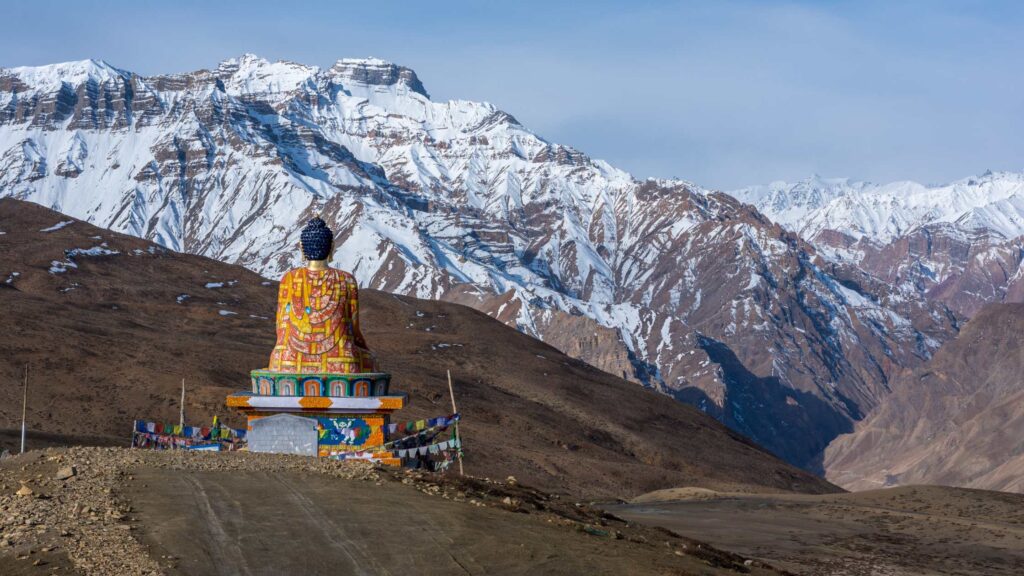
Spiti Valley sits between roughly 3,000 metres and 4,600 metres above sea level [VERIFY]. To put that in perspective, Kaza, the main town where most travellers stay, is at around 3,800 metres. Villages like Komic, Langza, and Hikkim are even higher, crossing 4,400 metres in some cases.
At these altitudes, the air contains significantly less oxygen than at sea level. Adults feel it as breathlessness, mild headaches, and fatigue when they first arrive. For a toddler, the effects can be more serious and, more worryingly, much harder to detect in time.
In our experience working with families planning Himalayan trips, the altitude piece is the one most parents underestimate. It sounds abstract until you are actually standing at 12,500 feet with a child who is suddenly lethargic and refusing to eat.
Why Toddlers Are More Vulnerable
Young children have smaller lungs, faster metabolisms, and developing cardiovascular systems. They are more sensitive to oxygen changes than adults. Add to this the fact that a two-year-old cannot tell you “I have a headache” or “I feel dizzy,” and you have a situation where the warning signs of Acute Mountain Sickness (AMS) can go unnoticed until the condition has already become serious.
This is the core medical reality. Toddlers cannot communicate their symptoms clearly. A tired cranky child could just be tired. Or they could be showing early signs of altitude sickness. Telling the two apart requires experience, vigilance, and often a pulse oximeter.
Many pediatric travel medicine sources advise caution for children below a certain age when travelling above 2,500 to 3,000 metres [VERIFY]. Some sources specifically recommend avoiding altitudes above 3,000 metres with children under two [VERIFY]. Spiti starts above these thresholds and goes up from there.
Signs Parents Often Miss
The symptoms of altitude sickness in toddlers are subtle and easily confused with normal childhood crankiness.
Irritability and fussiness beyond their usual baseline is often the first sign. If your normally cheerful child becomes unusually whiny and nothing seems to settle them, do not dismiss it as a mood.
Poor sleep is another common indicator. Toddlers who suddenly struggle to sleep, wake repeatedly, or cry through the night at altitude may be experiencing discomfort they cannot articulate.
Refusal to eat or drink can also signal AMS. Loss of appetite is a classic altitude symptom. If your child pushes away food they normally enjoy, pay attention.
Lethargy or unusual quietness is actually more concerning than crying. A child who goes silent, who stops playing, who just wants to lie down, may be in the early stages of altitude sickness.
Irregular or rapid breathing is a red flag that needs immediate response. If breathing looks laboured or the breath rate seems abnormally fast, you should act fast.
Can You Actually Reduce the Risk?
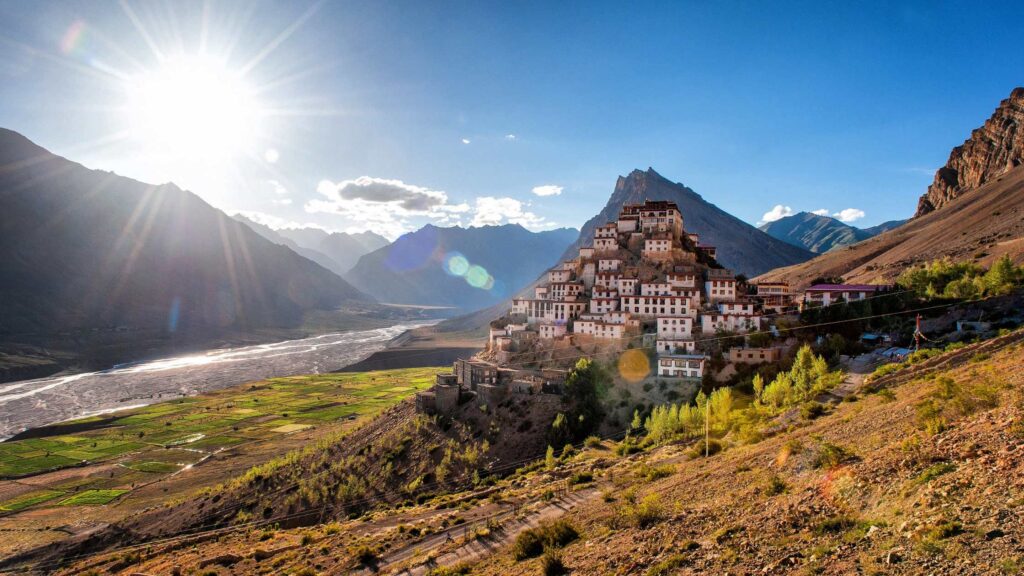
Yes, to some extent. But reducing risk is not the same as eliminating it. If you are committed to this trip, these are the practices that make it safer.
Slow Acclimatisation Is Non-Negotiable
The widely accepted rule in high-altitude medicine is that once you go above roughly 2,500 metres, you should not ascend more than around 500 metres in sleeping altitude per day [VERIFY]. This rule exists because the body needs time to adjust to thinner air, and children need even more time.
This means any itinerary that takes you from the plains to Kaza in two days is too aggressive for a toddler. A properly paced family trip would involve staying at progressively higher elevations with rest days built in.
Climb high, sleep low is another principle worth following. Visit higher places like Key Monastery or Kibber during the day, then return to sleep at a lower altitude where possible. For example, spending nights at Kalpa or Nako before moving deeper into Spiti.
Hydration, Nutrition, and Rest
Dehydration makes altitude sickness worse. Toddlers dehydrate faster than adults, so you need to offer water frequently throughout the day, not just at mealtimes. The dry cold air also pulls moisture from the body without you realising it.
Keep meals simple and familiar. A child already stressed by travel is unlikely to accept new foods. Carry what your child normally eats, because Spiti has very limited options for picky eaters.
Rest is critical. Do not pack every day with sightseeing. We usually recommend that families building any kind of Spiti Valley packages around a toddler plan for half-day activities at most, with afternoons spent resting in the room.
The Pulse Oximeter
A pulse oximeter is a small device that measures the oxygen saturation in the blood. For any family travelling to high altitude with young children, this is an essential tool. It gives you an objective reading of how your child is coping with the altitude, something you cannot judge by looking at them alone.
Our team has heard from parents who said the oximeter was the single most useful item they carried. Readings dropping below certain levels would signal the need to descend.
Medication Discussion
Some adults take medications like Diamox (acetazolamide) for altitude sickness prevention. Whether any medication is appropriate for a toddler is strictly a decision for your pediatrician, not for a travel blog. Do not self-medicate your child based on what you read online or what other travellers recommend. Consult a pediatrician experienced in travel medicine well before your trip.
Best Route for Families: Shimla vs Manali
The route you pick matters enormously when travelling with a toddler.
Why the Shimla Route Is Strongly Recommended
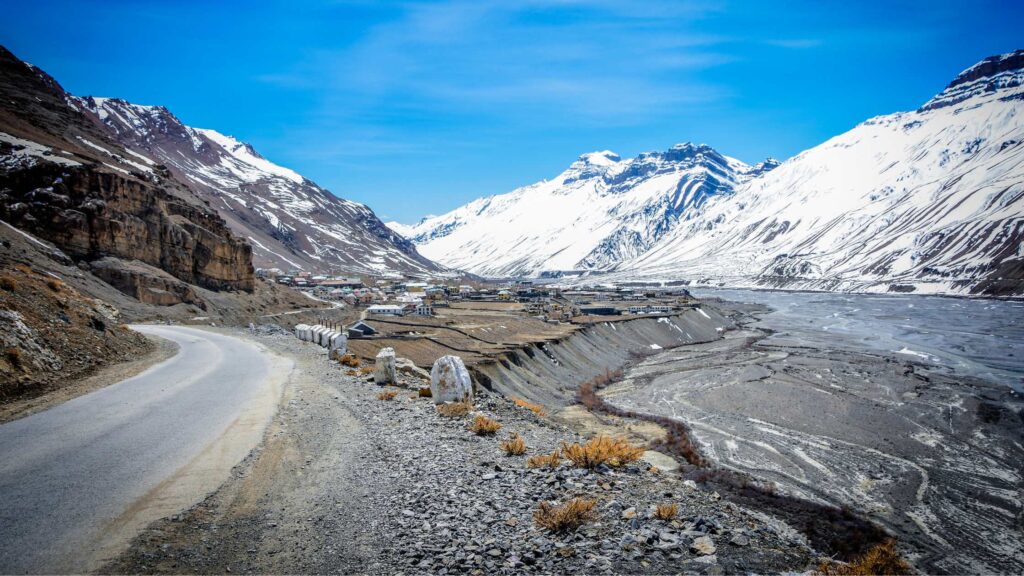
The Shimla to Kaza route is longer and takes more days, but it climbs altitude gradually. You move from Shimla at around 2,100 metres, through Narkanda, Rampur, Kalpa at around 2,960 metres, then to Nako, Tabo, and finally Kaza over several days.
This slow climb gives your child’s body time to adjust at each stage. Rest days at Kalpa or Nako before pushing into the main Spiti Valley can make a real difference in how your toddler handles the altitude.
If you are building a family-focused Spiti Valley packages itinerary, the Shimla route is the only one we would recommend for a toddler.
The Manali Route Is Not Appropriate
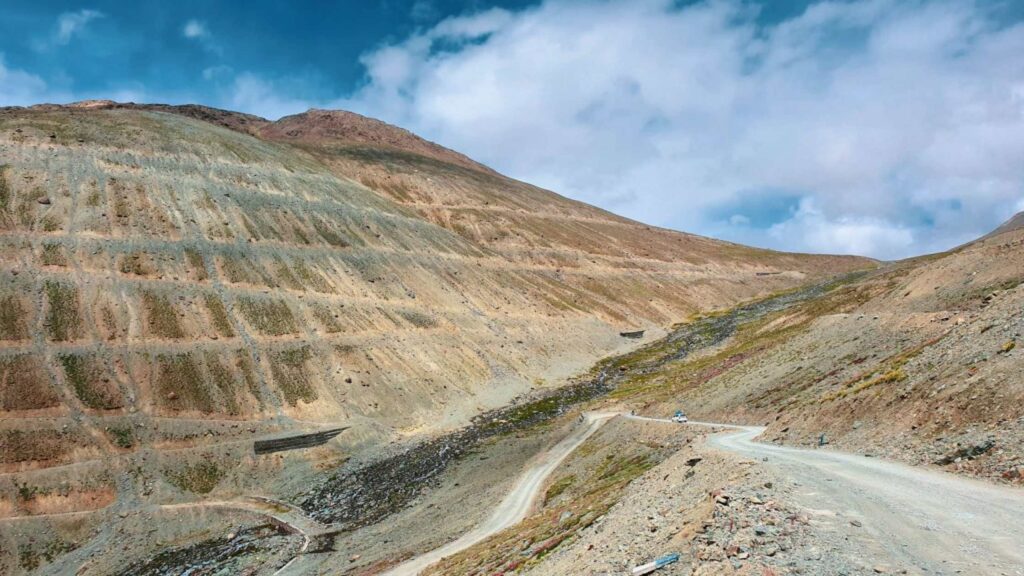
The Manali to Kaza route crosses Kunzum Pass at around 4,590 metres [VERIFY] in a single day’s drive. You gain massive altitude very quickly, with minimal time to adjust.
For a toddler, this is risky. The combination of rapid ascent, cold wind at the pass, long hours on rough terrain, and remote stretches with no medical facilities adds up to a situation no parent wants to be in with a young child.
Warning: If anyone recommends the Manali route as a “faster way to reach Spiti with the family,” we would be very cautious. Speed is exactly what you do not want when travelling with a toddler at altitude.
Ideal Time to Travel with a Toddler
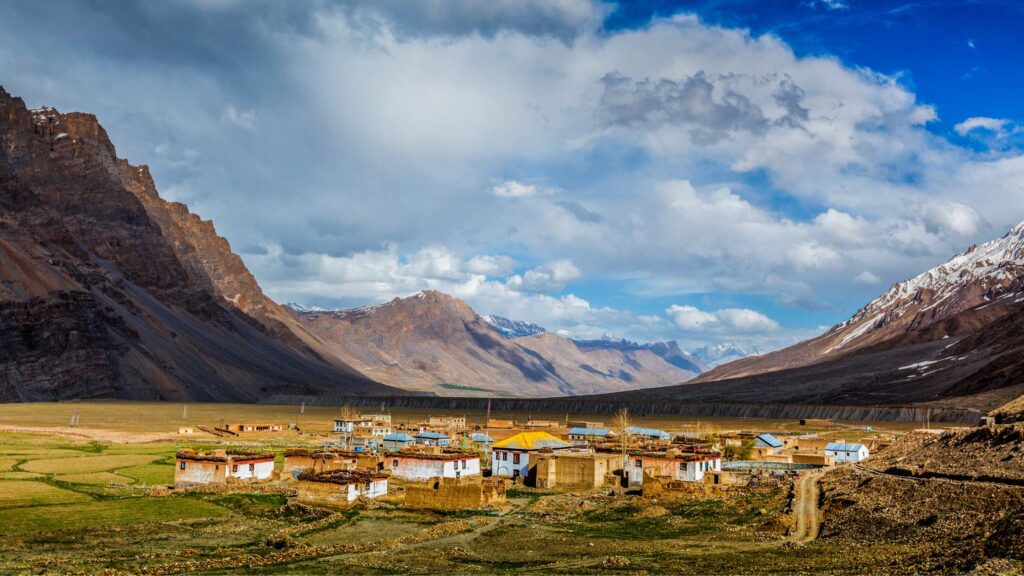
Timing matters almost as much as route.
Late May, June, and early July are generally considered good months. The weather is relatively stable, days are warmer, and roads are typically open. This is when most families consider Spiti.
September and early October also offer a window. The monsoon has eased, the landscape is clearer, and the crowd thins out. But nights start getting cold, and by mid-October, temperatures drop fast.
Monsoon months from late July through August are genuinely dangerous. Landslides are frequent, roads can get blocked for days, and rescue in case of emergency becomes very difficult. We never recommend monsoon travel to Spiti with a small child.
Winter from November through April is not suitable for toddlers at all. Temperatures can drop to extremely low levels, many stretches of road are snowbound, and most accommodation struggles to stay warm enough for a young child.
Whichever month you pick, build flexibility into your plan. Roads can shut without warning. The weather can change. A rigid itinerary with a toddler is asking for trouble.
Ground Reality: Facilities in Spiti
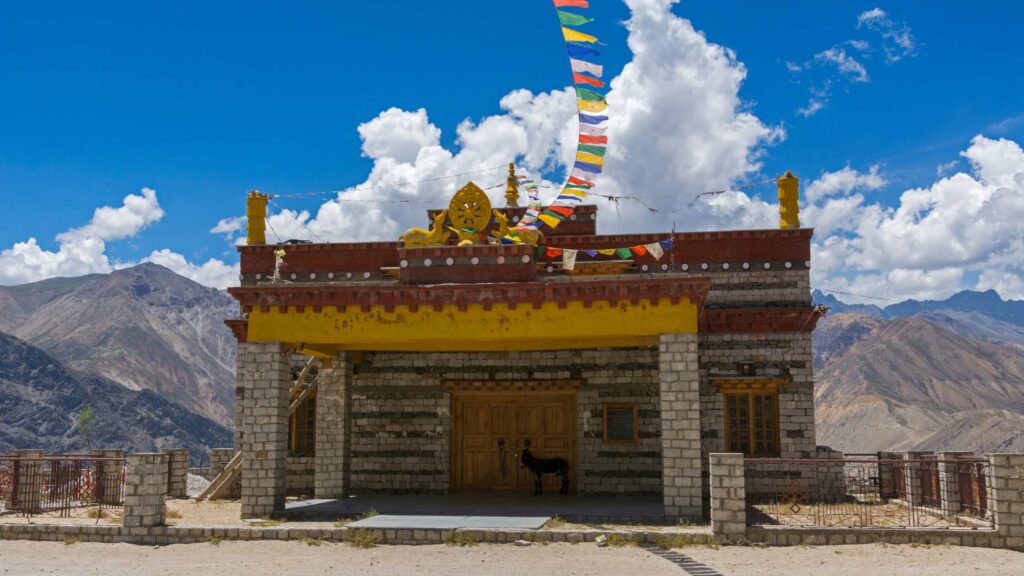
This is the part that most Spiti travel content glosses over, and it is the part that matters most when you have a young child.
Healthcare Is Extremely Limited
Kaza has the only proper hospital in Spiti, and even this is a basic facility, not a fully equipped medical centre. Villages like Tabo, Nako, Langza, and Kibber do not have hospitals. Some have small health posts, but not pediatric care.
There are no pediatric specialists in Spiti Valley [VERIFY]. If your child has a serious medical issue, the realistic options are to either stabilize and wait, or arrange evacuation to Reckong Peo, Shimla, or Manali, depending on which direction is accessible. Evacuation from deep Spiti can take many hours and depends entirely on road conditions.
Accommodation and Heating
Most Spiti accommodations are homestays and guesthouses. Some are genuinely lovely, run by warm local families who will treat your child like their own. But the physical infrastructure is basic. Expect simple rooms, limited heating (often just a single room heater or bukhari), and shared bathrooms in some properties.
Some places in Kaza have better-insulated hotels, but even here, heating may not run through the night depending on electricity and fuel availability.
Food Options for Young Children
Spiti’s food scene is limited. Local cuisine is hearty but not always toddler-friendly. You will find dal, rice, rotis, thukpa, and momos in most places. Dairy-based items like milk, yogurt, and paneer can be harder to source consistently.
If your toddler eats a specific brand of baby food or relies on formula, carry enough for the entire trip plus buffer days. You cannot count on finding these products in the valley. Our team usually tells families to pack familiar snacks, biscuits, dry fruits, and any comfort foods their child relies on.
Emergency Evacuation
In the event of a serious medical emergency with a child, evacuation is possible but not quick. Road ambulance to Reckong Peo or Manali takes hours. Helicopter evacuation exists in theory but depends on weather, altitude, availability, and is expensive [VERIFY]. This is why travel insurance with emergency evacuation coverage is not optional for this kind of trip.
Essential Packing Checklist for Toddlers
Because Spiti is remote, you cannot rely on buying what you need once you are there. Plan to carry almost everything.
Your medical kit should include a pulse oximeter, oral rehydration salts (ORS), fever and pain medication prescribed by your pediatrician for your child, any regular medications, a digital thermometer, basic wound care, and anti-diarrhoea pediatric medication. Speak to your pediatrician about what else to include based on your child’s specific needs.
Clothing must cover extreme cold. Thermal base layers, fleece mid-layers, a proper windproof and waterproof outer layer, warm caps that cover the ears, gloves, warm socks, and sturdy shoes. Even in summer, mornings and evenings are cold, and wind chills at passes can be brutal.
Food and feeding supplies means familiar snacks, baby food if applicable, formula in sufficient quantity, sterilised feeding bottles, a thermos for warm water or milk, and enough backup for delays. Do not assume you will find these items in Spiti.
Comfort items are often forgotten but matter a lot. Favourite toys, a familiar blanket, and books help a stressed child feel grounded in unfamiliar surroundings. A tired toddler in a cold guesthouse at 12,000 feet needs familiar things to hold on to.
Documents should include your child’s medical records, vaccination card, prescription details, your pediatrician’s phone number, and crucially, travel insurance with emergency evacuation coverage specifically noted. Take physical copies, not just digital ones.
Sample Toddler-Friendly Itineraries
Slow travel is the only approach that works with a young child in Spiti. Any itinerary shorter than about a week is too compressed for proper acclimatisation.
The Minimum Viable Family Trip
A five-day itinerary is possible but tight. It would involve entering via the Shimla route, staying at Kalpa or similar moderate altitude for a night or two, making a brief visit to Tabo or Nako, and returning without going deep into Spiti. This type of trip deliberately avoids the highest-altitude villages and does not include Kaza as an extended stay.
A More Comfortable Option
An eight to nine day trip allows a proper Shimla route entry with acclimatisation nights at Narkanda, Kalpa, Nako, a limited stay in Kaza, a day visit to nearby monasteries at reduced pace, and a slow exit back through the Shimla route. This is what we typically recommend for families genuinely committed to the trip.
The Ideal Scenario
A twelve-day itinerary offers the most buffer. It gives you rest days where needed, keeps driving hours short, allows weather flexibility, and lets you turn back without disrupting an overpacked schedule. Honestly, with a toddler, this is the safest format.
Across all these options, the principles remain the same. Keep daily driving to a few hours at most. Build in full rest days. Follow the climb-high-sleep-low rule. Skip high-altitude spots like Chandratal and the villages above 4,000 metres if your child shows any signs of not adjusting well.
Transportation: What Works Best with Kids
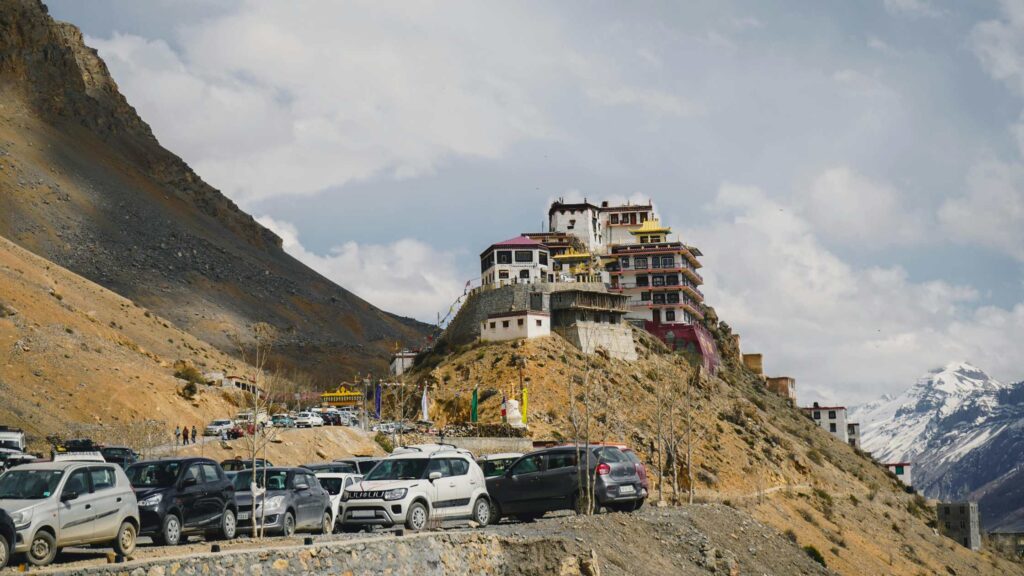
Private Taxi with an Experienced Driver
This is our strong recommendation. An experienced local driver who has done the Spiti route many times knows the road conditions, the weather patterns, the rest stops, and the emergency options. They drive at a pace that suits the terrain, not your phone’s ETA.
A comfortable SUV with good suspension and heating makes a massive difference on rough stretches. Your toddler will spend hours in this vehicle, so comfort and safety matter.
Self-Driving Is Challenging
If you are an experienced mountain driver and know the routes, self-driving is possible. But with a toddler adding stress to the equation, driving yourself while also managing your child’s needs on rough terrain is a lot. Landslides, water crossings, and sudden weather shifts demand your full attention.
Buses and Shared Transport Are Not Suitable
Public buses and shared taxis are not built for toddler comfort. Long hours, overcrowded seating, no flexibility to stop when your child needs a break, and no control over the driver’s pace make these options unsuitable for families with young children.
No Direct Flights
There are no flights directly to Spiti. The nearest airports are Bhuntar (Kullu) and Shimla, from where you still have multiple days of road travel. Plan accordingly.
Common Parental Concerns
Will my child definitely get altitude sickness?
Not necessarily. Many children handle moderate altitude without issues. But the unpredictability is the problem. You cannot know in advance how your specific child will react, which is why gradual acclimatisation, close monitoring, and willingness to descend are essential.
Is there enough food for picky eaters in Spiti?
For very picky toddlers, probably not. Bring their regulars with you. Rely on homestay meals of dal, rice, and rotis as a backup. Do not expect your child’s usual restaurant favourites to be available.
What happens in a medical emergency?
You stabilise, consult whatever local help is available, and arrange evacuation to Shimla, Manali, or Reckong Peo depending on direction and access. This is why travel insurance with evacuation coverage is essential and why 24×7 contact with your pediatrician back home is a good idea.
Should I carry oxygen or medication?
Oxygen cylinders are carried by some tour operators for emergencies. Whether you personally carry one depends on your comfort level. Medication should always be guided by your pediatrician, never by internet advice. Ask them specifically about what to carry and how to use it.
Risk Assessment: Should You Go or Not?
This is where we want you to be honest with yourself.
Age matters enormously. Children under three are at significantly higher risk from altitude and have almost no ability to communicate symptoms. We strongly advise against Spiti trips for children below three years of age.
Your child’s health matters. Any history of respiratory conditions, heart issues, or recurring illness should be a clear signal to reconsider. Get a pediatric clearance before you even start planning.
Trip length matters. A rushed trip is a dangerous trip. If you cannot commit to at least eight to nine days for proper pacing, this is not the right trip.
Your experience matters. If you have never travelled in the mountains at altitude, taking your toddler on your first Himalayan trip is not wise. Start with easier destinations first.
Your emergency preparedness matters. If the thought of managing a medical situation in a remote village feels overwhelming, that is useful information. It means you are not prepared for this trip yet.
A rough way to think about this. If your child is under three, if you are a first-time altitude traveller, and if you have a tight schedule, this is a red light situation. Reconsider. If your child is three to four, healthy, you have mountain experience, and your schedule is flexible, this is a yellow light. Proceed with extreme caution, proper planning, and a pediatrician’s approval. If your child is close to five, healthy, experienced with altitude in lower regions, and you have two weeks to spare, this moves closer to green, though still not risk-free.
Backup and Emergency Planning
Every family trip to Spiti with a toddler needs a full contingency plan before you leave home.
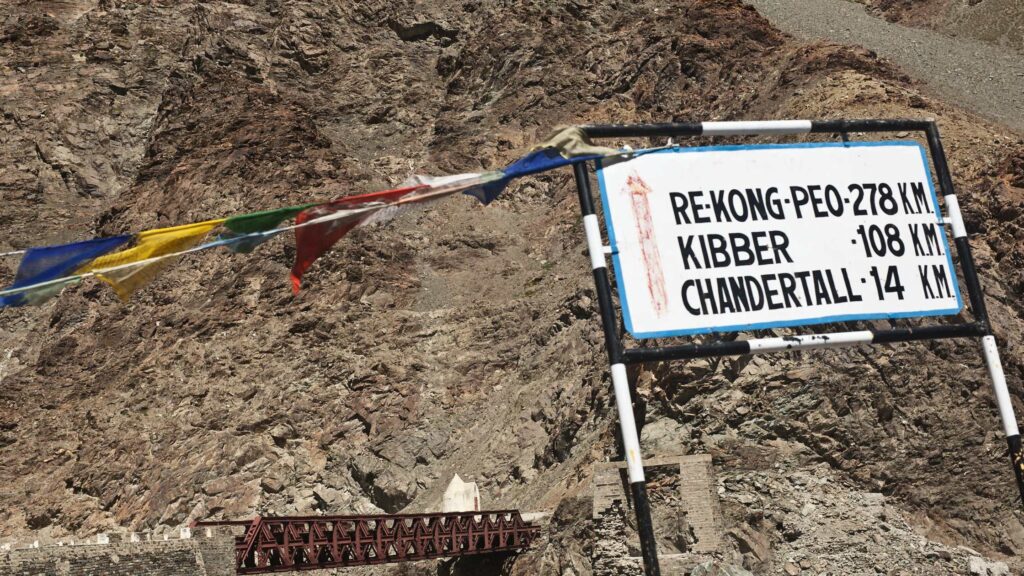
Know your descent options. At any village you stay in, know how to get back down to a lower altitude quickly if needed. A map, contact numbers, and a rough plan should be in your head, not just hoped for.
Know when to descend immediately. Persistent vomiting, confusion, extreme lethargy, severe breathing difficulty, or an unresponsive child is a medical emergency. Descend right away, do not wait for morning, do not hope it will pass.
Know your evacuation options. Road is usually the only realistic path out of deep Spiti. Helicopter evacuation exists but is weather and altitude dependent, and is not always available [VERIFY]. Your travel insurance should cover evacuation explicitly.
Carry backup supplies. Extra medication, extra food, extra warm clothing, and extra water. Roads in Spiti can close without warning. Being stuck for an extra day with insufficient supplies is a real possibility.
Final Verdict: Is It Actually Doable?
Let me be straightforward with you. Taking a toddler under five to Spiti Valley is technically possible. But practically, it carries risks that we genuinely believe many parents underestimate.
The safer age to consider Spiti with children is around five years and above [VERIFY]. At that age, children can communicate discomfort, handle the travel fatigue better, and adjust more reliably to altitude.
If you absolutely must do this trip with a younger child, the best-case scenario involves a healthy four-year-old, a twelve-day itinerary via the Shimla route, a private vehicle with an experienced driver, a comprehensive medical kit including a pulse oximeter, pediatric clearance before travel, comprehensive travel insurance with evacuation coverage, and a parent who is mentally ready to turn back at any sign of trouble.
If any of that is missing, we would honestly suggest waiting. Spiti Valley is not going anywhere. Your child’s safety is far more important than a trip that can happen in a year or two when they are better equipped to handle it.
We have helped families plan trips to gentler Himalayan regions that offer similar beauty without the altitude stakes. Places like Tirthan Valley, Shoja, or parts of Kinnaur can give you mountain magic without pushing your toddler into genuinely risky territory.
Planning the Right Trip for Your Family
If after reading all of this you still want to explore Spiti with your family, or if you are reconsidering and want help finding safer alternatives, our team is here to talk it through honestly.
We do not push trips that we do not think are suitable. We would rather help you plan a trip that works for your family than sell you an itinerary that puts your child at risk.
Reach out to us for our Spiti Valley packages and tell us about your family. Share your child’s age, any health considerations, your travel experience, and your flexibility on dates and duration. We will give you a realistic opinion on whether Spiti is right for your family right now, or whether a different Himalayan destination would serve you better.
The best trip is the one where everyone comes home safe, rested, and wanting to travel again. Let us help you plan that trip.
Also read: Spiti for Vegetarians and Jains: What You Can Actually Eat (Village by Village Guide 2026)