
March in Spiti is not exactly when the travel season begins. It is still the last part of winter with a small temperature rise.
I have seen many travelers come to Kaza in the first part of March, thinking they would see spring and have access to the open roads. They soon find themselves stuck in Tabo for 2 days because a tiny, new layer of snow fell and closed off the road ahead of them.
March falls in between winter and spring.
While Instagram will show you the pretty white mountains and blue skies, it will not show you that the guesthouses in Langza are all closed, or that if there are some icy patches on the internal roads after Kaza, or that if you have a 7-day circuit trip planned, you might experience delays due to road closed due to the Kunzum Pass being buried under snow.
This guide is designed to help you determine the best and safest way to have a fun trip in Spiti in March 2026 without getting any nasty surprises.
Quick Verdict: Is Spiti Valley Open in March?
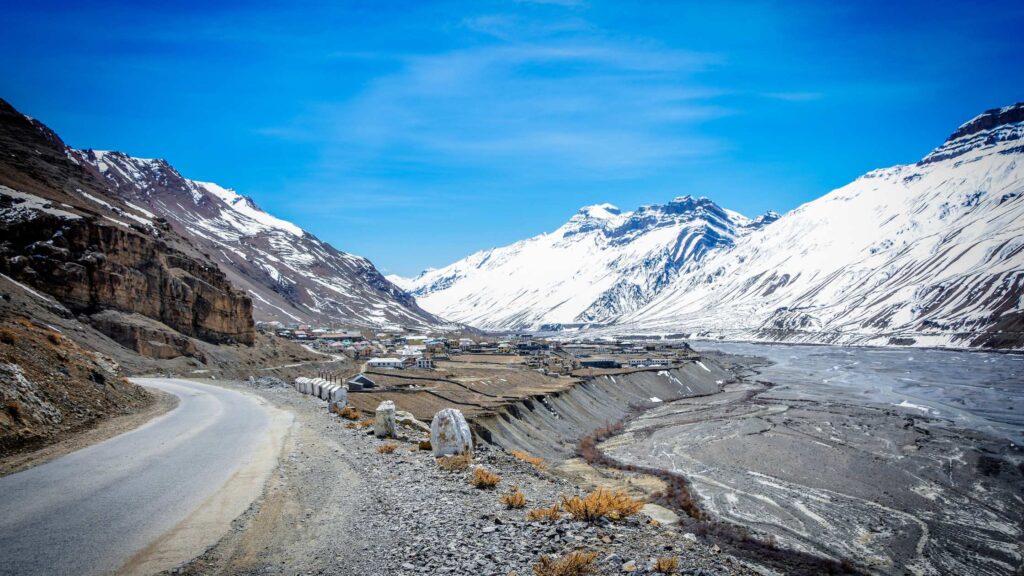
Yes, but not the way you think.
Here’s the breakdown:
Access route that works: Shimla → Kinnaur → Tabo → Kaza (via Reckong Peo). This route functions as Spiti’s winter supply corridor and is prioritised for clearing.
Route that’s usually closed: Manali → Rohtang → Kunzum Pass → Kaza. Don’t plan a full circuit. Kunzum typically stays shut through March, sometimes into April as well. Please verify locally before visiting.
What’s open:
- Kaza town and core monasteries (Key, Tabo, Dhankar)
- Nako, Kalpa, villages along the Kinnaur–Spiti route
- Kibber (if internal road is clear—check locally)
What’s NOT open:
- Chandratal Lake (frozen and inaccessible)
- High-altitude villages like Langza, Hikkim, Komik (depends on snowfall; often restricted)
- Pin Valley (accessibilityto this valley is uncertain—heavy snow blocks access most years)
What this means
- Full Spiti circuits are not realistic in March.
- Travel is typically in-and-out from the Shimla side.
Who should go:
Cold-weather veterans. Photographers chasing “White Spiti” silence. People who understand that buffer days aren’t optional—they’re survival.
Who should skip:
First-time Himalayan travellers expecting postcard-perfect road trips. Families with young kids. Anyone on a tight, non-flexible schedule. Bikers without serious high-altitude winter experience.
What ‘Spiti in March’ Really Means (Let’s Set Expectations)
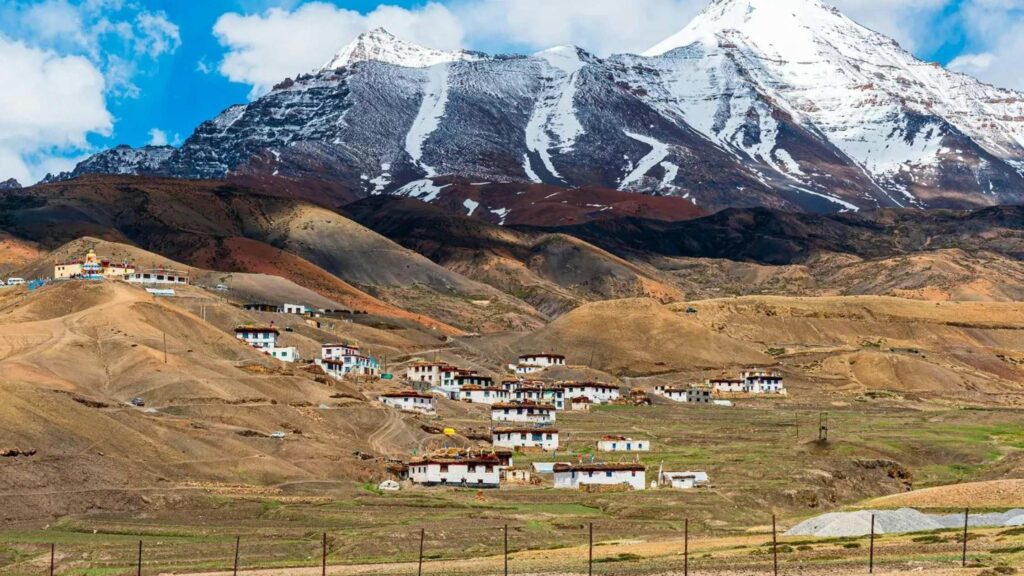
March is late winter, not early spring.
A trip to Spiti during this time will allow you to experience stunning blue sky days with blindingly white snow-covered scenery. Even though the sun may feel warm around lunchtime (1 PM), it disappears quickly and, by 5 PM, the air temperature can plummet to near freezing.
At this time of year (March), the temperature is usually around -10°C to -15°C and, if there is wind, it will feel even colder.
Sometimes, roads that are “open” can close due to fresh snowfall for an extended period of time.
Unlike in Manali, where you can typically find the roads cleared of snow within hours, when in Spiti, you will wait on the side of the road for days.
What March sightseeing really looks like:
This trip is about immersing yourself in Kaza’s culture and lifestyle rather than just visiting some of the many villages.
You can enjoy the tranquil, peaceful atmosphere of Kaza by walking on frozen riverbeds, stopping at random beautiful cafes, and observing big changes in scenery caused by moving clouds and snow-covered peaks.
If you plan to see the entire Spiti Circuit, including Chandratal Lake and all of the high villages of Spiti, you will probably be disappointed with your trip in March!
However, if you come for the raw, quiet, winter version of the valley—the one locals actually live in—March is breathtaking.
Spiti Valley Road Status in March:
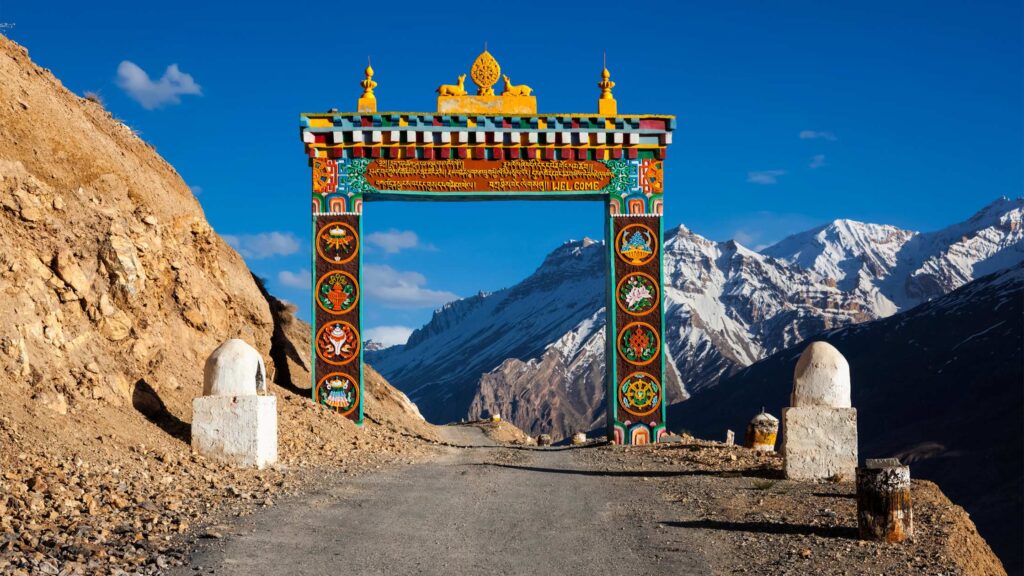
Knowing the road status makes or breaks your trip. Why… because the Spiti valley is only accessible via road during this time.
Which Routes Are Open vs. Usually Closed
Shimla → Kinnaur → Spiti (Your Primary Access)
This is the only consistent route into Spiti during March.
The road goes: Shimla → Rampur → Jeori → Wangtu → Reckong Peo → Nako → Tabo → Kaza.
What to expect:
- Generally kept open for locals and essential supplies
- Sections between Nako and Tabo can have ice patches, especially in shadowed zones
- After heavy snowfall, BRO (Border Roads Organisation) clears this route first
- Khab Bridge to Sumdo stretch can be narrow with occasional rockfall risk
Travel time reality:
Reckong Peo to Kaza takes 7–9 hours on paper. In March, plan for 10–12 hours if roads are icy or there’s been recent snow.
Manali → Kaza via Kunzum Pass (Usually Closed in March)
Let me be direct: this route is almost always shut in March.
Kunzum Pass is at an elevation of 4,590 m and is covered with heavy snow until late April to sometimes even late May. The Border Roads Organization prioritizes clearing it during the beginning of the summer season because it is the main access to the region from Shimla.
Even if you have heard of “locals walking across” or “some jeeps making it to cross,” do not plan your trip with those expectations. Many travellers that made it to Manali expecting to be able to “try their luck” only had to either turn back or hire expensive taxis to go a full loop to Shimla
How to Check Road Status Properly (The Same-Day Rule)
The road status can chane in a matter of a few hours, so you have keep checking the road status very consistently to stay updated be ready and felxible enough for small or even big detours.
Official source:
HP Lahaul & Spiti District Road Status
Updated regularly, especially during the winter months. Check this 24–48 hours before your departure and again on the morning you start each leg.
What “open” actually means:
- Open: Road is clear, vehicles moving normally
- Partially Open: Passable but with delays—could be snow clearing in progress, one-way traffic, or ice patches requiring slow movement
- Closed: Blocked due to snow, avalanche risk, or landslide
You can also call your accommodation in Kaza or Tabo the day before you leave. They’ll give you the latest changes in weather and road closures. Ask specifically: “Is the road from [your current location] passable today? Any fresh snow expected?”
Local drivers track this obsessively. If your hotel owner says, “Road is open, but start early—afternoon can bring fresh snow,” please please please…. listen.
Road Blocks in March: What May Not Be Accessible Even If You Get To Kaza
Getting to Kaza does not mean you can get to everything around Kaza, including visiting nearby places.
Kaza → Langza / Hikkim / Komik
Due to their high altitude, the villages of Langza (4400 m) and the neighbouring villages of Hikkim and Komik (4400+ m) can sometimes remain inaccessible until mid-April.
The cause may not just be snow, but the roads to the villages become dangerous because they develop ice sheets. The roads are narrow enough and even local jeeps have to use chains.
Local information is essential before you attempt to drive the road to the villages; any heavy snowfall within 48 hours before your trip will make the village inaccessible.
Kaza → Pin Valley
Pin Valley road usually remains blocked through March. Heavy snow accumulates along the valley approach, and BRO doesn’t clear it early since it’s not a priority route.
If you are planning your March trip solely for the purpose of visiting Pin Valley, you will need to either change that plan because you will not be able to access it or wait until the end of April or sometime in May.
Kaza → Kibber
Kibber (14 km from Kaza) has better odds. The road often remains passable, but ice forms in shadowed stretches, especially near the monastery area.
Again: same-day check. Ask your hotel, ask cab drivers. Don’t assume.
Weather in March: What It Actually Feels Like
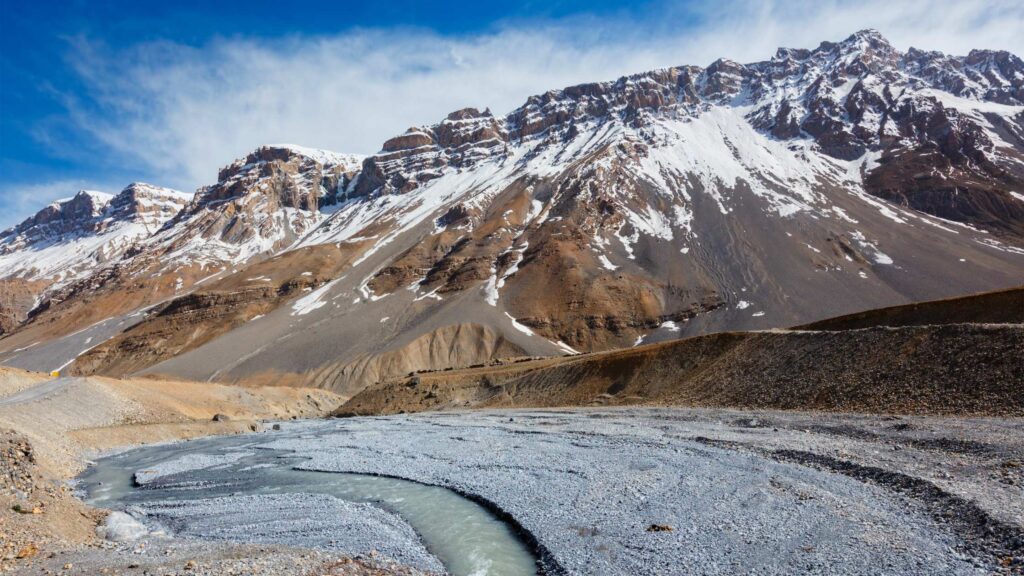
The March climate in Spiti can be very misleading.
Daytime:
During the Day you shall find Bright, blinding sunshine! And brilliantly Blue skies! In direct sun, around noon, you can easily feel the needto remove your extra layers.
Temperatures hover between 5°C and 12°C during peak sun hours.
But step into the shadow or feel the wind, and the cold cuts through immediately.
Night-time:
In March, Spiti will remind you that it is still winter, with the average overnight temperature in Kaza ranging from -10°C to -18°C, with even colder overnight lows in the higher elevations.
If you have a place that does not have heating sources, such as a bukhari, it can be very difficult for you to get sleep. Generally, thin blankets will not keep you warm.
Most quality places to stay provide thick razais (quilts), but make sure you ask before booking.
Wind chill is real:
-10°C doesn’t seem too bad until the wind is blowing at 30 km/hr! Your cheeks will feel like they are being stabbed, and your finger tips are numb even though they are in gloves.
I had to find this out the hard way while I was hiking near Dhankar Lake on a sunny, calm day, very late in the afternoon in March.
I was on route to the base of the ridge, and after about 10 minutes of hiking (halfway there), the winds came down the ridge and made me turn around because I could not feel my hands any longer.
Visibility and snow texture:
The month of March provides some of the best and crispest visibility that you can have. There is no humidity in the air, therefore it feels crisp and dry…the mountains look as though they have been etched into the sky.
When fresh snow has fallen from the night before, it also creates some of the most stunning textures, such as rippled dunes on the frozen riverbeds; icicles under the eaves of some monastery, and untracked, unstirred, vast expanses of pristine white snow, close to Tabo, etc.
However, the fresh snowfall can also cause road closures the next day. They are both beautiful and unpredictable.
Is March An Acceptable Time Of Year To Travel To Spiti?
March is SAFE if:
Yes! March is indeed Safe to travel to Spiti as long as you abide by the following rules:
Allow Buffer Days. In the event of any delays due to weather or other unforeseen events, you should have built at least an extra 2-3 days into your itinerary. Do not put “maybes” on this.
Bring Proper Clothing Layers and Cold Weather Gear. This includes the following: Thermals Base Layer, Insulated Down Jacket, Waterproof/Windproof Shell, and Snow Gloves. A “Hoodie” and “Jeans” are NOT proper cold-weather gear.
BOOK PROPERLY HEATED ACCOMMODATION. Confirm before arrival (i.e., not when it is midnight and freezing!).
Use Local Drivers That Have Experience Driving In These Weather Conditions. Ensure The Drivers Have Up-To-Date Knowledge Of Local Road Conditions/Weather Events.
Mentally Prepare To Travel Slower Than Anticipated. For Example: A 6 Hour Trip Could Easily Take 10 Hours. You May Also Spend Ideally A Full Day In Tabo Waiting On Road Clearance!
March is RISKY if:
If you are going to be self-driving in March, you could be at a higher risk than any other time of year due to:
You have no previous experience driving in snow/ice conditions. Even for those who have driven in the Himalayas before, March can have unpredictable weather and road conditions.
You have a tight schedule and cannot afford any delays along your route due to any weather-related issues (i.e., roads closed or accidents); e.g., if you are scheduled to be back in Delhi on Day 7 and the roads are closed for any reason (accidents or weather).
You are driving up higher altitude towns without checking the conditions of the roads first; e.g., if you arrive at Langza and find out you can’t make it to Langza because of weather conditions, or you run out of fuel after driving halfway without confirming the availability of fuel before that point would be very costly.
You are traveling with young children or older adults without cold-weather clothing; e.g., extreme nighttime temperatures and sudden changes in weather during the winter can be particularly difficult on anyone who does not have experience or live in areas with cold winters and/or experience high-altitude winters.
Quick Safety Checklist for March:
Roads: Check official status + local confirmation daily
Power: Many places have scheduled power cuts; confirm backup/inverter
Water: Pipes freeze. Hot water availability may be limited to certain hours
AMS (Acute Mountain Sickness): Carry Diamox if you’re prone to altitude issues. Kaza sits at 3,650m.
Medicines: Stock up in Shimla/Reckong Peo. Kaza has basic supplies, but don’t count on finding everything
Communication: Network is patchy. BSNL works best. Jio/Airtel can be hit or miss
Best Things to Do in Spiti in March
Forget the checklist mentality. March isn’t about ticking 20 spots.
Monasteries: Key, Tabo, Dhankar
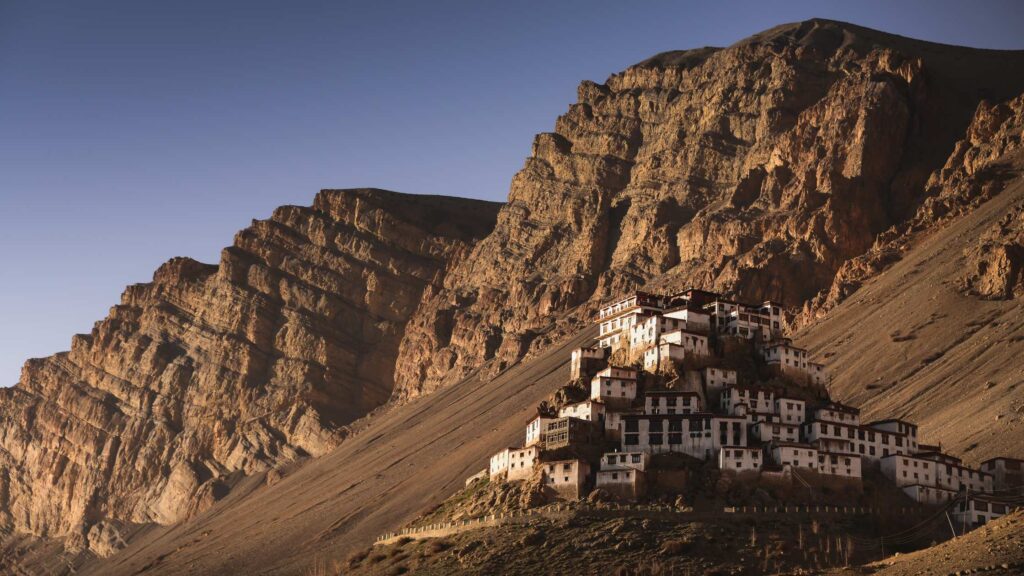
Key Monastery resembles a white fortress mounted above Kaza. So, if you wish to visit in March, the number of people visiting is down, which allows you to sit in the prayer hall and listen to monks chant without a lot of noise coming from others around you.
The monastery opens at about 7 a.m. and is silver streaked with plenty of early morning light reflecting off of it from the snow-capped mountains nearby, giving the building a beautiful gold hue.
Tabo Monastery is older than Key Monastery and is more peaceful and reflective in nature. The murals that can be seen inside the Tsuglagkhang (the main temple) at Tabo are more vivid than Key due to the light coming through small windows during this time of year.
Depending on when the lunar calendar falls, you may also be able to catch monks getting ready for Losar (the Tibetan New Year falls in either late February or early March). Hopefully, if you visit at this time, you will observe the creation of a sand mandala or the preparation of butter sculptures.
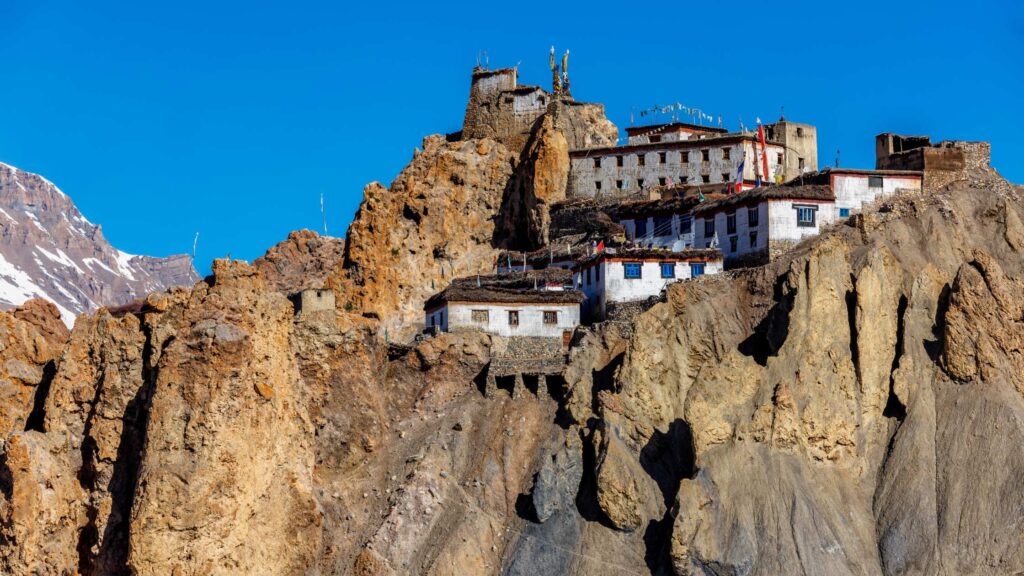
Dhankar Monastery and Fort are built upon the edge of a cliff. The hike up to Dhankar Monastery takes approximately 20 minutes from Dhankar village, and in March, sections of the path leading up to Dhankar Monastery may be slippery.
Please check with locals before attempting the hike. If the path is safe, the view from the top is remarkable, seeing the two rivers, Spiti and Pin, merging (confluence) at the bottom of the mountain. You will want to hold onto your hat (literally) as there is quite a lot of wind at this altitude.
Winter Landscapes + Photography
March gives you “White Spiti.”
The valley is still snow-covered, riverbeds frozen, and the stark contrast between white ground and blue sky is what photographers dream about.
Kaza’s Top 3 Activities:
1. Explore walking on the Frozen Spiti River (at the bottom of the hill, near the Kaza bus station). Be careful walking down and even on the ice. The locals often play on the ice.
2. Go for a drive along the road to Rangrik (amazing views of wide open valleys, uninterrupted white).
3. Spend the sunset on the rooftop terraces of Kaza’s market’s cafés (e.g., Café Zomsa, if they are open, and Norling).
Between Tabo & Kaza:
- Stop before Sumdo (just before entering the Spiti district of Kinnaur) to see the change from brown, barren mountains to white peaks.
Cafés & Slow Travel:
- March makes you move at a slower pace, which is when this valley reveals itself.
Kaza has several cafés that are open all winter:
1. Café Zomsa (if they are open)—has a pleasant atmosphere, hot coffee, and a bukhari in the corner.
2. Norling Restaurant—local Tibetan fare, with momos that taste homemade.
3. Sol Café—frequently open even during the off season—owners have lived in the valley for many years; they know the valley well.
Take some time in the afternoons to relax with the owners of Café and get to know them a little better. They will tell you all about the roads that were just opened today, any fresh snowfalls, and even sometimes about any monks visiting from Lhasa.
You can take a walk through the Kaza Market in the late morning when the sun has had a chance to warm up the street that runs through the centre of the town.
Although the majority of the shops will be closed (apart from one or two provisions stores), you’ll see many local people purchasing vegetables from lower towns, as well as many children in their thick jackets walking to school.
This is what real Spiti looks like…there is nothing like it on Instagram.
Best 6–8 Day Itinerary for March

Option A: Classic Winter Spiti (Recommended) — Shimla Side In/Out
This itinerary plays it safe and builds in proper buffer time.
Day 1: Chandigarh/Delhi → Shimla or Narkanda
- Start early (7–8 AM) to avoid traffic near Parwanoo and Solan
- Reach Shimla by afternoon; if you’re comfortable driving another hour, push to Narkanda (snow views start here)
- Overnight: Narkanda (stay options with heaters: Tethys Ski Resort has good heating; confirm before booking)
Day 2: Narkanda → Sangla or Kalpa
- Drive via Rampur, Jeori, Wangtu
- Wangtu has the famous Wangtu bridge—narrow, locals cross one vehicle at a time
- Choose Sangla if you want riverside calm (Baspa River is stunning in winter, partially frozen)
- Choose Kalpa if you want closer proximity to Kaza the next day
- Overnight: Sangla or Kalpa (Kalpa: Kinner Villa has heating and great Kinner Kailash views)
Day 3: Kalpa → Nako → Tabo
- Leave early (8 AM)
- Stop at Nako Lake—it’s partially frozen, turquoise in some patches, white in others
- Nako village itself is tiny but photogenic
- Continue to Tabo (another 1.5–2 hours)
- Visit Tabo Monastery in the evening if you reach before 5 PM
- Overnight: Tabo (Monastery Homestay or Dekyid Guest House—both have bukharis)
Day 4: Tabo → Dhankar → Kaza
- Leave after breakfast (9 AM)
- Detour to Dhankar (30 min off the main road)
- Explore Dhankar Monastery and fort (check trail condition with locals before hiking up)
- Drive to Kaza (arrives by 3–4 PM)
- Settle in, acclimatize
- Evening walk around Kaza market
- Overnight: Kaza (Spiti Organic Kitchen Homestay has excellent heating; Zostel Kaza also reliable)
Day 5: Kaza Local (Key Monastery + Kibber if accessible)
- Visit Key Monastery in the morning
- Ask locals about Kibber road status
- If open: drive to Kibber (14 km, highest motorable village with post office—though Hikkim claims this title too)
- If closed: spend time exploring Kaza, visit Sakya Tangyud Monastery nearby
- Afternoon: café time, talk to locals about road status for next day
- Overnight: Kaza
Day 6: Buffer Day (Weather/Road Safety) OR Kaza Exploration
- This is your safety net
- If weather’s good and you’re feeling adventurous, try for Langza (but only after local confirmation)
- If roads are iffy or fresh snow fell, use this day to relax, reorganize, maybe visit Rangrik village
- Overnight: Kaza
Day 7: Kaza → Return Towards Kalpa
- Start early
- Retrace route via Tabo, Nako
- Stay in Kalpa or push to Sangla if you want a riverside night
- Overnight: Kalpa/Sangla
Day 8: Kalpa → Chandigarh or Delhi
- Long drive back
- Break journey at Shimla if you’re tired
- Reach Chandigarh/Delhi by evening
Why this works:
Two buffer days (Day 6 + flexible Day 7) mean if you lose a day to snow, your return ticket doesn’t get affected.
Option B: Short March Trip
6 Days, Focused on Tabo + Kaza Core
Use this ONLY if:
- Roads are confirmed stable before you leave
- You’re okay with limited sightseeing
- You accept that 1 weather delay could compress everything
Day 1: Delhi/Chandigarh → Shimla
Day 2: Shimla → Kalpa
Day 3: Kalpa → Tabo → Kaza
Day 4: Kaza local (Key + Kibber if open)
Day 5: Kaza → Kalpa
Day 6: Kalpa → Delhi/Chandigarh
Why this is risky:
No buffer. If snow blocks roads on Day 4, you’re either stuck or rushing back dangerously.
Only attempt this if:
- You’re traveling with a very experienced local driver
- You’ve checked weather forecasts and road status obsessively
- You’re mentally prepared to miss things if nature doesn’t cooperate
Spiti Trip Cost in March

March sits in an odd pricing zone. It’s off-season for summer tourism, so some hotels drop rates. But winter logistics—heating, experienced drivers, 4×4 vehicles if needed—add cost.
Budget (₹12,000–₹18,000 per person for 7 days)
What this includes:
- Shared cab (Innova/Xylo, split among 5–6 people)
- Basic homestays with shared bukharis
- Simple meals (dal-rice, momos, thukpa)
- Minimal sightseeing detours
What this does NOT include:
- Private rooms with dedicated heaters
- Guide or premium vehicle
- Backup plan costs if stuck
Realistic? Yes, if you’re backpacking solo or with friends and okay with basic facilities.
Standard (₹25,000–₹35,000 per person for 7 days)
What this includes:
- Private cab (Innova/Scorpio for 4–5 people)
- Comfortable guesthouses/homestays with room heaters
- Three meals, decent variety
- Key monastery visits, Tabo, Dhankar
- One buffer day built in
What this does NOT include:
- Luxury stays
- Last-minute flight changes if roads close
Realistic? This is the sweet spot for most travelers—comfort without overpaying, and flexibility to handle minor delays.
Premium (₹45,000–₹60,000+ per person for 7–8 days)
What this includes:
- Private SUV (Fortuner/Endeavour) with experienced driver
- Best heated stays (Spiti Organic Kitchen, premium homestays)
- All meals at nicer spots
- Extra buffer days
- Flexibility to add last-minute detours (if roads open)
What this does NOT include:
- Helicopter rescue if things go badly wrong (that’s separate insurance territory)
Realistic? If you’re traveling with family, want maximum comfort, and can afford safety margins, this tier makes sense.
Major Cost Variables:
1. Route selection
The total cost of a trip is largely determined by how you enter/exit the Spiti Valley, and which side you enter/exit. The Shimla-Kinnaur route is the most used and typically is opened for longer periods.
While there can be rare occasions when the Manali-Kaza route is opened earlier, using different one-way/mixed circuits can add the cost of returning the vehicles and limit the availability of vehicles. Always try to plan your trip using the most reliable route and not the quickest route.
2. Type of vehicle
Transportation is typically one of the largest costs associated with a trip. Costs vary based on whether a shared or private mode of transportation is chosen and the actual category of transportation used. Shared transportation reduces your per-person costs, but limits flexibility.
On the other hand, using a private vehicle provides comfort, the ability to stop for pictures, and also allows the group to have some control over the vehicle. However, the total cost of using a private vehicle will be incurred based on how many people are in the group.
3. Heating and room layout
In colder months, accommodation prices are determined by heating, more than room size or décor. Rooms that have a traditional heating source (fireplace or stove), or an electric backup heater, generally cost more, but will greatly influence the comfort provided and the ability to sleep on nights when the temperature is sub-zero. Always verify the type of heating actually provided in your room, not simply the words: “Heater Available”.
4. Food pricing
The place where you eat and what you eat (type of food) will determine the cost of your meals. Generally, simple roadside or village meals will be much more affordable than having meals at a café or guesthouse’s kitchen, where they have a more extensive menu. During winter months or in remote areas, food (and therefore food prices) may be limited due to the supply-chain challenge.
5. Buffer days
Extra days (above the normal 10 days you would normally) should be added for safety and logistics. The cost of extra days will include additional accommodation and food costs. For private tours, the cost will also include standby vehicle costs. Reducing your buffer days to save some money could prove to be a poor decision, especially given the possibility of road closures or weather delays.
6. Size of the group
The number of people you are travelling with will directly affect your overall cost-efficiency. For example, a solo traveller will absorb the entire cost of the vehicle or wait for a group to come together, while a couple will be able to comfortably share expenses. Small groups are often the most cost-effective way to travel, as they provide the best combination of comfort, flexibility, and average price per person.
Where to Stay in March
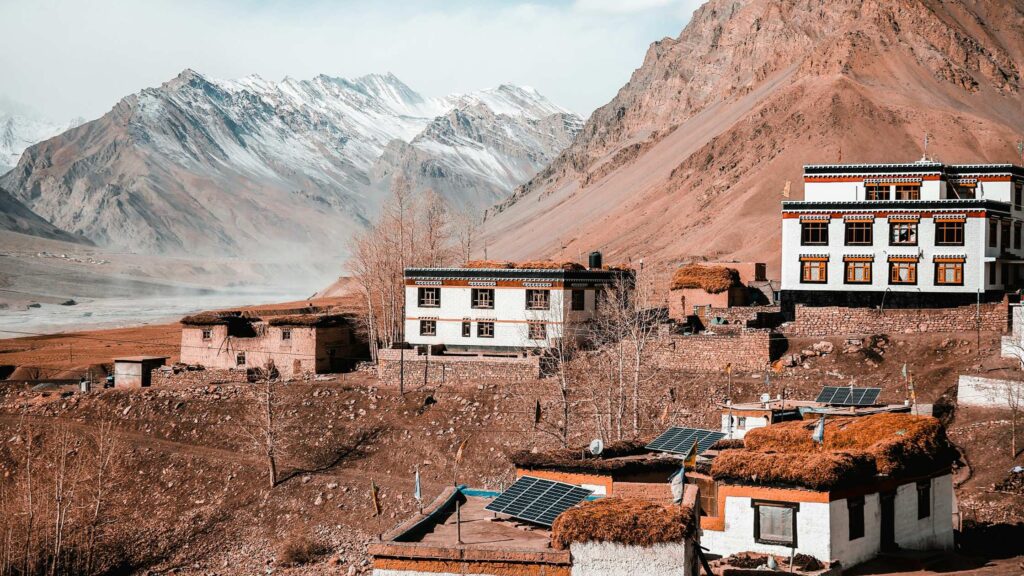
In March, staying somewhere is not as much as a summer trip, but still affects choices.
Check Before You Book:
Heating System
A Bukhari (wood-stove) style will provide you with consistent heat and be much more authentic than an electric heater, but requires frequent wood refueling. Electric heaters are convenient but ineffective during power outages (power outages are quite common in remote places such as Spiti).
A combination of a room heater and backup power/inverter
Hot Water
Do they have hot water 24/7 or only during certain times of the day (most places heat water using a geyser, and will only do so in the morning and evening to save electricity)?
Generator/ inverter
Does the homestay have a generator/inverter? In March, Kaza experiences 2-4 hour scheduled electric outages.
Access
Is the guesthouse on the main road, or on a fairly narrow, icy hill/road? You don’t want to be arriving 2 or 3 hours late at night in the snow!?
Location
Like Kaza, where you will have the most ease of access to cafes/market, Tabo will be closer to the monastery, which means it may be peaceful, but also likely colder than the open valley.
Food
Confirm with the homestay if they will be serving food in March. Some may shut down their kitchens in the off-season.
Best Stays in Kaza (March-Ready):
For Couples:
- Spiti Organic Kitchen Homestay — Excellent heating, home-cooked meals, run by locals who’ll update you on road status daily
- Zostel Kaza — Reliable heaters, social vibe if you want to meet other travelers, dorm + private rooms
For Families:
- Deyzor Hotel — Larger rooms, consistent heating, attached bathrooms with hot water (though confirm timings), central location
- Kaza Retreat — Slightly outside main market but quieter, family rooms, bukhari heating
For Solo Backpackers/Budget:
- Taste of Spiti Homestay — Shared bukhari in common area, basic but warm, friendly hosts
- Norling Guesthouse — Simple rooms, affordable, attached to Norling Restaurant (easy meal access)
Best Stays in Tabo:
Monastery Homestay — Run by monks, very basic but warm bukhari, vegetarian meals, peaceful beyond belief
Dekyid Guest House — Slightly better amenities than Monastery Homestay, bukhari heating, attached bathrooms
Best Stays in Kalpa (Stopover):
Kinner Villa — Amazing Kinner Kailash views, heated rooms, good food, family-run
Apple Pie Homestay — Cozy, bukhari, great apple orchards around (though bare in March, still scenic)
What to Pack for Spiti in March

March packing isn’t about style. It’s about survival and comfort.
Clothing:
Base layer (thermals):
- 2 sets minimum (top + bottom)
- Merino wool or synthetic (NOT cotton—it holds moisture and makes you colder)
Mid layer:
- Fleece jacket or down vest
- Thermal shirt or warm full-sleeve tees (2–3)
Outer layer:
- Down jacket (thick, insulated—this is your primary defense against -15°C nights)
- Windproof shell or snow jacket (wind chill is brutal; you need wind protection)
Bottom wear:
- Thermal leggings (wear under regular pants)
- Thick trekking pants or jeans (jeans are okay if layered with thermals)
- Waterproof pants if you plan any snow walking
Accessories (DO NOT SKIP):
- Woolen beanie/cap (you lose massive heat through your head)
- Neck warmer or muffler (wrap around face during windy stretches)
- Gloves—2 pairs (one will get wet, guaranteed)
- Warm socks—4–5 pairs (wool or thick trekking socks)
- Snow boots or trekking shoes with GRIP (icy roads = slipping risk)
Footwear:
What to bring:
- Trekking shoes/boots with deep tread (for icy monastery trails)
- Extra pair of warm shoes for indoors (many homestays ask you to remove shoes at entry)
What NOT to bring as primary footwear:
- Sneakers without grip (you’ll slip on icy patches)
- Formal shoes (zero traction, you’re asking for trouble)
Skincare & Health:
Sunscreen (SPF 50+):
UV rays at 3,500m+ altitude are no joke. Snow reflects sunlight, doubling exposure. You’ll burn even in “winter.”
Lip balm (with SPF):
Dry air cracks lips fast. Apply every hour.
Moisturizer:
Your skin will feel like paper. Heavy moisturizer, not light lotion.
Sunglasses:
Snow blindness is real. Bright white landscape + high-altitude sun = eye strain and pain. Polarized lenses preferred.
Medications:
- Diamox (for altitude sickness—consult doctor before trip)
- Paracetamol/basic pain relief
- Antacid (rich food + altitude = digestive issues for some)
- Band-aids, antiseptic
- Personal prescriptions
Tech & Accessories:
Power bank (20,000mAh minimum):
Power cuts are common. Your phone’s your camera, GPS, communication device—keep it charged.
Headlamp or flashlight:
Kaza doesn’t have street lighting everywhere. If power’s out and you need to walk to the bathroom (some homestays have external toilets), you’ll need this.
Adapter/universal plug:
Some older homestays have quirky sockets.
Ziplock bags:
Keep electronics, documents dry. Snow melt or unexpected moisture can ruin things.
What You DON’T Need:
- Light jackets only — Useless. You need DOWN.
- Cotton base layers — They trap sweat, make you colder
- Fancy outfits — Nobody cares. Warmth > style
- Too many shoes — 2 pairs max (trekking + indoor)
- Excessive toiletries — Basics only; you’re not staying at a 5-star
How to Plan Spiti March Trip from Delhi/Chandigarh

Starting from Delhi:
Option 1: Drive
- Delhi → Shimla: ~7–8 hours (340 km)
- Leave early (6–7 AM) to avoid Parwanoo traffic
- Break journey at Shimla for the night
Option 2: Overnight Bus
- HRTC (Himachal Road Transport) runs buses Delhi–Shimla
- Departs ~8–10 PM, arrives Shimla early morning
- Cheaper but tiring (not super comfortable for long Himalayan trips after)
Option 3: Train + Cab
- Take Shatabdi to Kalka, then toy train to Shimla (scenic but slow)
- Or take taxi from Kalka to Shimla (~3 hours)
From Shimla onward:
Hire a cab for the complete Shimla–Kaza–Shimla circuit and ensure you pre-book with a reliable local operator. Alternatively, you can choose an 8 Nights 9 Days Spiti Valley tour package from Delhi that includes professional planning and winter-experienced drivers.
Starting from Chandigarh:
Easier access:
- Chandigarh → Shimla: ~4 hours (115 km)
- Start early, reach Shimla by noon, continue to Narkanda same day if you’re comfortable
Or:
Hire a cab directly from Chandigarh for the full trip, or make your journey easier by booking a professionally planned 7 Nights 8 Days Spiti Valley tour package from Chandigarh.
Booking Cabs (Critical Tips):
Don’t go with the cheapest quote blindly.
In March, driver experience matters more than vehicle model. A seasoned driver who knows where ice forms, which stretches get tricky after 3 PM, when to stop and wait—this knowledge can prevent disasters.
Ask these questions before booking:
- Has the driver done winter Spiti trips before?
- Does the vehicle have snow chains (in case needed)?
- What’s the policy if roads close midway?
- Is fuel included or extra?
- Is driver’s accommodation and meals included in cost or separate?
Reliable operators (based on consistent winter feedback):
- Spiti Holiday (local Kaza-based operators)
- Himalayan Drivers Union (Shimla-based, experienced)
- Check recent Google reviews, not just star ratings
Final Planning Checklist + Call-to-Action
Before you book anything, go through this:
1 Month Before Trip:
- Confirm leave dates with buffer (don’t book fixed return flights)
- Book cab (if going private)
- Book first 2 nights’ accommodation (Shimla + Kalpa/Sangla)
- Start altitude acclimatization if prone to AMS (light cardio, hydration)
1–2 Weeks Before:
- Book Kaza accommodation with confirmed heating
- Check long-range weather forecasts (not 100% accurate but gives trends)
- Finalize packing list
- Buy/rent any missing gear (down jacket, snow boots)
48 Hours Before Start:
- Check official road status: https://hplahaulspiti.nic.in/road-status/
- Call your Kaza accommodation: ask about current weather, any road issues
- Confirm cab driver pickup time
- Charge all devices, pack power bank
Morning of Each Travel Day:
- Recheck road status (conditions change overnight)
- Start early (8–9 AM latest for major legs)
- Carry dry snacks, water, glucose (dhabas can be far apart in winter)
Ready to Plan Your March Spiti Trip?
If you want a realistic, safe itinerary tailored to March conditions—without the guesswork—we can help.
Send us a message:
“MARCH + [Your City] + [Number of People]”
We’ll suggest:
- The safest route based on current road patterns
- A realistic day-by-day itinerary with buffer days
- Cab options (shared or private) with experienced winter drivers
Stay recommendations with confirmed heating
WhatsApp: +9170185 37498
Email: [email protected]
March in Spiti isn’t for everyone. But if you’re ready for the cold, the quiet, and the raw beauty—it’s unforgettable.
FAQs:
Is Spiti Valley open in March?
Yes, Spiti Valley is open in March via the Shimla–Kinnaur route, while the Manali–Kunzum Pass side remains closed due to snow and winter conditions.
Is Spiti Valley safe in March for tourists?
Spiti is safe in March only with careful planning, buffer days, heated stays, and experienced drivers; it’s not ideal for rushed or first-time mountain travellers.
Which route is best for Spiti in March — Shimla or Manali?
The Shimla–Kinnaur route is the only reliable access in March; the Manali route via Kunzum Pass stays closed until late spring.
Is Manali to Kaza road open in March?
No, the Manali–Kaza road via Rohtang and Kunzum Pass is closed in March and cannot be used for circuit travel.
Is Kunzum Pass open in March?
No, Kunzum Pass remains snowbound in March and typically opens only by late April or May, depending on snow clearance.
Can we do the Spiti full circuit in March?
No, the full Spiti circuit isn’t possible in March; travel must be in-and-out via the Shimla side due to Kunzum Pass closure.
Is Chandratal Lake open in March?
No, Chandratal Lake is completely inaccessible in March, with frozen conditions and snow-blocked approach roads.
Will I see snowfall in Spiti in March?
Yes, March can bring fresh snowfall, especially in higher areas, but this also increases the risk of temporary road closures.
How cold is Kaza in March (day vs night)?
Day temperatures hover around 5–12°C in sunlight, while nights drop sharply to -10°C or lower, making heating essential.
Are Langza, Hikkim and Komik open in March?
These high-altitude villages are usually inaccessible in March due to snow, with access only possible on rare clear days—verify locally.
Is Pin Valley accessible in March?
Pin Valley is usually inaccessible in March, as the road remains snow-blocked until mid-April or later.
Do I need a 4×4 in March for Spiti?
A 4×4 isn’t mandatory on the Shimla–Kaza route but is strongly recommended for icy patches and any side roads to higher villages.
Can I self-drive to Spiti in March safely?
Self-driving is safe only for experienced winter mountain drivers; most travellers should hire a local driver for safety.
Is March a good time for a bike trip to Spiti?
No, March is extremely challenging for bike trips due to ice, freezing winds, and unpredictable road closures.
How many days are enough for Spiti in March?
Plan at least 7–8 days in March to allow slow travel, acclimatisation, and 1–2 buffer days for weather delays.
What are the best things to do in Spiti in March?
Visit Key, Tabo, and Dhankar monasteries, photograph snow landscapes, explore Kaza town, and enjoy slow winter travel.
Where should I stay in March — Tabo or Kaza?
Kaza is the better base in March due to more heated stays, food options, and easier access to nearby monasteries.
What should I pack for Spiti in March?
Pack heavy thermals, down jacket, windproof layers, insulated shoes, gloves, sunscreen, power bank, and basic altitude medicines.
What is the Spiti trip cost in March?
March trips cost less due to off-season rates, ranging from budget shared travel to premium private SUV itineraries based on comfort level.
Are hotels/homestays open in Spiti in March?
Yes, select homestays and guesthouses in Kaza and Tabo remain open, but heating, hot water, and meals must be confirmed in advance.
Also read: Best Shoes for Spiti (2026): Snow Boots vs Trekking Boots + What Actually Works