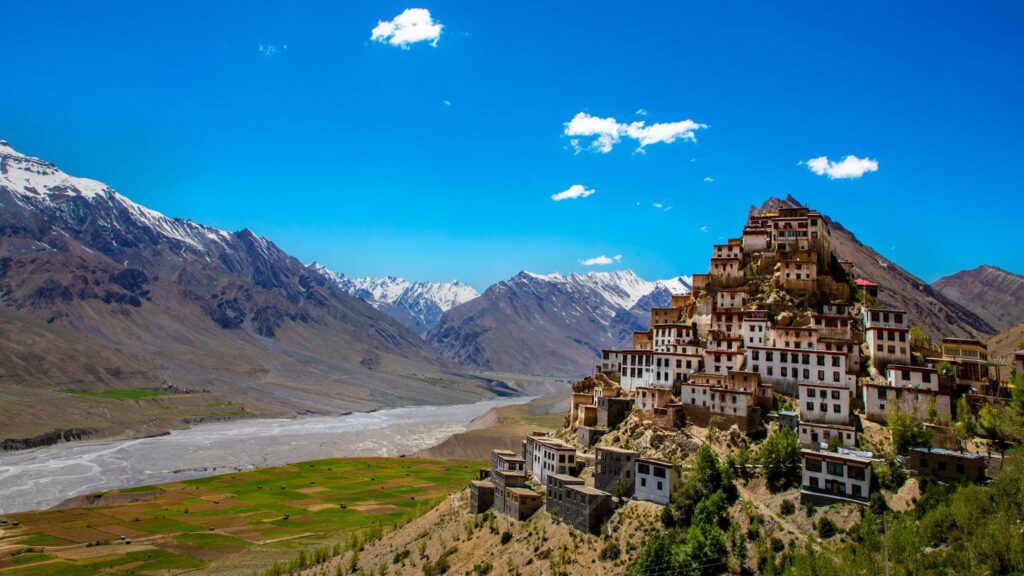
Delhi and Spiti Valley are separated by roughly 1,100 kilometres — but in terms of landscape, altitude, and atmosphere, they might as well be on different planets. From the heat, chaos, and concrete of India’s capital to a pristine cold desert at 3,800 metres where ancient monasteries overlook turquoise rivers and the Milky Way is visible to the naked eye — a Spiti Valley trip from Delhi is one of the greatest escapes an Indian traveler can make.
And here is the best part: Delhi is the closest major metro to Spiti Valley. That proximity gives Delhi travelers a critical advantage — more flexible trip lengths, more route options, and a lower travel budget compared to those flying in from Mumbai, Ahmedabad, or Bengaluru.
This expert guide covers everything a Delhi traveler needs — the exact Delhi to Spiti Valley distance and route breakdown, the ideal number of days for every type of traveler, a detailed day-by-day Spiti Valley itinerary from Delhi, and a thorough Spiti Valley trip cost from Delhi so you can plan with complete clarity and confidence.
Delhi to Spiti Valley Distance and Route Options
Delhi to Kaza — the main town of Spiti Valley — is approximately 1,050 to 1,200 kilometres depending on the route taken. Unlike travelers from Mumbai or Ahmedabad, Delhi travelers have the unique advantage of being able to reach Spiti entirely by road if desired — no flights required.
There are two primary routes from Delhi to Spiti Valley, and both have distinct advantages depending on the season, experience level, and comfort preference.
Route 1: Delhi → Shimla → Kaza via NH-5 / NH-505 (Shimla Route — Safest & Most Recommended)
| Leg | Distance | Driving Time | Road Condition | Notes |
|---|---|---|---|---|
| Delhi → Shimla | ~370 km | 7–8 hrs | Excellent (NH-44 + NH-5) | Drive overnight or take early morning departure |
| Shimla → Narkanda → Rampur | ~130 km | 3–4 hrs | Good (NH-5) | Scenic apple orchid stretch; tea breaks |
| Rampur → Nako | ~190 km | 5–6 hrs | Good to Moderate | Kinnaur canyon drive; dramatic gorges |
| Nako → Tabo → Kaza | ~130 km | 3.5–4.5 hrs | Moderate (mountain road) | Spiti entry; ancient monasteries en route |
| Total Delhi → Kaza | ~820 km | 2–3 driving days | Mostly good with mountain sections | Best for first-timers, families, seniors |
Route 2: Delhi → Manali → Kaza via Kunzum Pass (Manali Route — Faster but Tougher)
| Leg | Distance | Driving Time | Road Condition | Notes |
|---|---|---|---|---|
| Delhi → Manali | ~570 km | 10–13 hrs | Good (NH-3 / NH-21) | Overnight Volvo bus most popular; depart 5–6 PM, arrive 6–7 AM |
| Manali → Rohtang Pass | ~51 km | 2–3 hrs | Good to Moderate | Rohtang Permit required (book online) |
| Rohtang → Gramphoo → Kunzum Pass | ~120 km | 4–5 hrs | Rough / Off-road sections | River crossings and loose gravel; open June–Oct only |
| Kunzum Pass → Kaza | ~67 km | 2.5–3 hrs | Moderate | Dramatic descent into Spiti basin |
| Total Delhi → Kaza | ~808 km | 2 days (1 overnight bus + 1 drive day) | Mixed — good highways then rough mountain | Best for adventure seekers; faster but tougher |
Route 3: Delhi → Chandigarh → Shimla → Kaza (Via Chandigarh Stop)
| Leg | Mode | Distance / Time | Notes |
|---|---|---|---|
| Delhi → Chandigarh | Road / Train / Bus | ~250 km / 4–5 hrs | Many Volvo buses and Shatabdi trains daily |
| Chandigarh → Shimla | Road | ~120 km / 3 hrs | Comfortable scenic mountain entry |
| Shimla → Kaza | Road (2 days) | ~450 km | Full Spiti route via Kinnaur |
| Best for | Those breaking the Delhi–Shimla drive into two legs | – | More comfortable; extra sightseeing in Chandigarh possible |
Route 4: Fly Delhi → Kullu (Bhuntar) + Drive to Kaza
| Leg | Mode | Distance / Time | Notes |
|---|---|---|---|
| Delhi → Bhuntar (Kullu) Airport | Flight (55 min) | ~500 km by air | Limited flights; IndiGo and Air India operate this route |
| Bhuntar → Manali | Road | ~50 km / 1.5 hrs | Easy highway drive |
| Manali → Kaza via Kunzum | Road | ~200 km / 8–10 hrs | One dramatic driving day |
| Best for | Delhi travelers who want to save 1 day of road travel | – | Cost: Rs. 2500–6000 one way; Limited availability |
💡 Best route for Delhi travelers: The Delhi-Shimla-Kaza road trip (Route 1) is the gold standard — safe, scenic, gradually acclimatizing, and accessible to all experience levels. For the most complete experience, do a circuit: enter via Shimla route, exit via Manali. This covers everything Spiti has to offer in a single unforgettable journey.
How Many Days Are Ideal for a Spiti Valley Trip from Delhi?
Delhi’s proximity to Spiti Valley is a genuine advantage — you need fewer travel days compared to other cities, which means more time actually inside Spiti. Here is the definitive answer to the most-searched question by Delhi travelers:
| Trip Duration | Traveler Type | What You Can Cover | Verdict |
|---|---|---|---|
| 7–8 Days | Very time-constrained | Delhi → Manali → Kaza basics → back; only Kaza and Key Monastery | Too rushed; AMS risk high; not recommended |
| 10 Days (Minimum) | Working professional with limited leave | Shimla route in; Kaza highlights; Shimla route out; no Chandratal | Workable minimum; no buffer days |
| 12–13 Days (Good) | Leisure traveler | Full Shimla entry + Kaza + villages + Manali exit; skip Chandratal or Pin Valley | Good coverage; manageable pace |
| 14–16 Days (Ideal) | Most Delhi travelers | Complete Spiti circuit: Shimla in; all highlights; Chandratal; Manali out | The perfect Spiti trip from Delhi |
| 17–20 Days (Best) | Experience seeker / explorer | Full circuit + Kinnaur Valley extension + Pin Valley + Chandratal + leisure | The definitive Spiti Valley experience |
| 21+ Days | Slow traveler / remote worker | Full Spiti + Lahaul Valley + Kinnaur as one grand Himalayan journey | Epic Himalayan adventure |
✅ The ideal Spiti Valley trip duration from Delhi is 14 to 16 days. Delhi travelers have a key advantage over other cities — the travel time saved (no flight required) means more days can be spent inside Spiti itself. A 10-day trip is the genuine minimum; anything shorter compromises safe acclimatization.
The most critical mistake Delhi travelers make is attempting Spiti in 7 to 8 days because ‘Delhi is close.’ Proximity does not reduce the acclimatization requirement. Your body still needs time to adjust to 3,800 metres regardless of whether you drove from Delhi or flew from Mumbai. Rushing altitude is the fastest way to ruin a Spiti trip.
Spiti Valley Itinerary from Delhi: 14-Day Complete Circuit (Most Popular)

This is the most popular and recommended Spiti Valley itinerary from Delhi — a full circuit covering the Shimla entry, all major Spiti highlights, Chandratal Lake, and Manali exit. This plan works best for most Delhi travelers taking 2 weeks of leave.
Phase 1: Delhi Departure & Gateway (Days 1–2)
Day 1: Delhi → Shimla (370 km, 7–8 hrs drive | depart by 5–6 AM) | NH-44 to Ambala, then NH-5 through Kalka and the Shimla hill road | Arrive Shimla by afternoon | Mall Road evening stroll | Night stay: Shimla (2,200 m)
Day 2: Shimla Acclimatization Day | Jakhoo Temple hike (2,455 m) — gentle altitude introduction | The Ridge, Lakkar Bazaar, Christ Church | Optional: Toy Train to Kufri for mountain views | Rest well — your body is transitioning from Delhi’s 216 m to Shimla’s 2,200 m | Night stay: Shimla
Phase 2: Kinnaur Corridor — Ascending into the Trans-Himalaya (Days 3–5)
Day 3: Shimla → Narkanda (2,708 m) → Rampur (1,000 m) | Morning drive through dense pine and oak forests | Rampur Bushahr — historic trading town; Padam Palace; local market | Strategic descent to lower altitude; lungs get a comfortable reset | Night stay: Rampur
Day 4: Rampur → Sangla Valley (2,680 m) → Chitkul (3,450 m) | Enter the breathtaking Baspa River Valley | Chitkul — India’s last village before the Tibet border on the Hindustan-Tibet Road | Ancient wooden Mathi Devi Temple; Baspa River at golden hour | Night stay: Chitkul or Sangla
Day 5: Chitkul → Nako (3,662 m) | Leave Kinnaur behind and enter the high desert zone | Dramatic Satluj gorge and canyon drive | Nako Lake walk — a small jewel of a lake surrounded by willows and prayer flags | First real altitude test; check for AMS symptoms | Night stay: Nako
Phase 3: The Soul of Spiti (Days 6–10)
Day 6: Nako → Tabo (3,280 m) | The sacred town of Tabo — Ajanta of the Himalayas | 1,000-year-old Tabo Monastery: ancient frescoes, clay sculptures, meditation caves | Walk to the Tabo cave monastery complex at sunset | Night stay: Tabo
Day 7: Tabo → Dhankar Monastery (3,890 m) → Kaza (3,800 m) | Dhankar — the cliff-edge monastery that defies gravity | Dhankar Lake optional short hike (45 min; only if well-acclimatized) | Drive into Kaza — the commercial and cultural capital of Spiti | Arrive by 1 PM; full rest afternoon; no sightseeing | Night stay: Kaza
Day 8: Kaza Full Acclimatization & Exploration Day | Key Monastery (Ki Gompa) at leisure — 1,000-year-old fortress monastery at 4,116 m | Kaza local market: Tibetan thangkas, local honey, handwoven woolens | Spiti River viewpoint walk | Hot momos and butter tea at a local cafe | Night stay: Kaza
Day 9: Kaza → Langza → Hikkim → Komic Day Trip | Langza (4,400 m): fossil hunting village — find 450-million-year-old marine fossils in the rocks | Hikkim (4,440 m): world’s highest post office — send a postcard to Delhi! | Komic (4,520 m): one of the world’s highest motorable villages | Return to Kaza by evening | Night stay: Kaza
Day 10: Kaza → Pin Valley (Mud Village) → Kibber → Chicham Bridge | Pin Valley: snow leopard territory and Pin-Parvati pass viewpoints | Kibber village: traditional Spitian life at 4,205 m | Chicham Suspension Bridge: Asia’s highest motorable suspension bridge | Return to Kaza; evening at leisure | Night stay: Kaza
Phase 4: High Passes & the Sacred Lake (Days 11–12)
Day 11: Kaza → Losar → Kunzum Pass (4,551 m) → Chandratal Lake (4,300 m) | Cross Kunzum Pass — the spiritual gateway between Spiti and Lahaul | Kunzum Mata temple: every traveler stops to seek blessings before crossing | Chandratal Lake: the sacred crescent-shaped lake — arguably the most beautiful lake in the Indian Himalayas | Camp at Chandratal; extraordinary stargazing night | Night stay: Chandratal camp
Day 12: Chandratal → Batal → Gramphu → Rohtang Pass (3,978 m) → Manali | Dramatic descent through the barren Lahaul Valley | Cross Rohtang Pass — a completely different mountain landscape | Arrive Manali by late afternoon | Hot shower, restaurant dinner, comfortable hotel | Night stay: Manali
Phase 5: Manali & Return to Delhi (Days 13–14)
Day 13: Manali Rest & Exploration Day | Hadimba Devi Temple in the cedar forest | Old Manali cafes and market | Solang Valley for mountain views | Vashisht hot springs — therapeutic after 10 days at altitude | Final Himalayan sunset | Night stay: Manali
Day 14: Manali → Delhi (570 km, ~10–12 hrs drive | OR: take overnight Volvo bus night of Day 13, arrive Delhi morning Day 14) | Volvo buses from Manali to Delhi depart at 5–6 PM; arrive 6–7 AM next day | Drive option: NH-3/NH-21; straight highway after the mountains | Back in Delhi with a cold desert in your heart
💡 This 14-day Spiti Valley circuit from Delhi is the most popular itinerary among Delhi travelers — Shimla entry via the safe NH-505 route, complete Spiti coverage, Chandratal camping, Kunzum Pass, and Manali exit back to Delhi. It covers everything without sacrificing safety or acclimatization.
10-Day Minimum Itinerary from Delhi (For Tight Schedules)

If 14 days is genuinely not possible, here is a responsible 10-day plan from Delhi. It uses the Manali route for speed and covers the essential Spiti experience — but note it skips Kinnaur, Pin Valley, and the full Chandratal experience.
Day 1: Delhi → Manali by overnight Volvo bus (depart 5:30 PM)
Day 2: Arrive Manali (6–7 AM) → rest until noon → drive toward Spiti via Rohtang
Day 3: Manali → Kunzum Pass (4,551 m) → Kaza (3,800 m) — full dramatic entry into Spiti
Day 4: Kaza full acclimatization — Key Monastery, local market, rest
Day 5: Langza → Hikkim → Komic day trip (fossils, highest post office, highest village)
Day 6: Pin Valley → Kibber → Chicham Bridge day trip
Day 7: Kaza → Tabo → Dhankar Monastery (day trip or overnight at Tabo)
Day 8: Tabo → Nako → back toward Shimla route (begin return)
Day 9: Nako → Rampur → Shimla (long drive; depart early morning)
Day 10: Shimla → Delhi (7–8 hrs drive; back by evening)
⚠️ The 10-day plan from Delhi skips Chandratal Lake, the full Kinnaur corridor, and Pin Valley depth. It is the bare minimum for a responsible Spiti trip. If Chandratal is on your list — and it should be — you need at least 12 to 13 days. For the complete experience, 14 days is non-negotiable.
Delhi to Spiti Valley Road Trip: The Classic Self-Drive Circuit
One of the most popular ways Delhi travelers experience Spiti is the classic self-drive road trip — a full circuit in a personal vehicle covering Delhi, Shimla, Kinnaur, Spiti, Manali, and back to Delhi. This is the true Delhi traveler’s Spiti adventure.
Classic Self-Drive Circuit Overview
| Day | Route Segment | Distance | Driving Time | Night Halt |
|---|---|---|---|---|
| Day 1 | Delhi → Shimla | 370 km | 7–8 hrs | Shimla |
| Day 2 | Shimla acclimatization | – | – | Shimla |
| Day 3 | Shimla → Narkanda → Rampur | 130 km | 3–4 hrs | Rampur |
| Day 4 | Rampur → Sangla → Chitkul | ~100 km | 3–4 hrs | Chitkul/Sangla |
| Day 5 | Chitkul → Nako | ~130 km | 4 hrs | Nako |
| Day 6 | Nako → Tabo | ~75 km | 2.5 hrs | Tabo |
| Day 7 | Tabo → Dhankar → Kaza | ~70 km | 3 hrs | Kaza |
| Day 8 | Kaza acclimatization | – | – | Kaza |
| Day 9 | Kaza → Langza → Hikkim → Komic | ~80 km round trip | 4–5 hrs | Kaza |
| Day 10 | Kaza → Pin Valley → Kibber | ~100 km round trip | 5–6 hrs | Kaza |
| Day 11 | Kaza → Kunzum Pass → Chandratal | ~95 km | 4–5 hrs | Chandratal camp |
| Day 12 | Chandratal → Manali via Rohtang | ~120 km | 5–6 hrs | Manali |
| Day 13 | Manali rest day | – | – | Manali |
| Day 14 | Manali → Delhi via NH-3/NH-21 | 570 km | 10–12 hrs | Delhi |
Self-Drive Vehicle Recommendations
- Best vehicles: Toyota Innova Crysta, Mahindra Thar, Maruti Grand Vitara, Toyota Fortuner, Tata Safari
- Minimum requirement: Good ground clearance; never attempt Spiti in a hatchback or sedan
- Carry: 2 spare tyres (Kunzum area has sharp gravel), tyre puncture kit, jump cables, basic tool kit
- Fuel: Fill up completely in Shimla; next reliable petrol station is at Karcham; carry a 10-litre jerry can as backup
- Rohtang Permit: Required for all private vehicles crossing Rohtang Pass; book at rohtangpermit.nic.in
- NGT Green Tax: Private diesel vehicles pay green tax at the Rohtang check post (approximately Rs. 500)
Spiti Valley Trip Cost from Delhi: Complete Budget Breakdown
Delhi travelers have a significant cost advantage over other metros — no mandatory flights and a shorter overall route. Here is a realistic, comprehensive cost breakdown for a 14-day Spiti Valley trip from Delhi, calculated per person.
1. Transport: Delhi to Spiti and Back
| Transport Option | Cost (Per Person) | Details |
|---|---|---|
| Self-drive in own car (fuel only) | Rs. 6000 – Rs. 9000 (fuel) | Delhi-Shimla-Kaza-Manali-Delhi circuit: ~2800 km total; fuel at Rs. 3–3.5 per km |
| Rented self-drive SUV (Ola/Zoomcar/local) | Rs. 4000 – Rs. 6500 per day + fuel | 14-day rental: Rs. 56000–91000 total for vehicle; split 4 ways = Rs. 14000–23000 per person |
| Hired car + driver (full trip) | Rs. 25000 – Rs. 40000 per vehicle (14 days) | Split 4 ways = Rs. 6000–10000 per person; most popular group option |
| Delhi → Manali Volvo bus (one way) | Rs. 1000 – Rs. 2000 per seat | HPTDC and private luxury buses; book via RedBus or HRTC |
| Manali → Delhi Volvo bus (return) | Rs. 1000 – Rs. 2000 per seat | Same options; total bus cost both sides = Rs. 2000–4000 per person |
| HRTC government bus Delhi → Chandigarh → Shimla → Kaza | Rs. 800 – Rs. 1500 total | Cheapest option; takes 3+ days; good for budget solo travelers |
| Day trips from Kaza (shared local jeep) | Rs. 200 – Rs. 800 per person per day | Langza; Hikkim; Pin Valley; Kibber — local transport from Kaza |
Transport estimate for 14 days (hired car + driver, 4 people sharing): Rs. 6,500 to Rs. 12,000 per person total.
2. Accommodation (Per Night, Per Person)
| Type | Cost Per Night | Best Locations | Includes |
|---|---|---|---|
| Budget homestay (shared room) | Rs. 400 – Rs. 800 | Nako; Tabo; Kaza; Chitkul | Bed + 2 meals in most cases |
| Mid-range homestay (private room) | Rs. 900 – Rs. 1800 | Kaza; Tabo; Langza; Kibber | Attached bath; heating; 2 meals |
| Hotel / guesthouse (Kaza) | Rs. 1500 – Rs. 2800 | Kaza town centre | Better facilities; hot water; room service |
| Camping (Chandratal Lake) | Rs. 700 – Rs. 1600 | Chandratal base | Tent + sleeping bag + dinner + breakfast |
| Hotel (Shimla / Manali) | Rs. 1200 – Rs. 3500 | Shimla Mall Road area; Old Manali | Standard city hotel; attached bath |
| Budget hotel / dorm (Manali) | Rs. 500 – Rs. 1200 | Old Manali backpacker area | Dorm beds; shared bath; vibrant location |
Accommodation estimate for 13 nights: Rs. 10,000 to Rs. 28,000 per person depending on comfort preferences.
3. Food & Meals
| Meal Setting | Cost Per Day Per Person | Notes |
|---|---|---|
| Homestay meals included (2 per day) | Rs. 0 – Rs. 150 extra | Most homestays bundle breakfast + dinner; lunch is usually on the road |
| Roadside dhabas (lunch en route) | Rs. 100 – Rs. 250 per meal | Dal; rajma chawal; paranthas — fresh; filling; and affordable |
| Restaurants and cafes in Kaza | Rs. 200 – Rs. 500 per meal | Tibetan cuisine; momos; thukpa; noodles; Indian options |
| Cafes in Manali (Old Manali) | Rs. 300 – Rs. 700 per meal | Full menu including continental; pizza; pasta; Israeli food popular |
| Shimla restaurants | Rs. 250 – Rs. 600 per meal | Standard hill station restaurant pricing |
| Packed snacks and drinks (carry from Delhi/Shimla) | Rs. 100 – Rs. 300 per day | Energy bars; dry fruits; chocolates — stock up before entering Spiti |
Food budget estimate for 14 days: Rs. 5,000 to Rs. 12,000 per person.
4. Activities, Permits & Miscellaneous
| Expense | Cost Per Person | Notes |
|---|---|---|
| Monastery entry fees (Key Tabo Dhankar Kaza Kani Lhalung) | Rs 50-100 each; Rs 400-600 total | Carry small change; fees vary by monastery |
| Rohtang Pass permit (private vehicle) | Rs 500-700 per vehicle | Split among occupants |
| Inner Line Permit (Indians not required for Spiti) | Free | Carry Aadhaar or PAN for checkposts |
| Travel insurance with high altitude medical evacuation | Rs 500-1500 for 14 days | Recommended for Spiti travel |
| Pulse oximeter (buy in Delhi before departure) | Rs 1000-2200 one time | Buy before entering mountains |
| Altitude medication and first aid kit | Rs 1000-2500 | Consult doctor before medicines |
| BSNL SIM card (buy in Shimla only network in Spiti) | Rs 200-300 | Other networks do not work reliably |
| Local guide in Spiti (optional for first timers) | Rs 800-1500 per day | Useful for villages and treks |
| Cash buffer for remote ATM free days in Spiti | Rs 8000-12000 carried | Carry small denominations |
| Shopping (woolens pashmina thangkas local honey) | Rs 500-8000 | Personal choice |
| Tips for driver guide homestay hosts | Rs 1000-2500 | Optional but appreciated |
Miscellaneous estimate for a Delhi traveler: Rs. 4,000 to Rs. 10,000 per person.
Total Spiti Valley Trip Cost from Delhi: Summary
| Budget Category | Per Person (14 Days) | What This Covers |
|---|---|---|
| Budget Trip (Self drive own car and dorms and local food) | Rs 18000-28000 | Fuel and HRTC buses and dorm homestays and dhaba meals; raw Spiti experience |
| Mid Range Trip (Hired car and private rooms and good meals) | Rs 35000-55000 | Shared hired SUV and private homestay rooms and mix of homestay and cafe meals and guide |
| Comfort or Premium Trip (Package and best stays and all services) | Rs 60000-95000 plus | Full guided package and private vehicle and best available homestays and hotels and all meals |
💡 Delhi travelers have the most cost-efficient access to Spiti Valley of any major Indian city. A well-planned mid-range 14-day trip from Delhi costs Rs. 35,000 to Rs. 55,000 per person — significantly less than equivalent trips from Mumbai, Bengaluru, or Ahmedabad, where mandatory flights add Rs. 10,000 to Rs. 20,000 per person.
Spiti Valley Tour Package from Delhi: What the Best Packages Include
Dozens of tour operators run Spiti Valley tour packages from Delhi — from basic group tours on a shoestring to premium private Spiti circuits. Here is exactly what a quality package must offer, and how to separate the good from the risky:
| Must Have Feature | Why It Cannot Be Compromised |
|---|---|
| Delhi pickup and drop included | Convenience and seamless logistics from your doorstep |
| 14-16 day itinerary with dedicated acclimatization days | The single most important safety feature; never compromise on this |
| Private or semi private vehicle with Spiti route experienced driver | Safety on mountain roads; driver experience with Kunzum and Rohtang is critical |
| Oxygen cylinder and comprehensive first aid kit on board | Emergency altitude response; non negotiable for any high altitude trip |
| All pre confirmed accommodation (homestays and hotels) | No scrambling for rooms in remote Spiti at night |
| Local Spiti guide with high altitude first aid certification | Cultural knowledge and emergency protocol and navigation expertise |
| All meals included (breakfast and dinner) | Food security in areas with no restaurants for hours |
| Chandratal camping night included | The most iconic Spiti experience; should not be an optional extra |
| Rohtang permit arranged by operator | Saves hassle; operators have streamlined this process |
| Flexible itinerary adjustable for health and weather | Non negotiable; rigid itineraries are dangerous at altitude |
| 24 by 7 emergency contact and evacuation protocol | Your safety net in one of Indias most remote regions |
✅ Delhi has the highest concentration of Spiti Valley tour operators in India — which means both the best and the worst options are available here. Always ask: How many years have you been running Spiti trips? Do you carry oxygen? What happens if someone gets AMS on Day 3? The answers reveal everything about operator quality.
Best Time to Visit Spiti Valley from Delhi
Delhi’s brutal summers make May through September the natural escape window for Spiti. Here is how each month maps to conditions on the ground:
| Month | Spiti Conditions | Delhi Context | Suitability | Key Notes |
|---|---|---|---|---|
| May | 10-16C; roads beginning to open | Hot and dry in Delhi (38-43C) | Good | Early season; less crowded; some remote routes still opening; ideal for peace seekers |
| June | 15-22C; all major routes open | Extreme heat in Delhi (42-46C) | Excellent | Peak escape window for Delhi travelers; perfect Spiti weather; full access |
| July | 17-24C; Spiti stays dry | Delhi monsoon begins (30-36C) | Very Good | Spiti is in a rain shadow and largely dry and green; rest of Himalayas get rain but Spiti stays clear |
| August | 16-23C; peak tourist season | Delhi monsoon peak | Very Good | Busiest month; book everything in advance; vibrant and energetic Spiti |
| September | 12-18C; crystal clear skies | Monsoon ending and pleasant | Excellent | Best overall month; golden landscapes; harvest season; festivals; fewer crowds than August |
| October | 2-10C; routes closing by mid month | Pleasant in Delhi | Moderate | Early October only; for experienced and well equipped travelers; avoid after 15 Oct |
| Nov to April | -10 to -25C; most roads closed | Winter or spring in Delhi | Not Recommended | Spiti cut off; extreme cold; only for winter expedition specialists |
💡 The single best month for a Spiti Valley trip from Delhi: September. The monsoon has cleared, the sky is an impossible deep blue, the fields are gold with harvested grain, the crowds are thinner than August, and every mountain stands in perfect sharp relief. If you can only go once, go in September.
Delhi-Specific Tips for Spiti Valley Travel

The Delhi Altitude Advantage — and Its Hidden Risk
Delhi sits at 216 metres above sea level — significantly higher than Mumbai (14 m) or Ahmedabad (53 m), but still effectively at low altitude compared to Spiti’s 3,800 metres. Delhi travelers often underestimate altitude sickness risk precisely because they feel ‘closer’ to the mountains. This false confidence leads to rushed ascents and preventable AMS cases.
- Do not skip acclimatization days just because you ‘feel fine’ — AMS symptoms often emerge 12 to 24 hours after reaching altitude
- The Shimla night is a genuine and important acclimatization step — do not skip it by pushing straight to Narkanda on Day 1
- The altitude jump from Rampur (1,000 m) to Nako (3,662 m) in one day is significant — never rush this section
- Start mild cardio exercise 2 to 3 weeks before departure — Delhi’s flat terrain means most residents have low cardiovascular fitness for mountain altitude
Departure Logistics from Delhi
- Best departure day for Volvo to Manali: Tuesday, Wednesday, or Thursday — avoid Friday/Saturday when buses are packed with weekend tourists
- Self-drive departure: Leave Delhi by 4–5 AM to avoid Delhi traffic and reach Shimla by early afternoon
- Parking in Shimla: Park at the multi-level parking near the ISBT and take the lift up to Mall Road
- Book Rohtang Permit online at rohtangpermit.nic.in at least 3–5 days before your Manali-Rohtang crossing date
- Fill a full tank in Delhi before departure — next fuel top-up opportunity is in Shimla; carry a 5-litre jerry can for the Spiti stretch
Essential Gear to Source in Delhi Before Departure
- Pulse oximeter — buy from Chandni Chowk medical market, Amazon, or Flipkart; budget Rs. 1,000 to Rs. 2,200
- Thermal innerwear — Lajpat Nagar and Sarojini Nagar markets have good options; or buy in Shimla on arrival
- High SPF sunscreen (50+) — UV radiation is 30–40% stronger at Spiti altitude
- Offline navigation: Download Maps.me offline maps for Himachal Pradesh + Spiti before leaving Delhi
- BSNL SIM: Try to get one in Delhi (BSNL store in Connaught Place) or get one in Shimla
- Cash: Withdraw Rs. 15,000 to Rs. 20,000 before entering Spiti — ATMs in Kaza are unreliable; no UPI/card payment in remote villages
Top Places to Visit in Spiti Valley — Delhi Traveler’s Perspective
| Destination | Altitude | Distance from Kaza | Why Every Delhi Traveler Loves It |
|---|---|---|---|
| Key Monastery (Ki Gompa) | 4116 m | 12 km | Iconic fortress monastery over 1000 years old; dramatic views |
| Tabo Monastery | 3280 m | 47 km | UNESCO heritage murals; unmatched authenticity |
| Langza Village and Fossils | 4400 m | 18 km | Fossil hunting of ancient sea creatures; geological wonder |
| Hikkim Post Office | 4440 m | 20 km | Worlds highest post office; mail a postcard home |
| Chandratal Lake | 4300 m | 90 km | Sacred crescent lake; most photographed in Spiti; Milky Way at night |
| Kunzum Pass | 4551 m | 100 km | High altitude gateway between Spiti and Lahaul; bucket list crossing |
| Chitkul Village | 3450 m | 200 km via Sangla | Last village before Tibet; romantic historic settlement |
| Dhankar Monastery | 3890 m | 33 km | Cliff monastery with gravity defying views |
| Pin Valley National Park | 3800-5000 m | 25-60 km | Snow leopard habitat; bharal; raw wilderness |
| Komic Village | 4520 m | 25 km | One of the highest motorable villages; perspective changing views |
Frequently Asked Questions
How many days is ideal for Spiti Valley from Delhi?
The ideal duration is 14 to 16 days for a Spiti Valley trip from Delhi. This allows 1 to 2 travel days each way, 2 mandatory acclimatization days in Spiti, and 7 to 8 days of actual exploration across the valley’s major highlights. Ten days is the realistic minimum — anything less compromises safe acclimatization and the quality of the experience significantly.
What is the distance from Delhi to Spiti Valley?
The road distance from Delhi to Kaza (Spiti Valley headquarters) is approximately 820 km via the Shimla-Kaza route (NH-5 and NH-505) and approximately 808 km via the Manali-Kaza route (NH-3 and Kunzum Pass). The Shimla route takes 2 to 3 comfortable driving days; the Manali route can be done in 1.5 to 2 days but involves rougher terrain.
What is the total Spiti Valley trip cost from Delhi for a group of 4?
For a 14-day mid-range trip for a group of 4 from Delhi, the realistic total cost is approximately Rs. 1,40,000 to Rs. 2,00,000 for the entire group — or Rs. 35,000 to Rs. 50,000 per person. This includes hired car and driver (Rs. 25,000–40,000 total), accommodation for 13 nights (Rs. 40,000–80,000 total), food (Rs. 20,000–45,000 total), fuel and tolls, guide, permits, and supplies.
Which is better for Delhi — Shimla route or Manali route to Spiti?
For most Delhi travelers, entering via the Shimla-Kaza route and exiting via Manali (the complete circuit) is the best option. It provides the safest, most gradual acclimatization through the beautiful Kinnaur corridor, covers more terrain and destinations, and returns you to Delhi via the convenient Manali highway. If time is very limited, the Manali entry and exit is faster but misses the Kinnaur Valley experience entirely.
Can I do Spiti Valley from Delhi in 7 days?
A 7-day trip from Delhi to Spiti Valley is possible in terms of logistics but is strongly not recommended for health and experiential reasons. With 7 days total, you spend approximately 2.5 days just driving to and from Spiti, leaving only 4 to 4.5 days in the valley — insufficient time for safe acclimatization. The risk of Acute Mountain Sickness is significantly elevated with such a rushed ascent, and the experience feels more like a stressful obstacle course than a rewarding journey. Ten days is the responsible minimum.
Is Spiti Valley accessible by public transport from Delhi?
Yes, Spiti Valley is accessible from Delhi entirely by public transport. The route is: Delhi to Chandigarh or Shimla by train or Volvo bus, then HRTC government buses from Shimla toward Reckong Peo and Kaza, with stops at Rampur, Nako, and Tabo. HRTC operates direct Shimla-Kaza buses (departing Shimla every few days during summer season). The journey takes 2 to 3 days in total and is a genuinely rewarding way to experience the mountains.
What permit do I need for Spiti Valley from Delhi?
Indian nationals do not require any special permit for Spiti Valley itself. You only need a valid government-issued photo ID (Aadhaar, PAN, or passport) for the multiple check posts along the route. The one permit that is required is the Rohtang Pass permit for private vehicles crossing Rohtang (on the Manali side) — this must be booked online at rohtangpermit.nic.in before your crossing date. Foreign nationals require a Protected Area Permit for restricted border zones.
What is the best Spiti Valley tour package from Delhi?
The best Spiti Valley tour package from Delhi will include Delhi pickup and drop, a 14 to 16-day itinerary with built-in acclimatization days, an experienced mountain driver familiar with both the Shimla and Manali routes, oxygen cylinders and first-aid kit on board, pre-booked accommodation throughout, an expert local guide, all meals, Chandratal camping, Rohtang permit arranged, and 24/7 emergency support. Packages below Rs. 30,000 per person for 14 days almost invariably compromise on one or more of these essential features.
When is the cheapest time to visit Spiti Valley from Delhi?
The shoulder months of May (early season) and October (closing season) tend to offer the most affordable accommodation rates and tour packages. June and August are peak season with highest prices. September offers an excellent combination of outstanding weather, lower prices than August, and fewer crowds — making it arguably the best value month for Delhi travelers planning a Spiti Valley trip.
Is the Manali-Kaza road safe for a Delhi traveler doing it alone?
The Manali-Kaza road via Kunzum Pass is one of the more challenging mountain roads in India — involving river crossings, loose gravel stretches, and very high altitudes with no mobile signal. Solo travelers from Delhi can navigate it safely with: a good SUV or 4WD vehicle, an experienced mountain driver or guide, starting the drive before 7 AM, and never attempting it after 3 PM or in bad weather. It is not recommended for solo travelers in their own hatchback or without prior mountain driving experience.
Final Word: Delhi to Spiti Valley — Your Backyard Himalayan Adventure Awaits
Of all the major Indian cities, Delhi travelers are the most fortunate when it comes to Spiti Valley. The mountains are within driving distance. The routes are established. The cost is manageable. And the experience is completely extraordinary.
Whether you are a solo Delhiite escaping the city’s relentless heat for two weeks, a group of college friends planning their first Himalayan road trip, or a couple looking for the kind of journey that becomes a defining life memory — Spiti Valley from Delhi delivers it all.
Plan for 14 days minimum. Take the Shimla route in. Come back via Manali. Budget Rs. 35,000 to Rs. 50,000. Get a BSNL SIM in Shimla. Carry cash. Drink water. Ascend slowly. And on the night you camp beside Chandratal Lake, watching the Milky Way arc overhead in silence — you will understand exactly why this journey from Delhi is worth every kilometre.
💡 Spiti Valley is not a destination. It is a perspective shift. And from Delhi, it is closer than you think — and more transformative than you can imagine. Start planning today.