
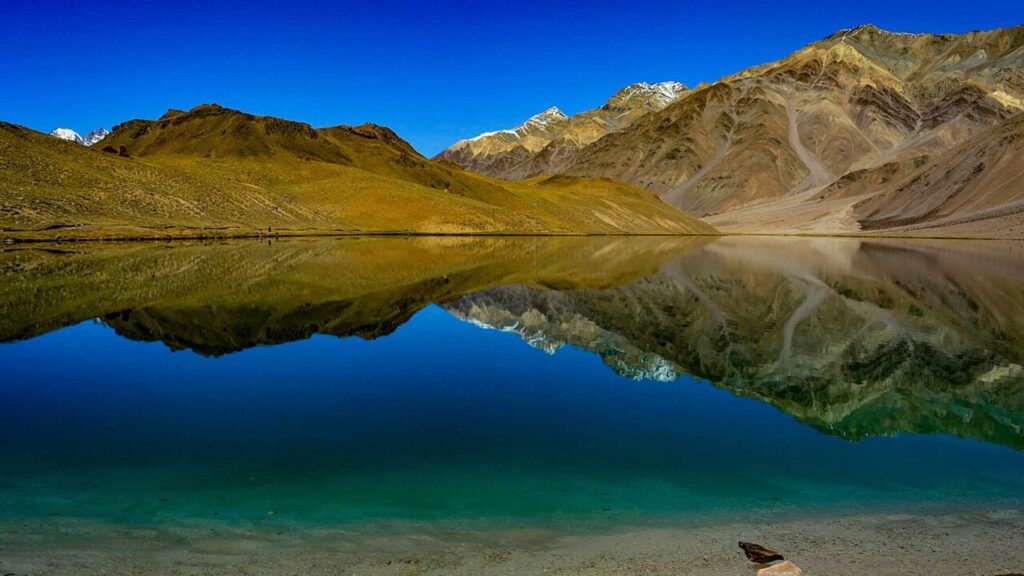
Let’s be straightforward with for “Is Chandrataal Open in March?” : No, Chandrataal is not open in March.
We know that’s not what you were hoping to read. You’ve probably been scrolling through travel reels, looking at those impossibly blue crescent-shaped lake photos, and thinking — can I pull this off in March before the summer crowds arrive?
The honest answer is no, and this article will explain exactly why. More importantly, it will tell you what you can do in Spiti in March, because that story is actually quite good once you stop chasing a lake that isn’t ready for you yet.
The Quick Answer
Chandrataal is not open in March. The lake sits at around 4,300 metres and can only be reached through the Kunzum Pass corridor — part of the Manali–Kaza highway — which remains closed every winter. The camps are seasonal and don’t operate this early either. Chandrataal typically becomes accessible from late May or June onwards, depending on that year’s snow clearance.
So Whats Actually Closed and Why?

Chandrataal Itself
The lake is buried under snow in March. There are no facilities, no camp staff, no tea stalls — nothing. The site is completely dormant. Even if you somehow got close to it on foot (which would be an extremely dangerous undertaking), there would be nothing to support your stay there.
This is not a case of “it depends on the year” or “check the weather forecast.” The closure is structural, not conditional.
Reaching Chandrataal from Kaza in March
Even if you are already in Kaza, you cannot drive to Chandrataal in March. The road from Kaza towards Batal — which is your jumping-off point for Chandrataal — runs through the Kunzum Pass area. Kunzum Pass typically sits closed well into spring. The road simply does not exist under several metres of snow.
So if someone tells you “just go from Kaza,” they haven’t been there in March.
Trekking In — Is That an Option?
Only if you are an experienced mountaineer with expedition-grade equipment, a guide, emergency communication, and a genuine understanding of avalanche terrain. We are not exaggerating. The approach in March involves high-altitude snow with real avalanche risk and zero rescue infrastructure nearby.
For a regular traveller, this is not a trek. It is a serious winter expedition. Please do not attempt it casually.
What About the Camps?
The tent camps around Chandrataal are seasonal commercial operations. They physically pack up after the season ends and are only set up again once the road opens and the site is safe — which is typically somewhere in June. There is no camp to book, no accommodation to find, and no workaround in March. The camps simply do not exist there during this period.
Want a March-safe Spiti plan that doesn’t gamble on closed routes? WhatsApp us your dates, pickup city, and group size and we’ll send you a realistic itinerary built around what’s actually open. Call or Whats app+91-7018537498
Why is the Route Blocked? The Real Explanation
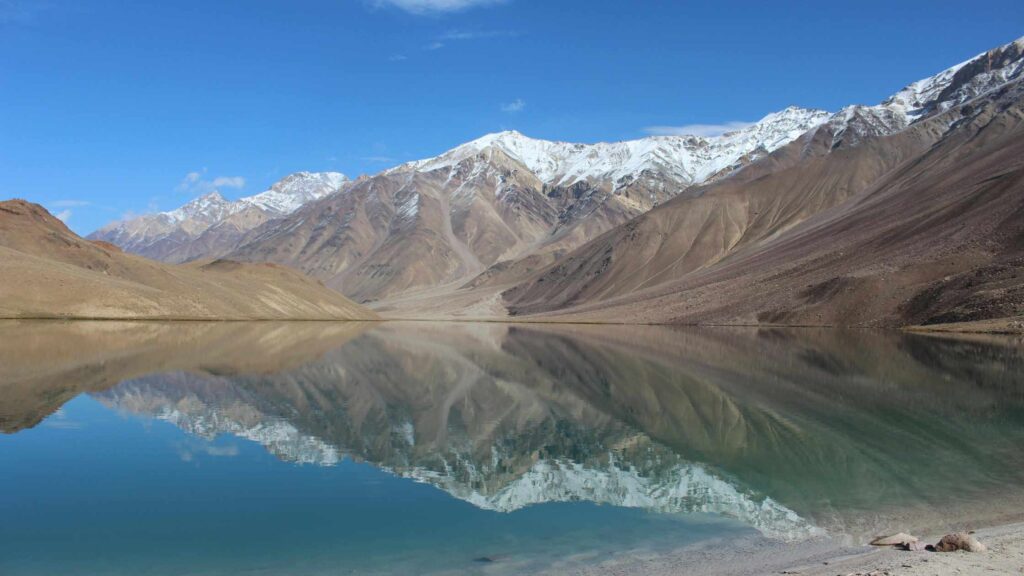
Here is the geography you need to understand.
To reach Chandrataal, you need to travel through the Manali–Kaza highway corridor. This road crosses Rohtang Pass on the Manali side and Kunzum Pass deeper into Spiti — Kunzum sitting at around 4,590 metres.
This entire highway shuts down every winter, usually from around November, and does not reopen until BRO (Border Roads Organisation) completes snow clearance from both ends.
March is typically when BRO is beginning to pre-position equipment and start preliminary clearance work. The road is nowhere near open. Snow depth at Kunzum in March can be measured in metres, not centimetres.
What this means practically: the Manali–Kaza corridor being closed in March is not a rumour or a general caution. It is a hard fact on the ground every year. And because Chandrataal sits on this corridor, its closure is a direct consequence.
The timeline for this corridor opening varies year to year based on snowfall patterns and BRO’s progress. You cannot rely on last year’s opening date. The best way to confirm is to call BRO Manali, check with HRTC Kaza, or speak to a local operator who has someone on the ground.
When Does Chandrataal Actually Open? / Chandrataal Opening Date
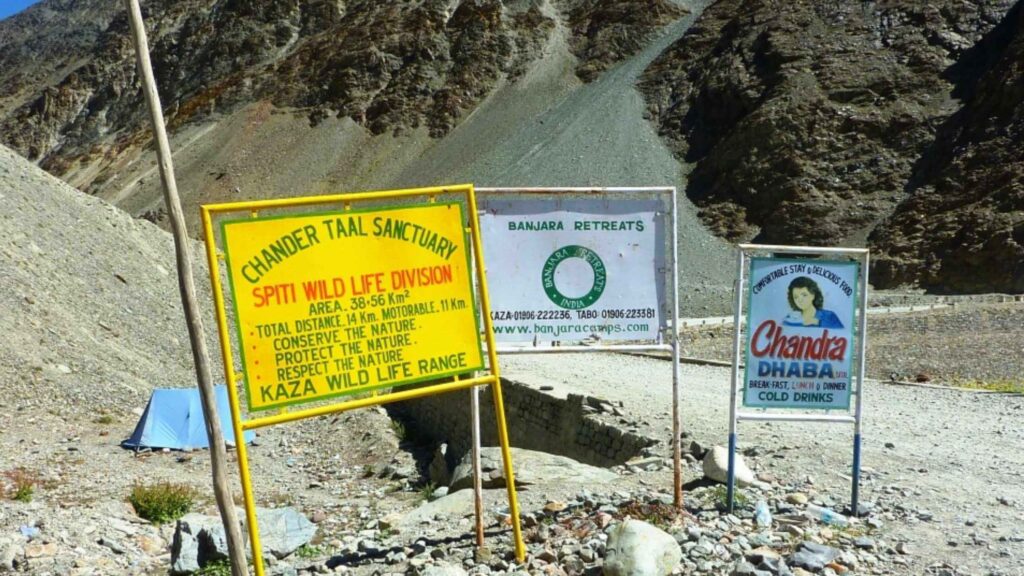
This is where we need to be careful not to overpromise.
Road access to the Chandrataal turnoff at Batal typically becomes possible somewhere in the late May to June window in most years. Some years with lower snowfall, it has happened in mid-May. Some years it pushes into June. You cannot bank on a specific date.
And road-open does not mean camp-open. Once the road clears, camp operators still need time to physically travel in, set up their tents, arrange supplies, hire staff, and get permissions sorted. Camp season at Chandrataal usually begins properly in June.
If the classic Chandrataal experience is what you are after — the crescent lake reflecting the sky, the overnight camp at altitude, the early morning walk to the viewpoint — then June, July, or early August is your window. Start planning now with our Chandratal Tour Packages. These months give you the most reliable conditions, the best light, and a properly operational camp setup.
September is quieter and beautiful in a different way, but early snow is possible by late September, so build flexibility in.
Can i Still Visit Spiti in March?
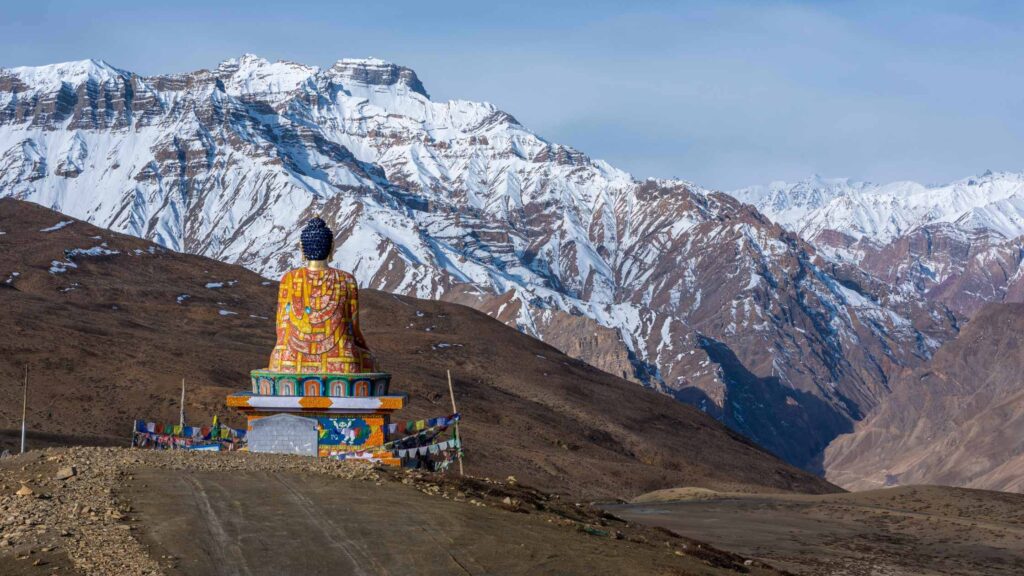
Yes. And this is where we want to change the conversation.
March Spiti is a genuinely good trip. It is just a different trip. Once you stop thinking about it as a “failed summer plan” and start thinking about it as its own thing entirely, March in Spiti becomes very appealing.
Here is the critical piece of route planning: you will enter Spiti via the Shimla side and return the same way. The route goes Shimla – Narkanda – Rampur – Reckong Peo – Nako – Tabo – Kaza. The Manali side is closed, so a full circuit is not possible. Do not book one-way flights assuming you can exit from Manali in March.
Within this Shimla-side plan, here is what March actually gives you.
Almost zero crowds. You will walk into Key Monastery and feel like you have the whole place to yourself. Tabo, which gets uncomfortably packed in peak summer, is quiet and deeply contemplative in March. The monks are present, the routines are unhurried, and the atmosphere is exactly what people imagine when they dream of a Himalayan monastery experience.
The landscape is extraordinary. Snow-covered villages against brown-and-red canyon walls. The Spiti river running low and glassy below frozen cliffs.
Langza and Komic sitting under a thick blanket of snow with the Himalayan skyline behind them. This is not the same Spiti as July — it is starker, quieter, more elemental.
What March is not: it is not a trip for lakes, meadows, or high-altitude road trips across open passes. It is a monasteries, snow landscapes, and cultural immersion trip. If you go in knowing that, you will not be disappointed.
What to do Instead of Chandrataal Lake in March?
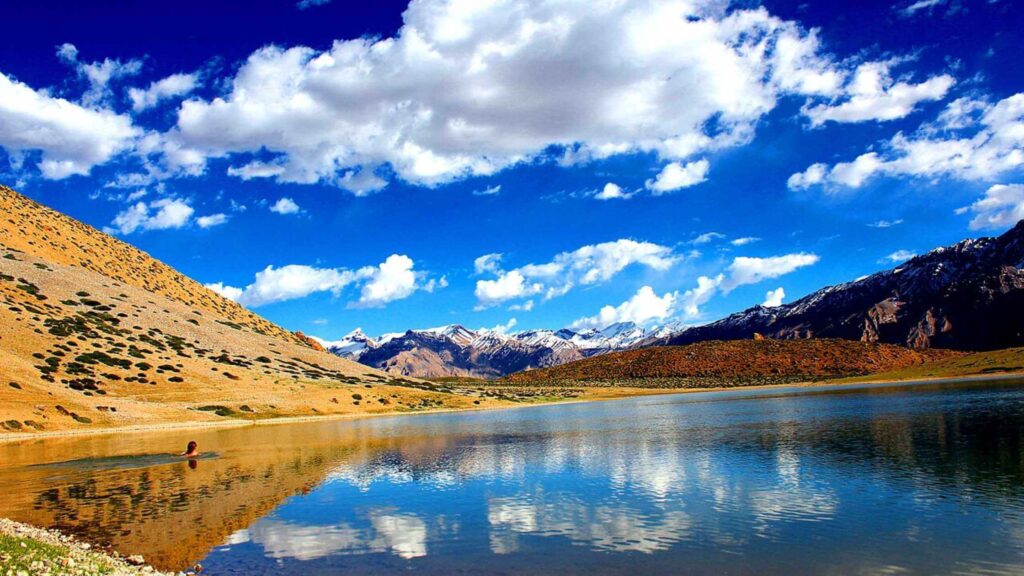
If You Want Something That Feels Like a Lake
Nako Lake is on the route as you come in from the Kinnaur side, sitting in a small village just before the landscape transitions into proper Spiti. In March it will likely be frozen or snow-covered, but it is accessible and the village around it is charming. Treat it as a stop on the way, not a destination in itself, and you will enjoy it for what it is.
Dhankar Lake, above Dhankar village, is a summer destination. The trail to it in March will typically be under snow. But Dhankar itself — the fort perched impossibly above the confluence of the Pin and Spiti rivers — is one of the most dramatic spots in the entire valley and is very much accessible. Go for Dhankar, not specifically for the lake.
If You Want the Signature Spiti Visuals
Key Monastery on its rocky crag above the Spiti river. The village of Kibber with snow on every rooftop. The fossils at Langza — you can sometimes find marine fossils right on the surface in the fields around the village, which is extraordinary given that this landscape was once a seabed. The drive through the Spiti river canyon between Sumdo and Tabo, where the scale of the gorge makes you feel very small.
These are not consolation prizes. These are the images that make Spiti what it is.
If You Are Specifically After Snow and Dramatic Roads
The canyon road between Reckong Peo and Tabo has few rivals in India for sheer drama. In March, with the river below and snow-dusted cliffs above, it is genuinely stunning.
The Chicham suspension bridge — reportedly one of the highest motorable suspension bridges in Asia — is accessible from Kaza and gives you vertigo-inducing views over a deep gorge in the snow.
These experiences require no open passes, no seasonal camps, and no waiting for BRO clearance. They are fully yours in March.
Your March Planning Checklist

Before You Book
Confirm your itinerary uses only the Shimla-side route in and out. Any itinerary that shows Manali as an entry or exit point in March is unreliable — do not book it.
Check the current road status for NH-5 and the Spiti road closer to your actual travel date. Conditions can shift in March due to fresh snowfall or landslides, and what is true in early March may be different by late March. Local operators and the HRTC office in Kaza are your best sources.
Build at least one buffer day at either end of your trip. A single road blockage can cascade through your whole plan in March if you have no room.
Book accommodation in advance. Fewer guesthouses and homestays operate in March across Spiti, especially in smaller villages. Do not assume you can find a room on arrival.
Pack properly for cold. March nights in Spiti — even in Kaza town — can drop well below zero Celsius. Higher villages are colder still. Thermal layers, a quality sleeping bag, and windproof outer layers are not optional.
Carry supplies from Shimla or Reckong Peo. Kaza has basic provisions but is not stocked for everything in off-season. Medicine, specific snacks, toiletries, and camera gear should come with you.
If Your Heart Is Still Set on Chandrataal
Shift the trip to June or July. We mean this kindly, not dismissively. Chandrataal in June — when the snow is melting into the lake, the sky is high and clear, and the camp is properly set up — is one of the most beautiful overnight experiences in the Indian Himalaya. It is worth planning an entirely new trip around.
If your March dates are fixed and cannot move, do the Shimla-side Spiti trip with full commitment and a clear head. It is a very different experience, and a very good one. Then put Chandrataal on the list for next season.
FAQs About Chandrataal and March Spiti
No. Chandrataal is not accessible for regular travel in March. The road leading to it runs through the winter-closed Manali–Kaza corridor and Kunzum Pass area, which remains shut until typically late May or June. The campsite is not operational either. There is no practical way for a regular traveller to visit Chandrataal in March.
No, Kunzum Pass is typically closed in March. It sits at around 4,590 metres and receives heavy snow through winter. BRO begins clearance operations in spring, but the pass usually does not open for civilian traffic until late May at the earliest, and often not until June. The date shifts each year depending on snowfall. Contact BRO Manali or a local Spiti operator for current status closer to your travel date.
No. The full circuit — entering from Shimla and exiting via Manali, or vice versa — requires both sides of the highway to be open. The Manali–Kaza road is closed in March. You can only do a Shimla-in, Shimla-out trip this time of year. Plan your flights and ground transport accordingly.
No. The camps are seasonal. They are physically set up from around June each year and taken down at the end of season. In March, there is no accommodation of any kind at or near Chandrataal.
Reframe the trip around what March does well: Key Monastery, Tabo, Dhankar fort, the Spiti river canyon drive, and the snow-covered villages of Langza, Komic, and Kibber. These are all accessible on the Shimla-side March itinerary and represent some of the most rewarding experiences Spiti offers in any season.
The most reliable sources are BRO offices in Manali or Kaza, the HRTC bus depot in Kaza, and established local tour operators with someone currently on the ground in Spiti. Do not rely solely on travel forums or social media posts — they are often outdated. Call closer to your travel date rather than weeks in advance, as conditions change rapidly.
Yes, for the right traveller. March offers almost no crowds, dramatic snow landscapes, accessible monasteries, and a raw quiet atmosphere that peak season simply cannot replicate. It requires cold-weather preparation, flexible scheduling, and realistic expectations about access. For those who embrace what March actually offers, it is one of the most memorable ways to experience Spiti.
Enter and exit via Shimla. The standard routing is Shimla – Narkanda – Rampur – Reckong Peo – Nako – Tabo – Kaza. Some travellers add a night in Sangla or Chitkul in the Baspa Valley as a detour on the way in, which is a worthwhile addition. Do not plan any Manali entry or exit in March.
Nights can drop to around minus 10 to minus 15 degrees Celsius or colder in higher villages. Daytime in the lower valley on a clear day can feel relatively mild — around 5 to 10 degrees Celsius — but do not let sunny afternoons fool you. Pack serious cold-weather gear regardless. A sudden snowfall can change conditions quickly.
In exceptional low-snowfall years, road access to the Chandrataal area has reportedly opened as early as mid-to-late May. But this is not something you can plan around. If you want to target early season, treat June as your base expectation and any earlier opening as a welcome surprise. Building a trip around “maybe mid-May” is a gamble with poor odds.
Yes, on the Shimla route. A capable 4WD or SUV is strongly recommended. The road through the gorge sections and near Nako can be affected by fresh snow or ice. Confirm road conditions from someone who has driven the route recently before you depart, and carry traction aids if you are driving yourself.
Indian nationals do not need a permit for the standard Spiti circuit. Foreign nationals should check current ILP (Inner Line Permit) requirements, as some border-adjacent areas have restrictions. Your tour operator can advise and arrange this. Carry a valid photo ID regardless.
Final Verdict
If Chandrataal is your specific goal, March is simply the wrong month. The route is closed, the camps don’t exist, and there is no workaround for a regular traveller. Move your dates to June or July and the experience will be everything you imagined.
If Spiti Valley itself is your goal — the silence, the monasteries, the snow-covered high-altitude world — then March can absolutely deliver that. Go in via Shimla, stay flexible, pack for real cold, and commit to what March actually offers rather than chasing what it cannot.
And whatever you do, do not book a Manali exit in March. That road is not there.
Want a March-safe Spiti plan that doesn’t gamble on closed routes? WhatsApp us your dates, pickup city, and group size — we’ll put together a realistic itinerary based on what’s actually open, where you can actually stay, and what will genuinely make your March trip memorable. No false promises about Chandrataal.