
Every year around February, our inbox starts filling up with the same kind of message. A woman, somewhere in Bangalore or Delhi or Mumbai, has been dreaming about Spiti for months. She has watched the reels, read the blogs, maybe even bought riding gear already. But there is one question she keeps circling back to before booking anything.
Is Spiti Bike Trip Safe for Women Travellers?
This guide is the honest answer we wish someone had given us years ago when we first started running trips to this valley. No sugar-coating, no scare tactics. Just what we have learned from running countless rides through Spiti and watching hundreds of women complete this journey, many of them solo, many of them on their first big ride.
Quick Answer
Yes, a Spiti bike trip is generally safe for women travellers, including solo riders. The valley has remarkably low crime rates, genuinely warm locals, and a culture of helping travellers in trouble.
But here is the honest part. Safety in Spiti has very little to do with people and almost everything to do with terrain, weather, altitude, and your own preparation. The real risks are not strangers on the road. They are landslides, sudden snowfall, oxygen levels at 14,000 feet, water crossings that swell by afternoon, and stretches where your phone shows no signal for hours.
Treat those four things with respect, and Spiti becomes one of the most rewarding rides of your life. Ignore them, and even the most experienced rider can get into trouble. That is the whole picture in two paragraphs.
Why Spiti Feels Safe but Still Demands Respect
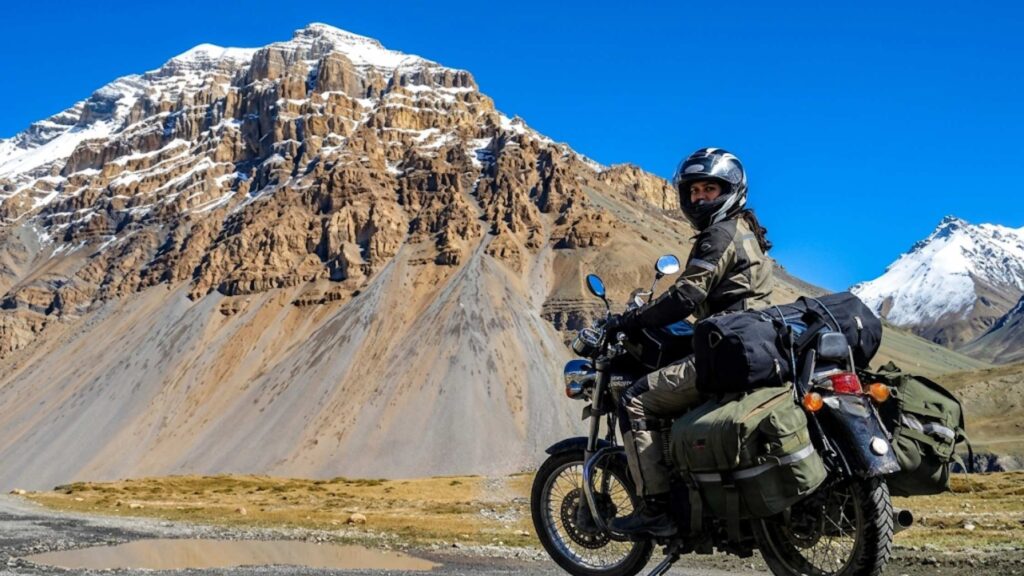
In our experience running trips here for years, Spiti has a particular quality that surprises most first-time visitors. The villages feel almost like one extended family. Lock-your-door paranoia just does not exist the way it does in bigger tourist towns. We have seen women travellers leave bags at homestays, walk alone through monastery courtyards in the evening, ask strangers for directions, and consistently come back saying the same thing. People here are kind in a way that feels old-fashioned.
Crime against tourists is extremely rare. The Buddhist cultural influence, the small population, and the sheer remoteness all contribute to this. Most villages have under 200 people. Everyone knows everyone. A stranger causing trouble would have nowhere to disappear to.
That said, feeling safe socially is not the same as being safe overall.
The same remoteness that keeps Spiti peaceful also means a hospital might be six hours away. A breakdown on the Kaza-Losar stretch could leave you waiting two hours for the next vehicle. A landslide can close a road for an entire day. The valley demands respect not because of who lives there, but because of where it is and what nature does to it.
This balance is important to understand before you go. Friendly does not mean forgiving.
Is a Solo Spiti Bike Trip Safe for Women?
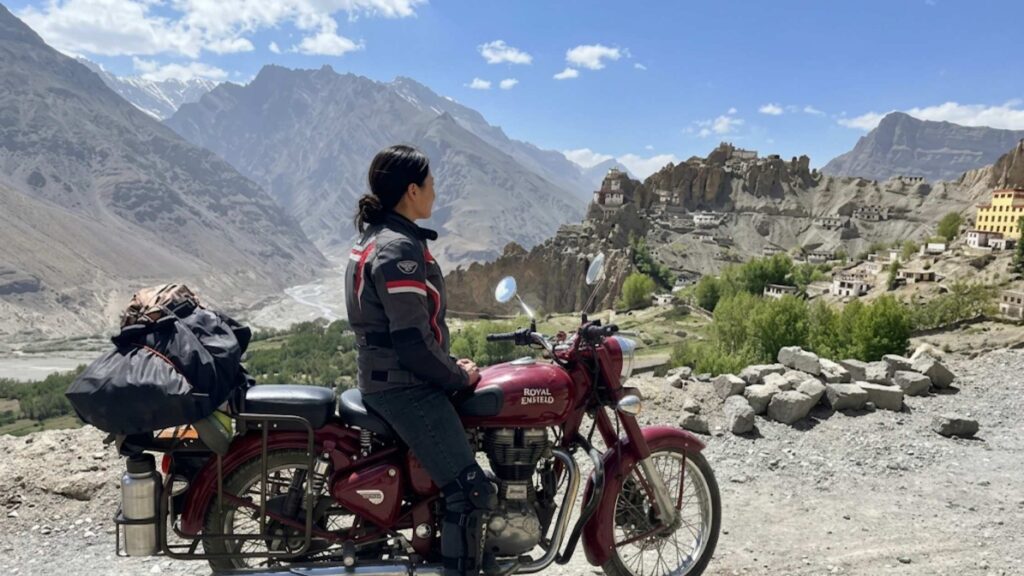
Short answer: yes, if you are prepared. Long answer: it depends on what kind of rider you are and what kind of decisions you make on the road.
Our team has seen solo female riders complete Spiti beautifully, and we have also seen experienced male riders cut their trips short because they underestimated the route. Gender is genuinely not the deciding factor here. Riding skill, mountain experience, and judgment matter far more.
The myths first. The idea that women face harassment risks on Spiti routes the way they might in some plains regions is largely unfounded based on what we have seen and heard from hundreds of solo women riders. Locals do not stare aggressively, dhabas are family-run and welcoming, and women travelling alone are usually treated with extra warmth, not extra attention.
The real concerns are practical.
If your bike develops a problem between Nako and Tabo at 4 PM, you might be alone for a while. If altitude hits you suddenly at Kunzum Pass, there is no medical facility within an hour’s reach. If a water crossing near Chicham looks deeper than yesterday, there may be no other rider for kilometres to consult.
This is why solo Spiti is not a beginner trip. It is a trip for someone who has done at least a few mountain rides, who can fix basic things on their bike, who reads weather and water flow with some confidence, and who is comfortable making conservative decisions when alone.
If that sounds like you, Spiti will probably be the best ride of your life. If it does not, going with a group your first time is not a compromise. It is just smart.
What Are the Real Risks Women Riders Should Know?
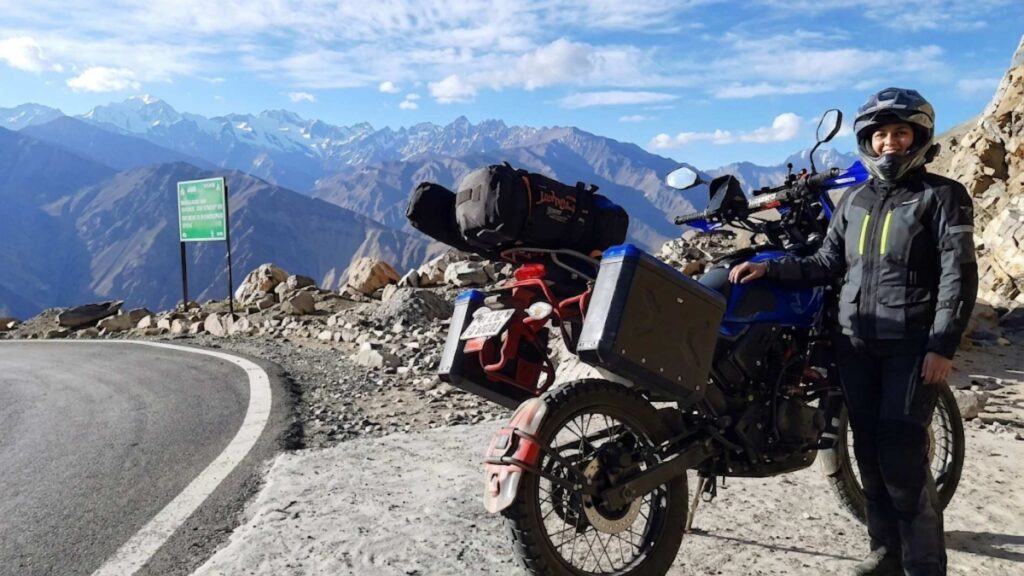
Let us be specific about the risks, because vague warnings help nobody.
Road conditions
Road conditions are the biggest one. The Spiti circuit includes everything from smooth tarmac near Reckong Peo to broken gravel near Gramphu, river crossings that change depth through the day, and stretches where loose stones can throw a bike off line in seconds. The road past Malling Nallah and the Gramphu-Batal stretch are particularly tricky and have caught out plenty of confident riders. Landslides are seasonal and unpredictable, especially during and after monsoon.
Weather
Weather flips fast in Spiti. We have seen clear skies at 11 AM turn into heavy snow by 3 PM at Kunzum, even in September. Rain in the lower valley can mean ice on the higher passes. Always check forecasts, but never trust them completely. Mountain weather has its own rules.
Altitude sickness
Altitude sickness is the silent risk that catches most people off guard. You can be a fit, healthy 25-year-old and still get hit hard at 14,000 feet. Symptoms can range from headaches and nausea to something genuinely dangerous if ignored. We have seen riders push through warning signs because they did not want to ruin their schedule, and that is exactly when things go wrong.
Network
Network and isolation form the fourth risk. Most stretches have no signal. BSNL works in some villages, Jio and Airtel almost nowhere reliably. If something happens between two villages, you are dependent on the next passing vehicle.
None of these are reasons not to go. They are just reasons to plan properly.
How to Prepare for a Safe Spiti Bike Trip as a Woman
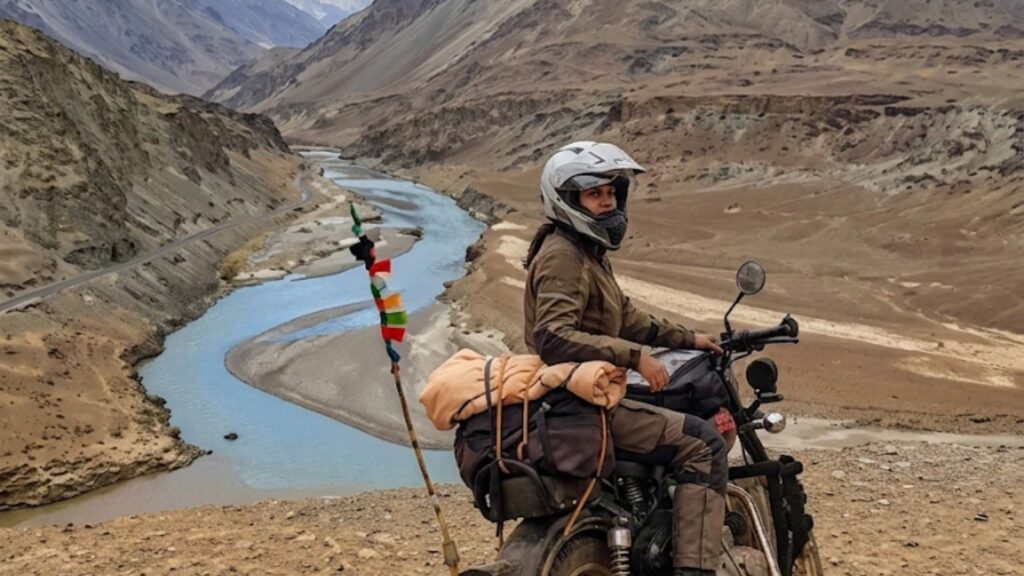
Preparation is the single biggest factor that decides whether your trip goes smoothly. Not gender, not bike, not route. Preparation.
Start with fitness. Spiti days are long. Eight to ten hours on a bike at altitude is genuinely exhausting in ways that low-altitude rides are not. A few weeks of basic cardio, even just walking 5 km daily for a month, makes a real difference. Your body handles oxygen scarcity much better when your baseline fitness is up.
Riding confidence matters more than riding speed. You should be comfortable handling a loaded bike on gravel, doing slow-speed control on rocky paths, and crossing water without panicking. If you have never done these, do a smaller mountain trip first. Sangla, Chopta, or even a long Manali-Leh weekend will teach you a lot.
Route planning with realistic buffers is crucial. Do not try to do Shimla to Kaza in two days. Add a buffer day somewhere. Mountains delay you in ways plains never do.
Acclimatization is non-negotiable. Two nights at moderate altitude before going above 12,000 feet is the standard rule for a reason.
For gear, focus on layers, waterproofs, good gloves, riding boots that can handle water, and a basic toolkit. Carry a power bank, a physical map, and a small first-aid kit. Carry more water than you think you need.
If planning all this feels overwhelming, browsing through structured options can help. Our Spiti Valley bike tour packages handle the route planning, acclimatization schedule, and backup vehicle support so you can focus just on the riding.
Best Routes for Safer Riding Experience
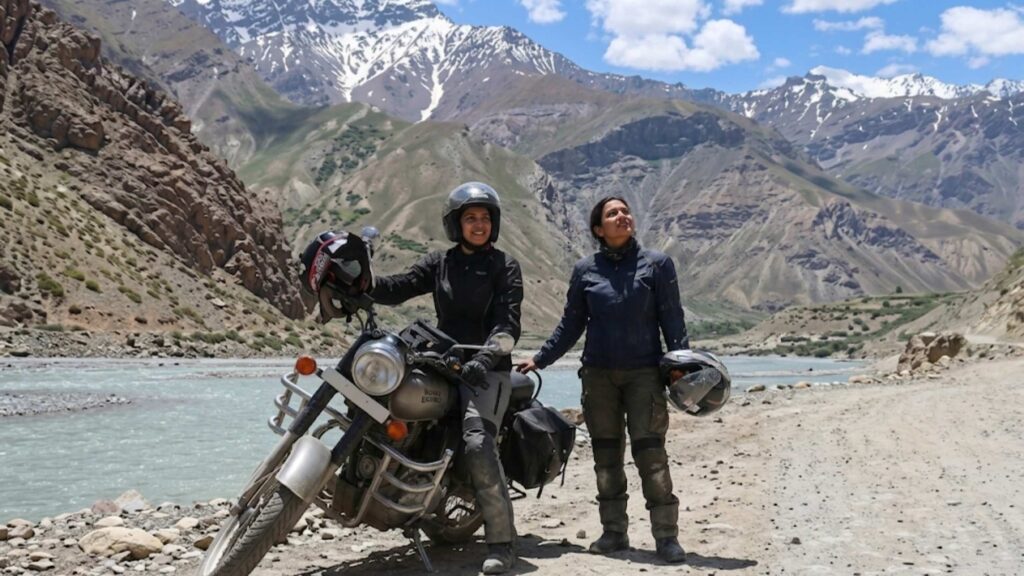
There are two main ways to enter Spiti, and from a safety perspective, they are not equal.
The Shimla route goes Shimla, Narkanda, Sarahan, Sangla, Chitkul, Reckong Peo, Nako, Tabo, Kaza. It is longer but the altitude gains gradually. You sleep at progressively higher villages, giving your body time to adjust. Road conditions along this route are mostly tarmac with some broken patches, and the river-side sections require attention but are manageable.
The Manali route goes Manali, Rohtang, Gramphu, Batal, Kunzum Pass, Losar, Kaza. Shorter, more dramatic, and significantly more challenging. You go from 6,000 feet at Manali to over 15,000 feet at Kunzum within a single day. The Gramphu-Batal stretch is one of the worst-maintained roads in the region, with water crossings, loose stones, and limited services.
For first-timers, especially women riding solo or with limited mountain experience, the Shimla-in, Manali-out approach is the most sensible. You enter gradually, acclimatize properly, and exit through the dramatic route after your body has adjusted. Doing it the other way around is the most common reason people get altitude sickness on day two and have to abort.
Accommodation Safety in Spiti
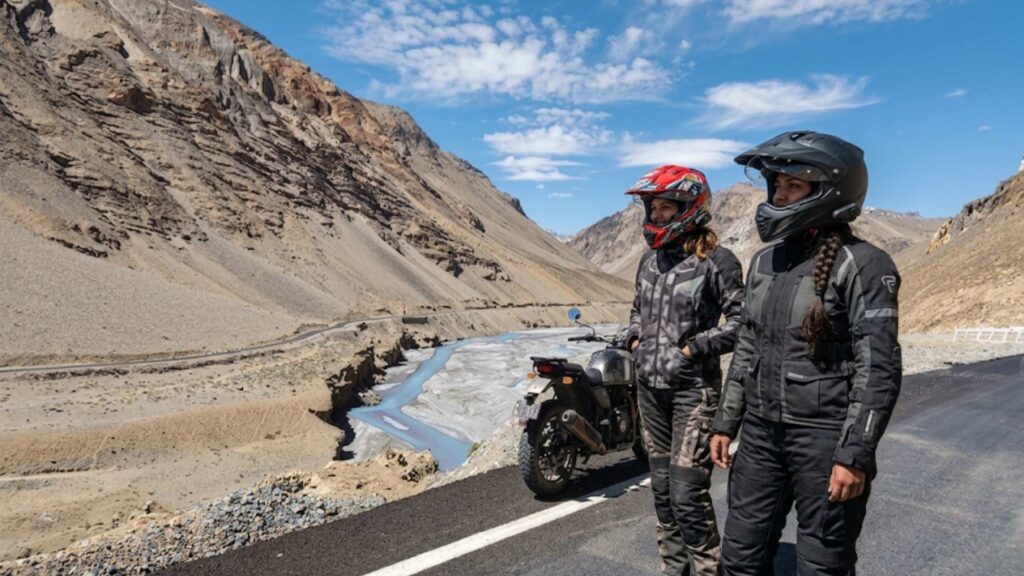
Homestays are the soul of travelling in Spiti, and they are also generally very safe.
Most homestays in Kaza, Tabo, Kibber, Komic, Langza, and Mudh are family-run setups where you eat with the family, share their kitchen sometimes, and sleep in clean basic rooms. Doors lock, but honestly, you rarely feel like you need to lock anything. We have had women travellers tell us they felt safer in a Spiti homestay than in their own apartment building back home.
A few practical suggestions. Choose homestays with some online presence or word-of-mouth recommendations rather than walking in completely blind. Try to arrive before dark, especially in remote villages, because finding accommodation at night with no network is genuinely stressful. If you are riding solo, mention to your homestay host where you are going next and roughly when. They will often check in or pass on the message if needed.
Carry cash. Most homestays do not accept cards or UPI reliably, especially beyond Kaza.
Guesthouses in Kaza, Reckong Peo, and Kalpa are slightly more hotel-style and also work well. They are useful when you want a hot shower and Wi-Fi for a night before heading deeper.
Network, Connectivity and Emergency Readiness
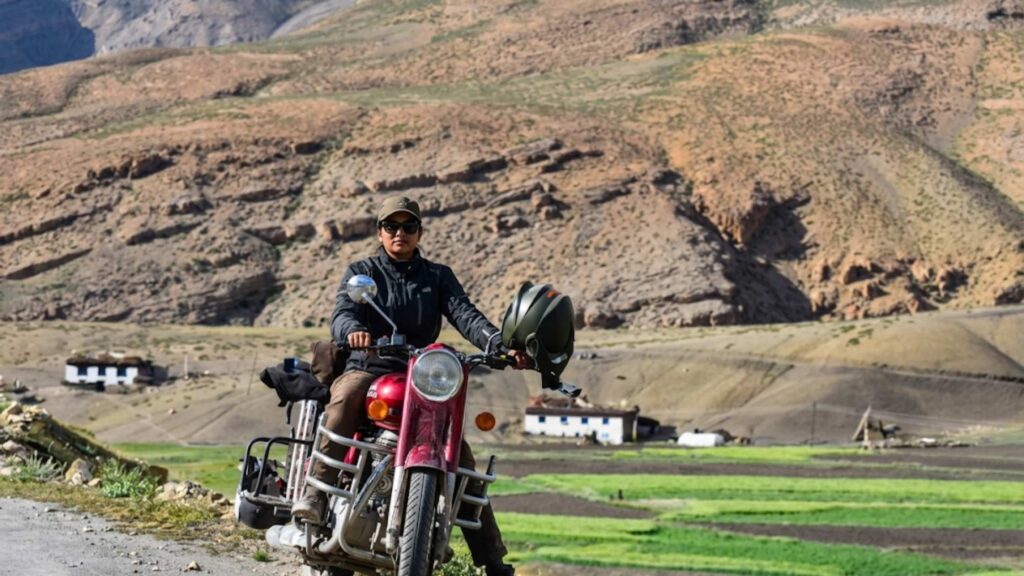
This is where Spiti differs most from regular travel. You will be offline a lot. Plan for it.
BSNL postpaid is the most reliable network in Spiti, with patchy coverage in Kaza, Tabo, Nako, and a few villages. Jio works in pockets near Kaza. Airtel is spotty. If you are coming from outside Himachal, getting a BSNL SIM in advance is genuinely useful. If not, plan to be unreachable for stretches.
Before leaving network coverage, share your itinerary with someone back home. Tell them which village you should be at by which evening, and agree on a check-in pattern. If you miss a check-in by 24 hours, they should know who to contact.
Download offline maps of the entire region on Google Maps and Maps.me. Cell signal is unpredictable, but GPS works almost everywhere. A physical map as backup is worth carrying.
Save these numbers offline: your homestay contacts, your trip operator if applicable, the nearest police station numbers in Kaza and Reckong Peo, and emergency services. 108 is the medical emergency number in Himachal but reaching them requires signal.
Carry a power bank with at least 20,000 mAh capacity. Charging is not always reliable in remote homestays, and your phone is your map, camera, and emergency tool all at once.
Health and Altitude Safety for Women Travellers
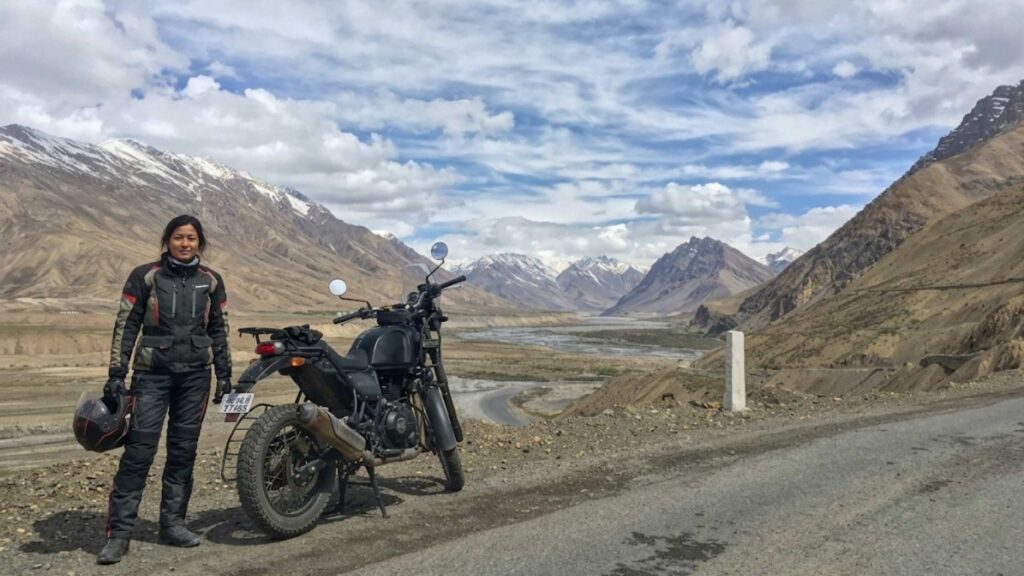
Altitude is the single thing that most underestimate, and women are no more or less vulnerable to it than men. AMS (Acute Mountain Sickness) does not care about gender, fitness, or age. Some people get hit, some do not, and the only reliable way to manage it is through how you travel.
The basics. Ascend gradually. Sleep no more than 500-700 meters higher than the previous night once above 8,000 feet. Hydrate aggressively, three to four liters of water daily, and your urine should be clear. Avoid alcohol for the first three or four days. Eat carb-heavy meals because your body uses more energy at altitude.
Watch for symptoms. Persistent headache, nausea, dizziness, loss of appetite, trouble sleeping. Mild symptoms are common and usually pass. But if symptoms get worse instead of better, descend immediately. Do not push through. People have died from ignoring AMS.
Some doctors prescribe Diamox as a preventive medication. Talk to your doctor before the trip about whether it is right for you. Do not self-prescribe.
For women specifically, one practical note. Periods can behave unpredictably at altitude. Some women find theirs come early, heavier, or skip entirely. Carry more supplies than you think you need, and know that this is normal and not a sign of anything wrong.
We have written a detailed breakdown on how to avoid altitude sickness in Spiti which covers the preparation, the day-by-day acclimatization schedule, and what to do if symptoms hit. Worth a read before you ride.
Local Culture and How to Travel Respectfully
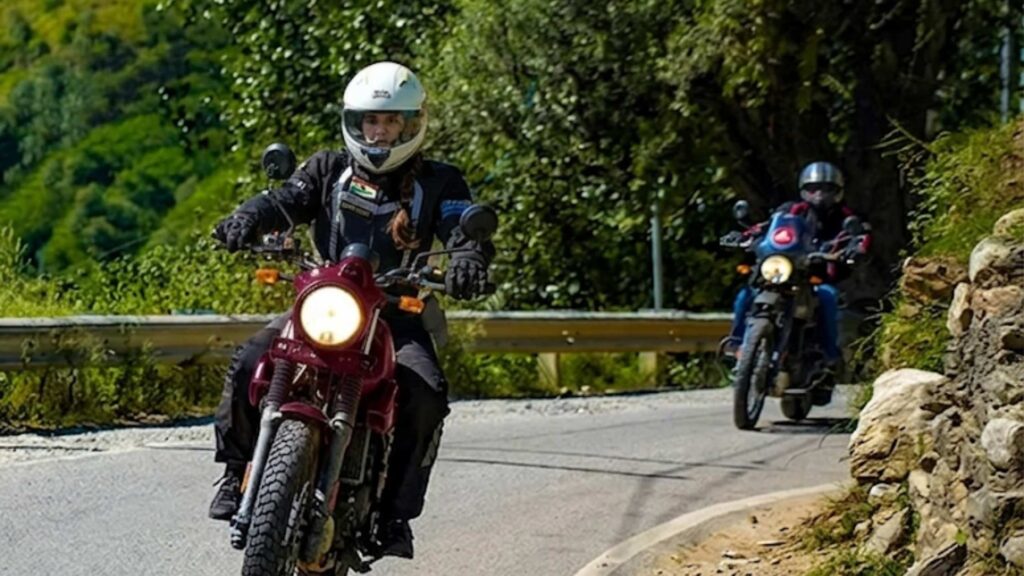
Spiti is culturally Buddhist and quite traditional. Villages are conservative, monasteries are active places of worship, and the pace of life is slower than what most travellers are used to.
Dressing modestly is not a rule but it is appreciated. Loose, comfortable, layered clothing works well practically and culturally. Inside monasteries, cover your shoulders and knees, remove your shoes where indicated, and walk clockwise around stupas and prayer wheels. Ask before photographing monks, locals, or inside religious spaces. Most people will say yes warmly, but the asking matters.
Avoid loud music in villages. Avoid drinking publicly. Greet elders with a small nod. These small things make a real difference in how welcomed you feel and how welcoming locals will be.
This is not about restricting yourself. It is just about traveling well. We have seen women travelers form genuine friendships with homestay families across multiple visits because they showed basic respect for local rhythms. That kind of connection is hard to find anywhere else.
Practical Safety Tips from Our Experience
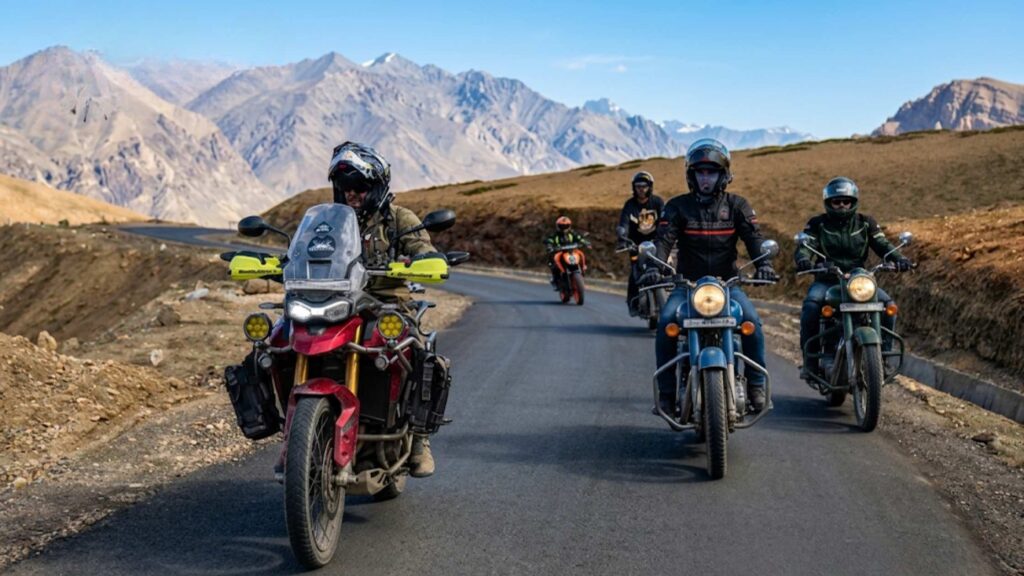
This is the section we wish more guides had when we started.
Start early, end early. Be on the road by 7 AM and off the road by 4 PM. Mountain weather worsens through the day, water crossings get deeper as snow melts in the afternoon sun, and visibility drops faster than you expect. Riding into dusk in Spiti is the single most common cause of accidents we have seen.
Never ride at night. This is non-negotiable. No streetlights, animals on roads, sudden weather, fatigue, and zero help if anything goes wrong. If you are running late, stop at the nearest village and ask for a place to stay. You will never be turned away.
Fuel up at every opportunity. The petrol pump in Kaza is the only reliable one for a wide stretch. The next ones are far. Carry a 5-liter spare can. Top up your tank even when you have half left, because there is no such thing as too much fuel in Spiti.
Trust your instincts. If a road looks bad, wait and watch a vehicle cross before you do. If a water crossing looks deeper than yesterday, walk it before riding. If altitude is hitting you, stop. If a stranger gives you a weird vibe (rare, but possible), trust that feeling. The mountains reward caution.
Travel light but smart. A loaded bike handles differently. Pack only what you need, but include the essentials. Spare tubes, basic tools, a tow rope, electrical tape, and a small medical kit have saved more trips than we can count.
Talk to other riders. Information about road conditions ahead is gold. Riders coming from where you are going will tell you what to expect. We have learned more about real-time conditions from dhaba conversations at Tabo than from any forecast website.
Is It Better to Go Solo or With a Group?
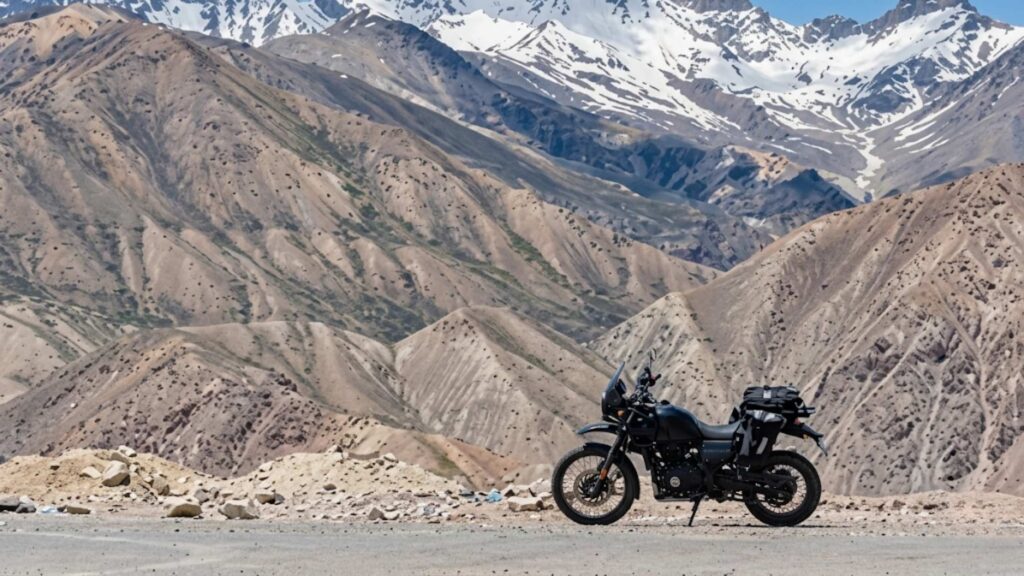
Honest answer: it depends entirely on you.
Solo riding gives you complete freedom. You stop where you want, ride at your pace, change plans on a whim, and have the kind of introspective experience that group travel cannot match. For experienced riders who have done mountain trips before, it can be transformative.
But solo Spiti is harder. You make every decision alone. You handle every breakdown alone. If altitude hits you in a remote village, you are alone with it. The freedom is real, but so is the responsibility.
Group tours trade some freedom for substantial safety margins. You get a backup vehicle, a guide who knows the routes, mechanical support, planned acclimatization stops, and other riders to share the experience with. For first-timers, beginners, or anyone who just wants to enjoy the ride without managing logistics, this is genuinely the better option.
There is also a middle path. Riding with friends in a small self-organized group of two to four. You get most of the freedom of solo riding with most of the safety of a group. This works really well if at least one person in the group has done Spiti before.
If you are still unsure which option suits you, browsing through the spitivalleypackages.com and seeing the kind of trips we run might help you decide. The structure of a guided trip is sometimes the bridge that gets people to attempt something they would otherwise postpone for years.
When Is the Safest Time for a Spiti Bike Trip?
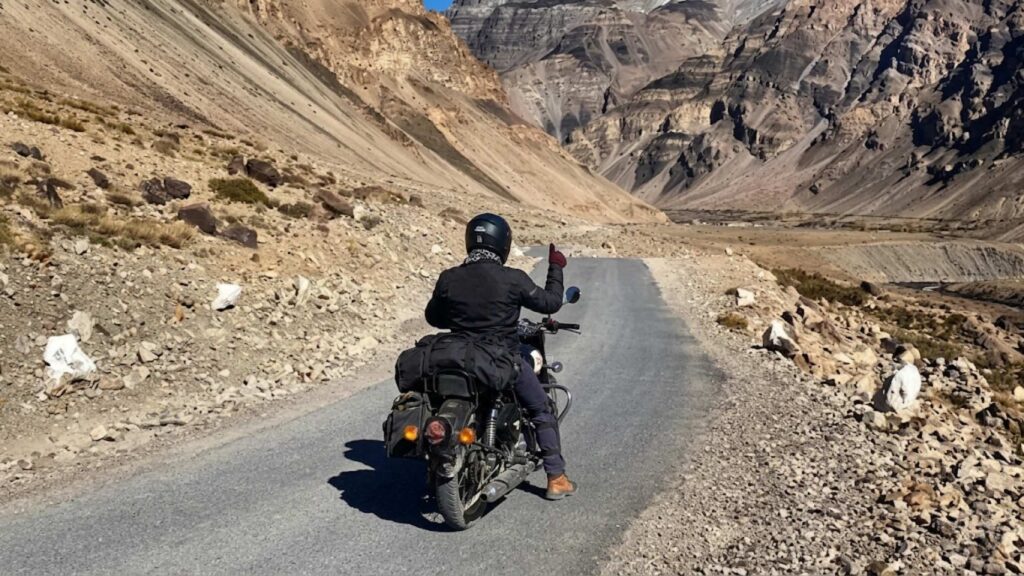
Practical breakdown of the seasons.
Mid-May to mid-June
Mid-May to mid-June is when the Manali side opens up. Roads are freshly cleared of winter snow, weather is stable, days are long, and crowds are still light. This is one of the safer windows. Early May can still have snow blocking Kunzum Pass, so check before planning.
Mid-June to early July
Mid-June to early July is generally good but watch for early monsoon spillover from the Shimla side. The Spiti valley itself is rain-shadow and stays mostly dry, but the approach roads from Shimla can have landslides.
July to mid-September
July to mid-September is monsoon season for the lower approach. Spiti remains relatively dry, but the routes in and out can get blocked. Landslide risk is real. We do run trips in this window with extra buffer days, but it is not the season for a tight schedule.
Late September to mid-October
Late September to mid-October is genuinely beautiful. Skies are clear, valleys turn gold, and crowds thin out. This is one of our favorite windows. Cold mornings, but stable.
Late October to April
Late October to April is winter. Most homestays close, Kunzum Pass shuts, and only the Shimla route stays open intermittently to Kaza. Winter Spiti is for very experienced riders only, and most operators do not run bike trips in this window.
For a first Spiti bike trip, mid-June to mid-September with proper buffer days, or late September to early October, is what we usually recommend.
Final Verdict: Should Women Do a Spiti Bike Trip?
Yes. With both eyes open.
Spiti is not unsafe for women. In many ways, it is safer than a lot of mainstream tourist destinations. The risks here are about terrain, weather, and altitude, and those risks affect every rider equally regardless of gender.
What makes the difference is preparation, judgment, and respect for the conditions. A well-prepared woman rider has a better, safer trip than an unprepared man. We have seen it consistently.
If you have been hesitating because of vague safety worries, hopefully this guide has given you something concrete to work with. If you are still nervous, that is also fine. Going with a group your first time, or even joining a women-only batch, can be the bridge between dreaming about Spiti and actually doing it.
The valley is patient. It will be there when you are ready. But do not let the readiness take ten years. Most regrets we hear are not about going. They are about not going.
Ready to Plan Your Trip?
If you want to talk through your route, share your itinerary for a sanity check, or just ask the questions you are too embarrassed to ask publicly, we are here for that.
>>Send us a WhatsApp message about planning a safe Spiti bike trip
we will respond honestly, even if you end up planning solo and not booking with us. We just like helping people get to Spiti the right way.
No pressure, no pushy sales. Just a conversation.
FAQ
Is Spiti safe for solo female travellers?
Yes, Spiti is generally safe for solo female travellers. Local crime is rare, locals are welcoming, and women solo riders consistently report feeling respected. The real challenges are environmental, like altitude, weather, and remoteness, rather than social. Solo travel here is best for those with prior mountain riding experience.
Can a beginner woman rider do Spiti bike trip?
A complete beginner with no mountain riding experience is better off doing a smaller trip first, like Sangla or Manali-Leh weekend, before attempting Spiti solo. However, a beginner can absolutely do Spiti as part of a guided group tour where backup vehicles and experienced leads handle the technical bits. The riding itself is not extreme, but the conditions demand awareness.
Which route is safer for women in Spiti?
The Shimla route (via Sarahan, Sangla, Reckong Peo, Nako) is generally safer for first-time riders because it offers gradual altitude gain and better road conditions. The Manali route (via Rohtang, Gramphu, Kunzum) is more dramatic but has rougher roads and steeper altitude gains. Many riders prefer entering through Shimla and exiting through Manali for the best balance of safety and experience.
Is network available in Spiti Valley?
Network coverage in Spiti is limited and unreliable. BSNL postpaid works best, with patchy coverage in Kaza, Tabo, and Nako. Jio works in pockets, Airtel is mostly absent. Plan to be offline for several stretches, download offline maps, share your itinerary with someone back home, and carry a power bank for emergencies.
What are the biggest risks in Spiti bike trip?
The biggest risks are altitude sickness, unpredictable weather including sudden snow on high passes, road conditions including landslides and water crossings, and remoteness with limited medical facilities. Crime against tourists is genuinely rare. Most accidents and emergencies we have seen are weather, terrain, or altitude-related rather than social.
Do women need special permits for Spiti?
No, women do not need any special permits for Spiti. The valley is open to all Indian tourists without special permits for most of the standard route. Foreign nationals need an Inner Line Permit to cross between Kinnaur and Spiti through the Sumdo checkpost.
Is it better to go with a group tour?
For first-time visitors to Spiti, especially those with limited mountain riding experience, a group tour is genuinely the safer and more enjoyable option. You get backup vehicles, planned acclimatization, mechanical support, and shared experience. Solo or self-organized group rides are great for experienced riders who have done mountain trips before and want more flexibility.
What is the safest time to visit Spiti?
The safest windows for a Spiti bike trip are mid-May to mid-June and late September to early October. Mid-June to early September works too but watch for monsoon-related landslides on approach roads. Avoid winter (late October to April) unless you are highly experienced, as most homestays close and high passes shut down with snow.
Is Spiti Bike Trip Safe for Women Travellers with limited network connectivity?
Limited network is a challenge in Spiti. While it is generally safe, women travellers should download offline maps, inform someone about their itinerary, and be prepared for long no-signal stretches.
Also read: Kunzum Pass in June 2026: Road Status, Weather, Route Tips, and Whether It’s Worth It