
If you’re checking the road before booking your Spiti trip, you’re already doing the right thing. Most travellers ask us whether the Shimla side is “the safe one,” and honestly, it usually is the more sensible way into Spiti because the climb is gradual and the route stays open through most of the year. But “more reliable” is not the same as “always clear.” The Kinnaur stretch of this road has its own moods, and a single landslide or a fresh snow spell can change your whole plan overnight.
So before you lock dates, let’s walk through what the Shimla to Kaza road actually does in 2026, section by section, the way our local team would explain it to you over a cup of chai.
Quick Answer
The shimla to kaza road status depends mainly on the condition of the Kinnaur road, the landslide-prone stretches, weather, snow or black ice in the higher sections near Nako, and what the local administration is allowing on any given day. This is the route that stays usable for most of the year, which is why it becomes the main way into Spiti when the Manali side via Kunzum Pass is closed or just opening.
That said, the exact 2026 status changes constantly and must be checked close to your travel date. Do not rely only on old blogs, Google Maps, or random social media posts, because mountain roads here don’t behave the way a flat highway does.
If the Kinnaur route has landslides, fresh blockages, snow, or local restrictions, the smart move is to delay travel or adjust the plan rather than push through. We’ve seen travellers make this mistake of trusting a six-month-old article and getting stuck at a repair zone for hours.
Latest Shimla To Kaza Road Status 2026
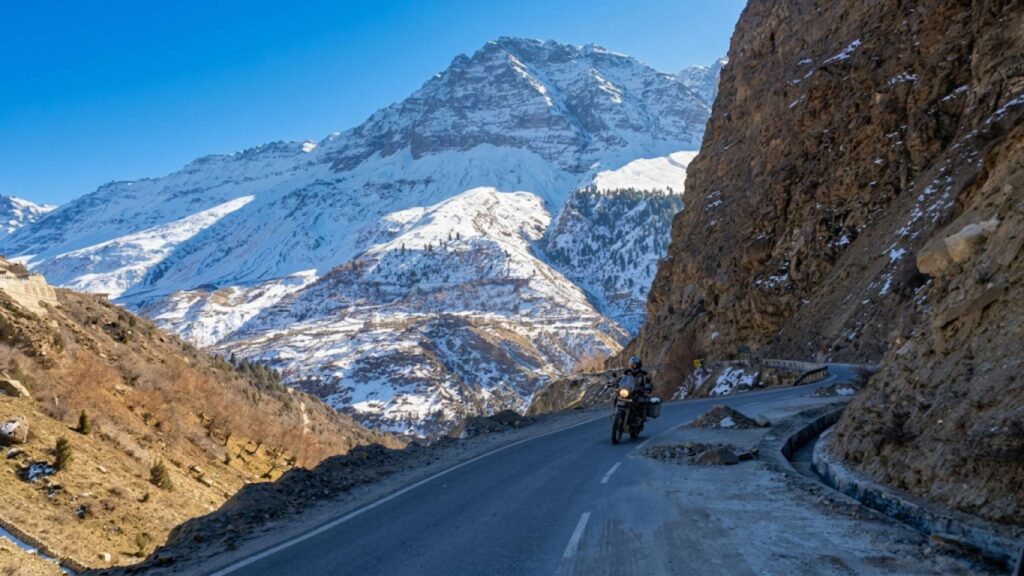
This is the section that matters most, so read it carefully. We keep this honest rather than guessing, because the road status genuinely changes from week to week.
As per the latest available update, the Shimla–Kinnaur side of the route stays open through the year, and it is the section most travellers rely on to reach Spiti when the Manali side via Kunzum Pass is still closed or only just opening. Here’s the practical picture:
Route covered: Shimla → Narkanda → Rampur → Kinnaur → Reckong Peo/Peo side → Pooh → Nako → Sumdo → Tabo → Kaza Overall route: Generally usable year-round on the Shimla–Kinnaur side, with temporary blockages possible at any time.
Kinnaur route: The key stretch. Usually open, but landslides, repair zones, and snow in the higher sections can cause short closures.
Rampur to Kinnaur: Mostly serviceable, though some sections are narrow and carry slow patches due to repair work.
Nako section: Tied to upper Kinnaur weather; snow and ice can disrupt it in the colder months.
Tabo to Kaza: Part of the final approach; usually passable but still weather and repair dependent.
Landslide or shooting-stone risk: Real on the Kinnaur stretch. The Nigulsari area in particular has been a recurring landslide and shooting-stone zone for years, so always treat it as a watch-point.
Recommended vehicle: A higher-clearance vehicle is safer and more comfortable on the rough and repaired patches; avoid low-clearance cars when conditions are uncertain.
Advice for travellers: Confirm current conditions a day or two before you travel, then again on the morning you leave.
One thing worth flagging on the Shimla side in 2026: NH-5 took heavy damage during the 2025 monsoon, especially around the Nigulsari and Pooh–Kaurik stretches in Kinnaur, and repair work has been continuing through 2026. So even when the route is open, expect single-lane sections, holding patterns near repair zones, and slow stretches. This is exactly why we tell travellers to confirm right before they set off rather than trust an old blog.
A quick note on the Manali side, since many travellers compare the two: as per the latest available update, that route via Kunzum Pass typically reopens only in late May to early June after BRO snow clearance, so for much of the year the Shimla–Kinnaur side is the only reliable way in.
This picture shifts through the season because of landslides, rain, snow, black ice, road repair work, shooting stones, BRO or PWD activity, and police or local administration restrictions. We won’t call the route fully open or closed for a specific day unless it’s confirmed on the ground, so always pair this with a live check before departure.
Why The Shimla To Kaza Road Status Changes So Often
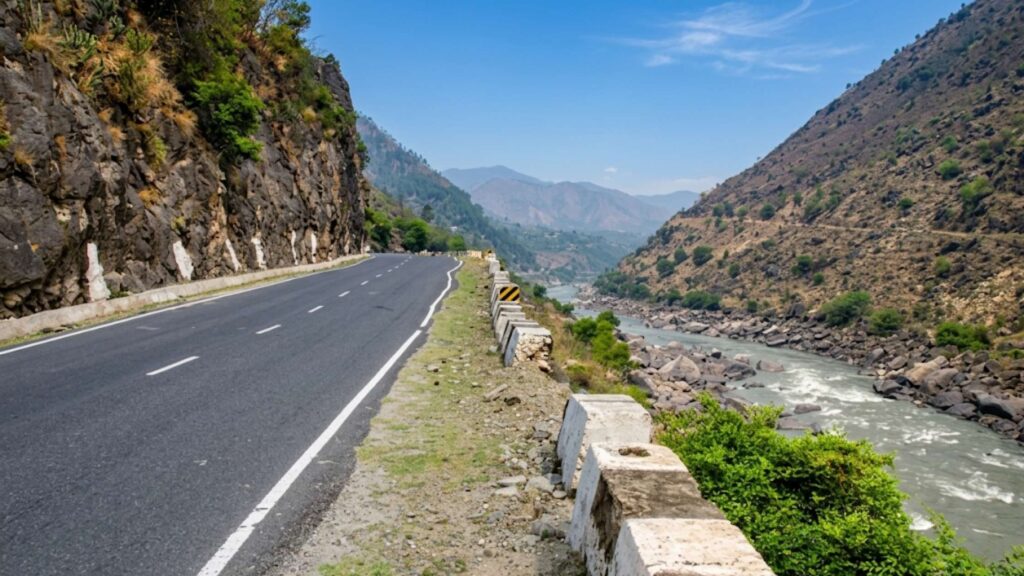
People assume that because this road exists on the map and is “all-season,” it must be predictable. It isn’t, and here’s why.
The Kinnaur mountain roads are carved into steep, unstable slopes. Several sections are genuinely landslide-prone, and during or after rain, loose rocks and shooting stones come down without warning. The Nigulsari area is the classic example travellers hear about.
Rain damages the lower and Kinnaur stretches, while the higher sections near Nako and upper Kinnaur deal with snow and black ice in the colder months. Add ongoing road repair work, narrow single-lane patches, traffic delays, and occasional police or local administration restrictions, and you get a road that can be smooth one week and stop-start the next.
In our experience, the Shimla to Kaza route is not just about whether the road exists on the map. It is about current road condition, weather, landslide risk, and how prepared your vehicle and group are.
Shimla To Kaza Route: Main Road Sections Explained
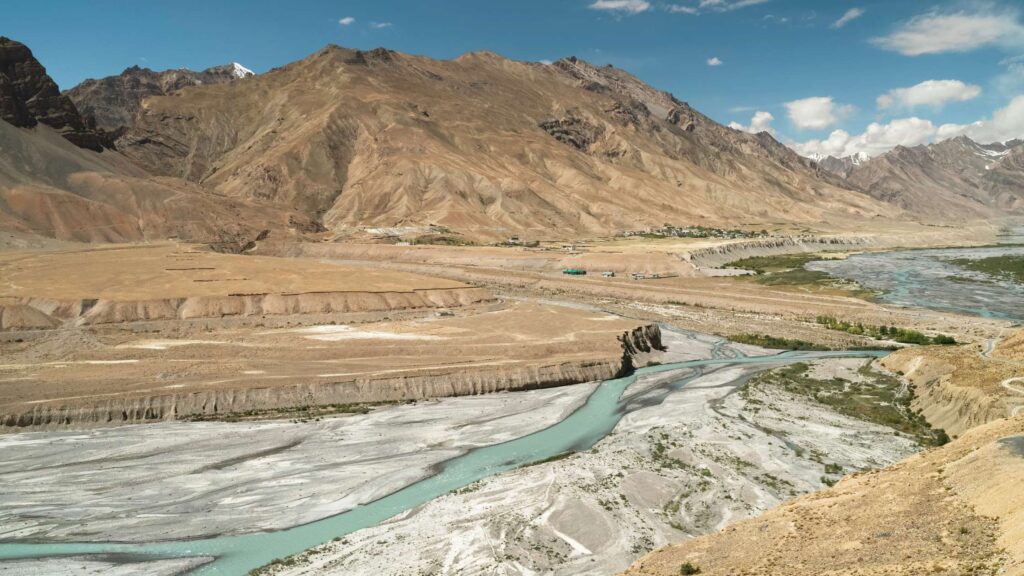
Let’s go through the route in the order you’ll actually drive it.
The line you’ll follow is Shimla → Narkanda → Rampur → Kinnaur → Reckong Peo/Peo side → Pooh → Nako → Sumdo → Tabo → Kaza. The big advantage of entering from the Shimla side is the gradual climb — you gain altitude slowly over a couple of days instead of jumping straight up like you would from the Manali side.
That gradual gain helps with acclimatisation, but don’t mistake it for an easy drive. The route is long and mountainous, and it can be genuinely tiring across two days behind the wheel.
The Kinnaur sections need careful, patient driving because of narrow roads, shooting-stone zones, and landslide-prone stretches. The Nako to Tabo and Tabo to Kaza sections then depend on weather, current road condition, and local updates rather than any fixed guarantee.
The full Shimla to Kaza drive is roughly 420 km and usually spread across two days with a night halt; exact timing varies a lot with road condition, so don’t treat any drive-time figure as fixed.
If you want a ready-made route framework with stays and transport sorted, our Spiti Valley Packages are built around this exact Shimla-side sequence.
Kinnaur Route Road Status 2026
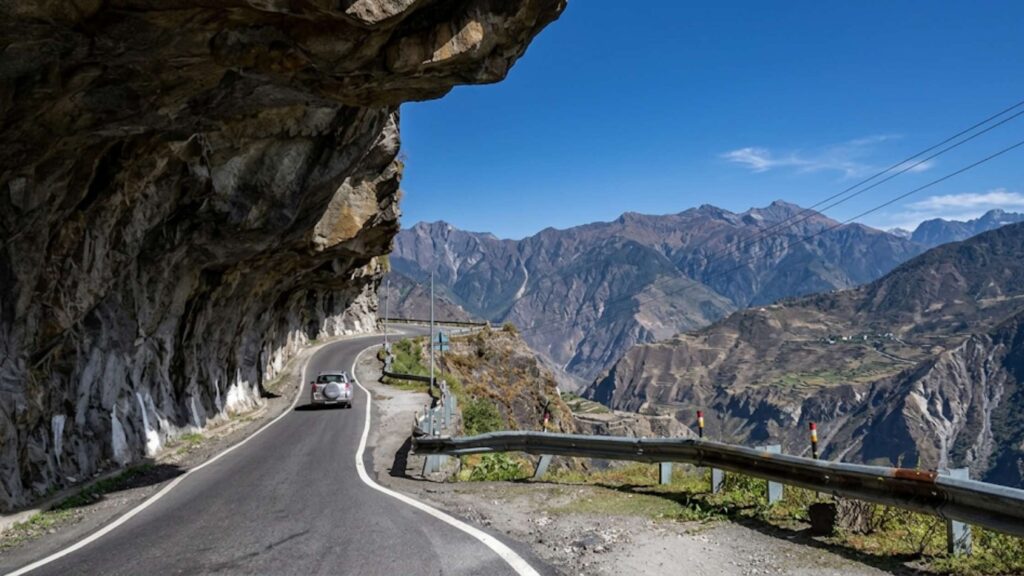
The Kinnaur stretch is the heart of the whole Shimla to Kaza journey. This is the part that connects the Shimla side with the upper Spiti approach, and it’s the part most likely to cause delays.
The Kinnaur route road status 2026 matters more than any other section because if Kinnaur is blocked, the rest of the plan doesn’t move. During certain seasons it remains far more useful than the Manali side, but it is not risk-free; landslides, shooting stones, road repair, rain, and snow can all affect movement here.
Families, couples, and first-time travellers especially should not assume this route is automatically easy. The scenery is gentle on the eyes, but some of the cliff-hugging sections feel anything but gentle for a first-time mountain traveller.
Our team usually recommends checking the Kinnaur route status very close to your travel date, not weeks in advance, because mountain roads can change quickly.
Nako Road Status 2026
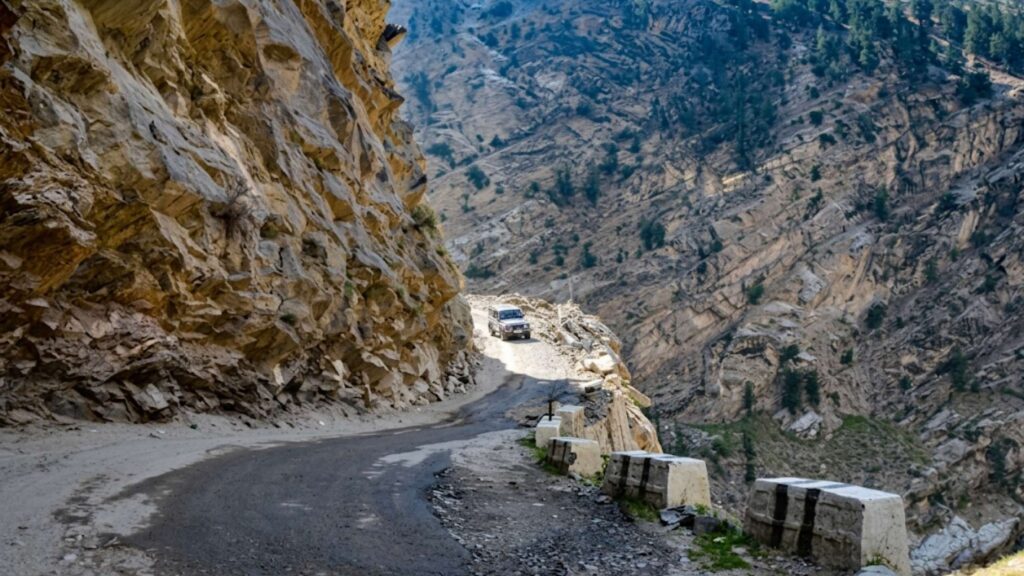
Nako sits in upper Kinnaur, before you drop deeper into Spiti from the Shimla side. Depending on your itinerary, it often works as a night halt or a natural break in the drive.
The Nako road status 2026 is tied to upper Kinnaur weather, and this is where things get a little more serious. Snow, rain, landslides, and local restrictions can all affect the road around Nako, particularly in the colder and wetter months. We won’t promise access here, because conditions at this altitude are genuinely changeable.
On paper, reaching Nako can look perfectly manageable. In reality, the decision should rest on the latest road update, your vehicle, the season, and who’s travelling with you. A confident group in a capable vehicle in stable weather is a very different situation from a family in a low-clearance car after a rain spell.
Tabo Road Status 2026
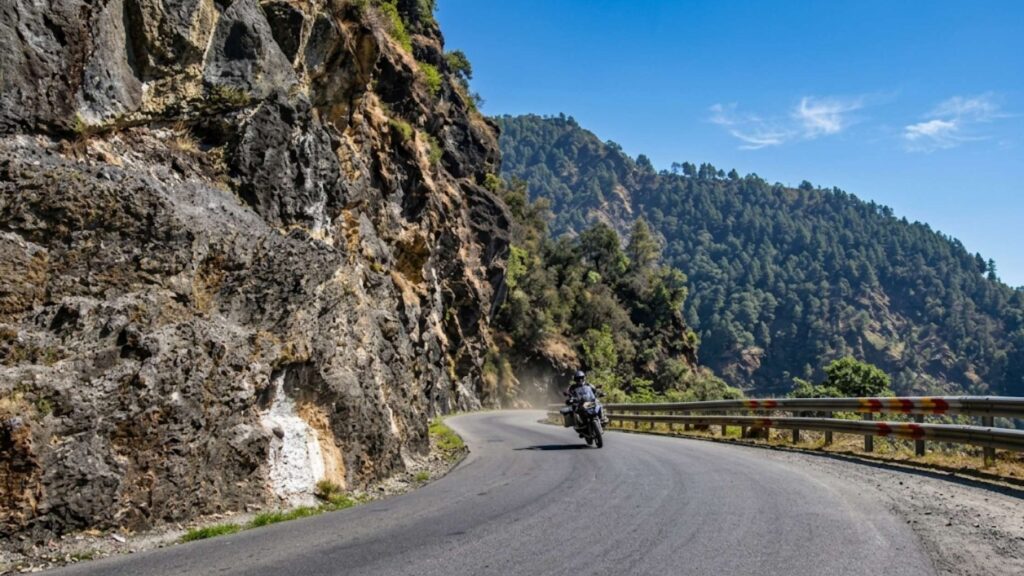
Tabo is one of the major stops before Kaza when you’re entering Spiti from the Shimla side, and it’s a lovely place to pause, with its ancient monastery.
The Tabo road status 2026 matters because the Tabo to Kaza stretch is usually part of the final approach into central Spiti. But “final approach” doesn’t mean “guaranteed clear.” Weather, road repair, snow, and local disruptions can still affect this section, so it needs verification like every other part of the route.
Here’s a mindset we’d gently push: reaching Tabo does not automatically mean the road ahead to Kaza is clear. Treat each section as its own checkpoint rather than assuming the rest will fall into place.
Is The Shimla To Kaza Route Open All Year?
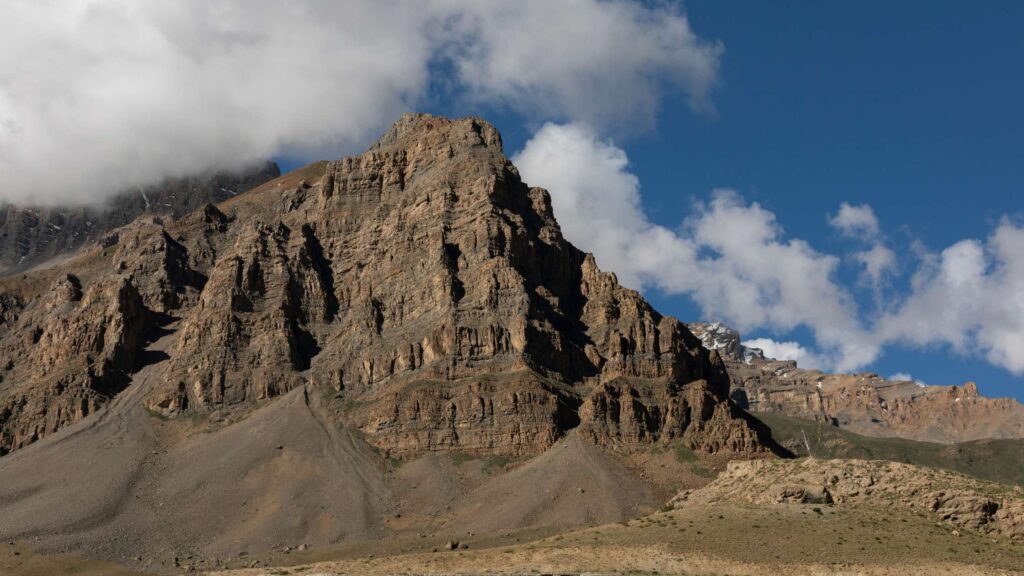
This is where we have to be precise. The Shimla–Kinnaur side is generally the main access route to Spiti; and especially so when the direct Manali–Kaza route via Kunzum Pass is closed, which it usually is through winter and into spring because of heavy snow on the pass.
But “the main all-year route” does not mean the Shimla to Kaza road is guaranteed open every single day. Temporary closures absolutely happen, caused by landslides, snowfall, black ice, road repair, shooting stones, accidents, or local restrictions.
So the honest framing is this: the route is designed to stay usable across the year, but day-to-day access depends on conditions. Treat seasonal windows as guidance only, and confirm exact conditions close to your travel date.
Best Time To Travel From Shimla To Kaza In 2026
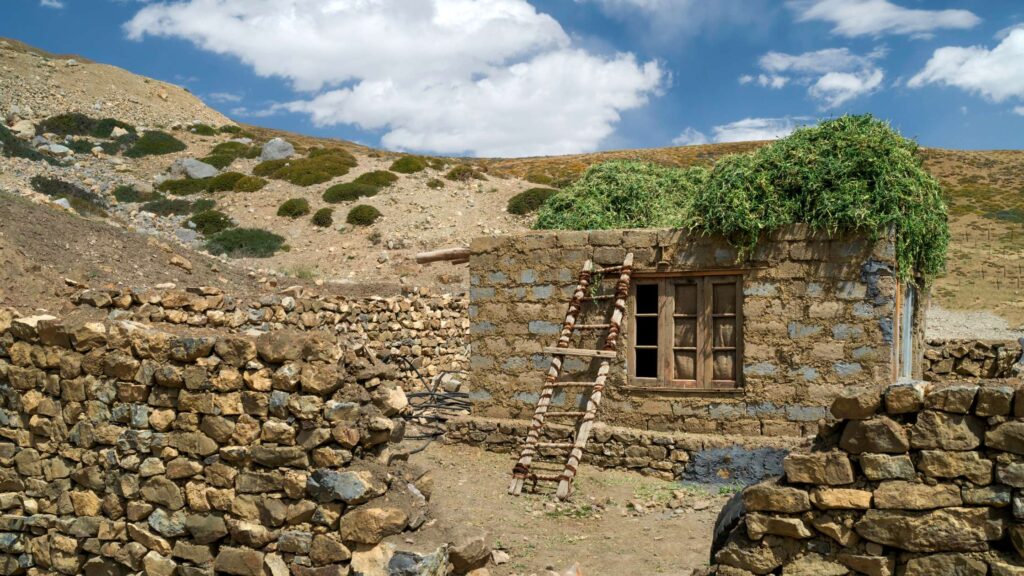
Here’s a practical month-by-month feel for the route. Keep in mind, best time does not mean guaranteed road condition.
January to March: Deep winter on the higher sections. Snow and black ice risk near Nako and upper Kinnaur, sub-zero temperatures, and limited facilities. The route is the only way into Spiti in this window, but it’s for prepared, experienced winter travellers. Check status very carefully.
April: A transition month. Weather starts improving but uncertainty remains, and the Manali side is still typically closed, so Shimla–Kinnaur is your reliable way in.
May: A better planning window for many travellers, with conditions generally improving. Still confirm the Kinnaur road condition before you commit.
June: A popular period. Watch for road repair activity and traffic build-up as the season picks up.
July: Rain and landslide risk increases on the lower and Kinnaur-side sections. Build in buffer time.
August: Monsoon impact is at its strongest, and landslide risk on the approach roads needs serious attention. Many travellers avoid this window for exactly this reason.
September: Often a favourite for clearer conditions and stable weather, but still confirm before travel.
October: Late-season cold sets in, with possible early snow in the higher sections.
November to December: Winter conditions return on the upper sections, and road status must be checked carefully again.
Shimla To Kaza Road Status For Bike Riders
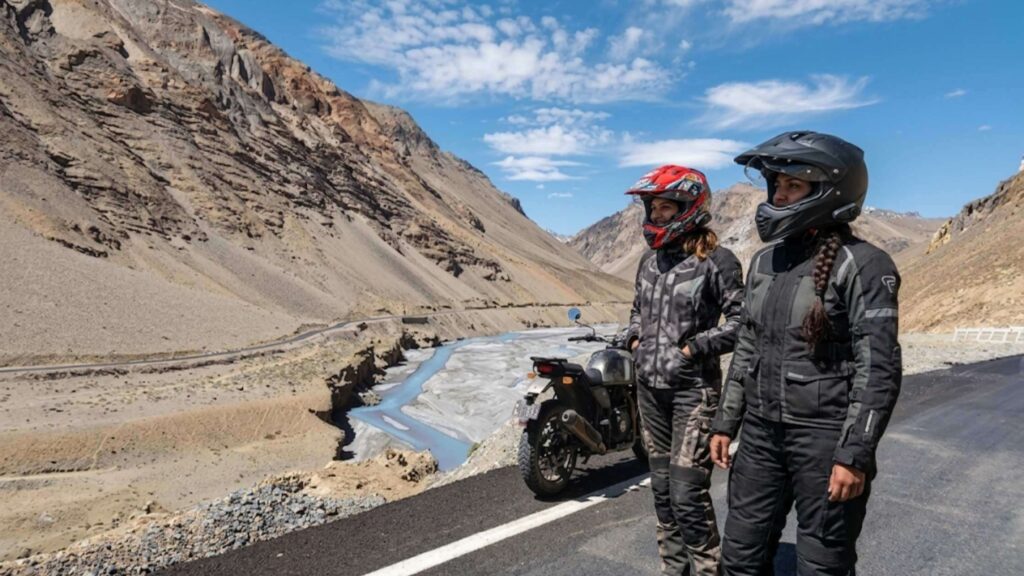
This route is hugely popular with riders, and for good reason; it’s stunning. But it’s still demanding, and we’d rather you go in clear-eyed.
If you’re riding, check the Kinnaur, Nako, Tabo, and Kaza route updates specifically, not just a general “is Spiti open” answer. Rain, landslides, shooting stones, black ice, and plain tiredness over long riding days can all turn into serious risks here.
Protective gear, sensible fuel planning, some backup support, and group discipline matter more than ego on this road. Solo riders should avoid pushing through uncertain weather, and beginners should steer well clear of bad-weather crossings and late starts. We’ve seen riders underestimate how quickly conditions shift between Reckong Peo and Nako.
If you’d rather ride with support and a planned route, take a look at our Spiti Valley bike tour packages, backup and night halts are sorted, so you focus on the ride.
Shimla To Kaza Road Status For Families
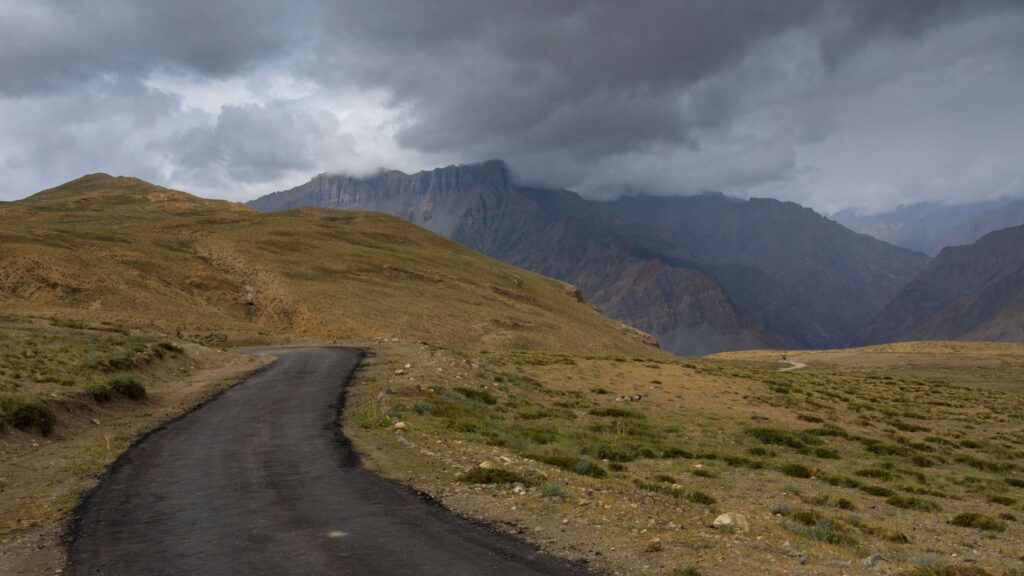
Families often choose the Shimla route precisely because the altitude gain is gentler than entering from Manali, which is a sound instinct. But road safety still comes down to current conditions on the day.
The long travel hours can be tiring, especially for kids and senior citizens, so pacing matters. Some of the Kinnaur sections can feel genuinely scary for first-time mountain travellers, and that’s worth preparing your group for in advance.
Slower pacing, good night halts, and a sensible itinerary make all the difference. If the road status is uncertain, please don’t rush a family trip through it; choose stable months, a reliable vehicle, and an unhurried plan.
Planning a family Spiti trip and unsure whether to enter from Shimla or Manali? Explore our Spiti Valley Packages and let our local Himachal team help you choose the safer route.
Should First-Time Travellers Take The Shimla To Kaza Route?
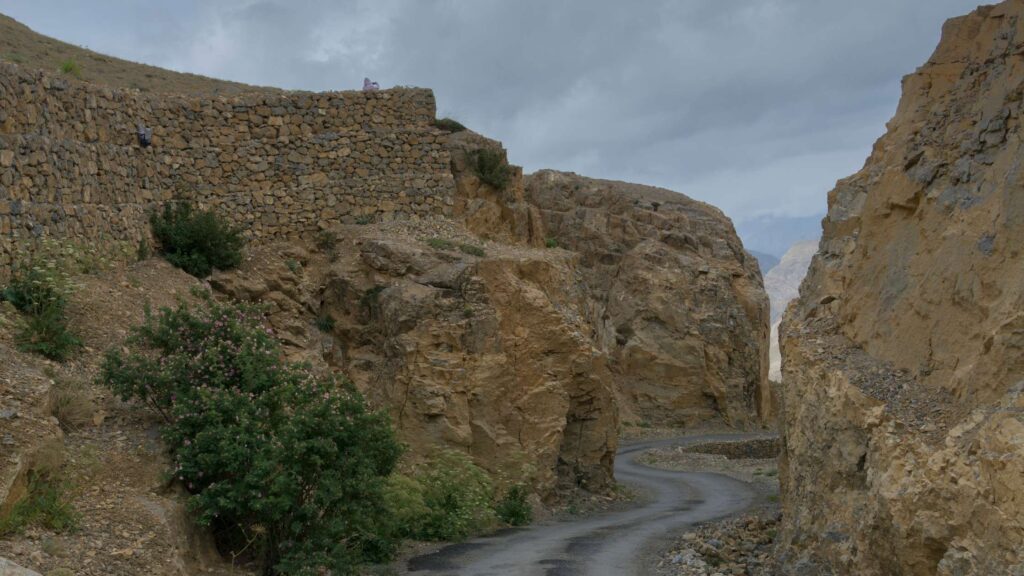
Honest answer: yes, first-time travellers can take this route, provided the road is open, the weather is stable, and the group is prepared.
In fact, Shimla to Kaza is usually the better choice for a first Spiti trip than entering directly from Manali, mainly because the gradual acclimatisation is kinder on the body. The route is longer, but for most first-timers it’s the more sensible call.
The catch is the same one we keep repeating: road condition still has to be checked, because the Kinnaur sections can be hit by landslides, shooting stones, and weather. And if you only have a handful of days, the route can feel rushed and tiring unless it’s planned well.
If altitude is your worry, this short read on how to avoid altitude sickness in Spiti is worth ten minutes before you travel.
Vehicle Advice For Shimla To Kaza Road
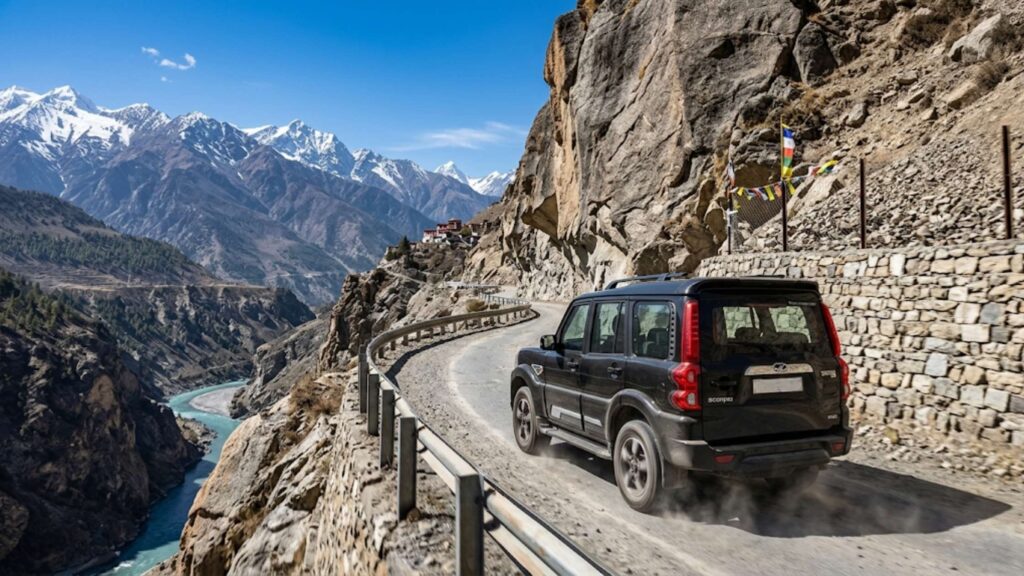
A few practical notes on what to drive.
SUVs are generally safer and more comfortable than low-ground-clearance cars on the rough or damaged sections, of which there are several in 2026 thanks to ongoing repair work. That said, an experienced mountain driver matters far more than the vehicle’s badge; a calm, road-aware driver in a modest car beats a nervous one in a big SUV.
Avoid low-clearance vehicles when the road condition is uncertain. If you’re planning a tempo traveller for a larger group, confirm the road condition first, because a long vehicle struggles on narrow, broken patches. Bikers need proper tyres, good brakes, full gear, and a backup plan.
And one habit that’s saved many travellers: avoid late-evening driving in landslide-prone or remote stretches.
Safety Tips Before Taking The Shimla To Kaza Road
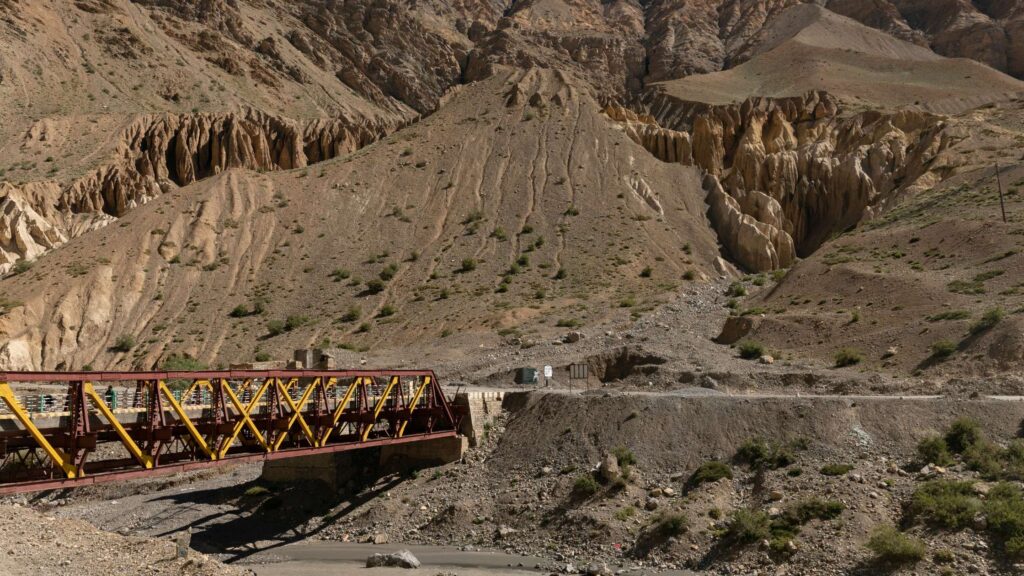
A few simple habits make this route much safer.
Start early. Mountain driving is always better in daylight, and an early start gives you buffer if you hit a delay.
Check road status one day before travel, then check again on the morning of departure. Things genuinely change overnight here.
Avoid night driving. Carry warm layers even in summer, because the higher sections get cold fast. Keep water and snacks handy, and don’t depend only on mobile network; coverage is patchy across Kinnaur and Spiti.
Keep buffer days in your plan, and don’t blindly trust Google Maps timing. Fuel up wherever you find reliable fuel — we won’t name specific pumps, so just top up when you get a good chance.
Listen to local drivers and follow BRO, PWD, local administration, and police or checkpost instructions. Avoid stopping in shooting-stone zones, and if locals advise against moving ahead, don’t push it. They read these slopes better than any app.
When Should You Avoid The Shimla To Kaza Route?
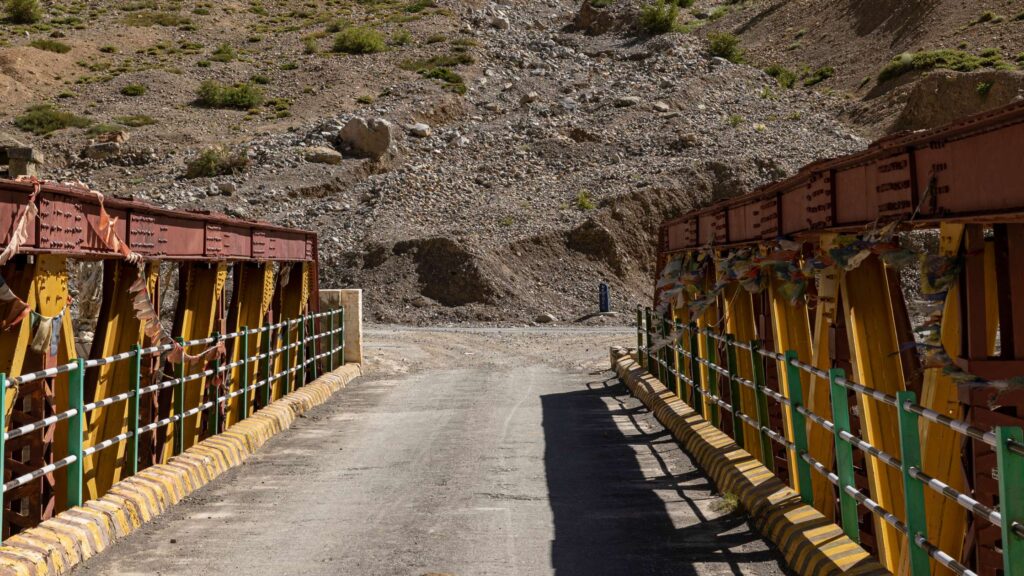
Calm but firm advice here. Hold off on this route when:
The latest road status is unclear or you’re getting mixed signals. There’s heavy rain in Kinnaur or lower Himachal. There are active landslide or shooting-stone alerts. There’s fresh snow or black ice risk in the higher sections.
Also reconsider if you’re travelling with kids or seniors and have no buffer days, if you’re in a low-clearance vehicle during uncertain conditions, or if you’re starting late in the day.
And a few non-negotiables: don’t take the route with no acclimatisation plan, don’t take it when you have a flight, train, or hotel booking that leaves you zero flexibility, and don’t take it if your driver isn’t confident on narrow Himalayan roads.
Shimla To Kaza Vs Manali To Kaza: Which Route Is Safer?
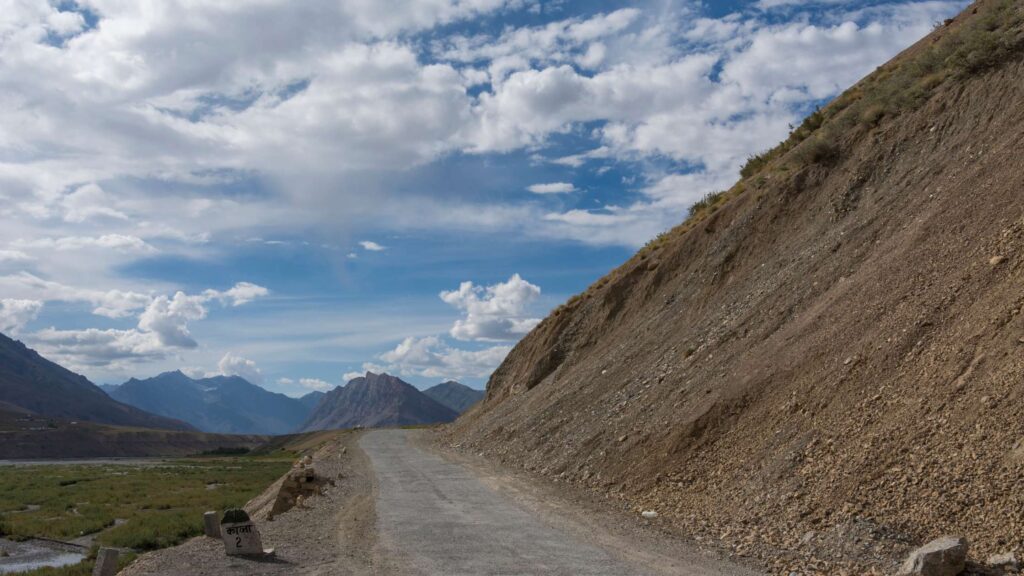
This is the question we get most, so let’s compare honestly.
The Shimla route is longer but usually better for gradual altitude gain, which makes it kinder for acclimatisation and generally the safer first-timer option. The Manali route is shorter but far more sudden in altitude gain, and it depends heavily on Kunzum Pass being open.
Because Kunzum Pass closes in winter under heavy snow and typically reopens only in late May to early June after BRO clearance, the Shimla route is the natural choice whenever the Manali side is closed or unstable. The Manali route works well in the right season, once Kunzum, Gramphu, Batal, and Losar sections are all stable.
We won’t oversell either one. The best route genuinely depends on your travel month, current road status, group type, vehicle, and comfort level. If you’re entering early in the season, Shimla in / Manali as a “maybe” exit is a sensible default. If you’re planning a Manali exit or a Chandratal add-on, check the Chandratal Road Status 2026 first, since that side opens later.
Suggested Itinerary Planning Based On Road Status
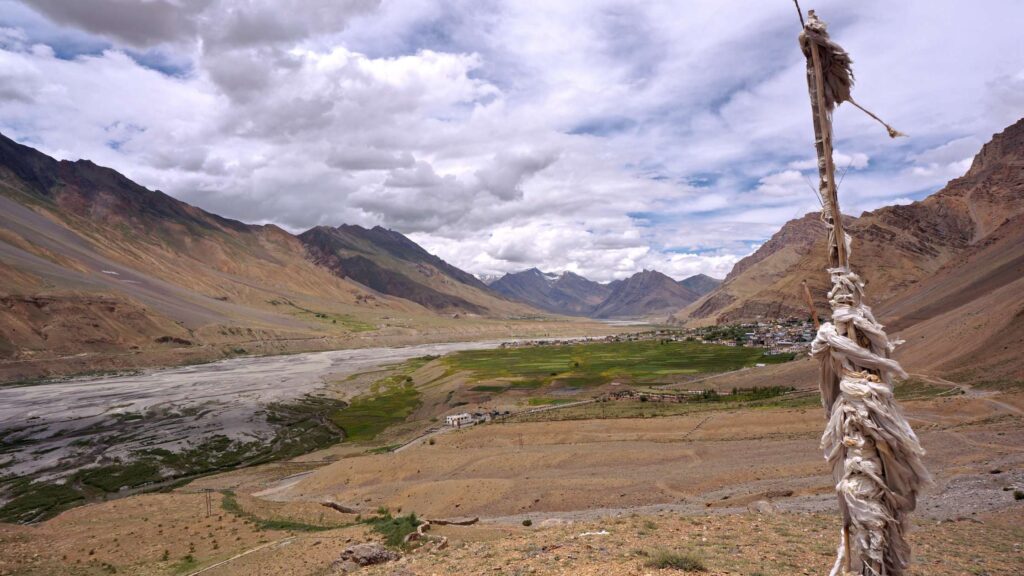
Rather than a rigid day-by-day plan, think in scenarios; because the road decides a lot for you.
Scenario 1: If the Kinnaur route is open and stable, plan the classic Shimla → Narkanda → Rampur → Kinnaur → Nako → Tabo → Kaza. This is the standard, sensible flow.
Scenario 2: If the Kinnaur route is uncertain, don’t force it. Delay the trip, add buffer days, or wait for a clearer update before committing.
Scenario 3: If you want to exit via Manali, confirm Kunzum Pass and the Manali–Kaza side status before finalising that exit; don’t assume it’ll be open just because it’s summer.
Scenario 4: If you’re travelling with family, always pick the slower, safer route over a rushed plan, even if it means seeing a little less.
Scenario 5: If you’re on a bike, avoid poor-weather days and keep enough flexibility in your dates to sit out a bad spell.
We’re deliberately not pinning down day-wise distances or fixed timings here, because road condition changes them so much; plan with buffer rather than a rigid schedule. For a fully planned version of the stable-conditions flow, our 9 Nights 10 Days Spiti Valley Tour Package From Shimla follows this route with proper acclimatisation built in.
Final Verdict: Should You Take The Shimla To Kaza Road In 2026?
Take the Shimla to Kaza route when the Kinnaur road is clear, the weather is stable, the Nako and Tabo sections are passable, and your vehicle and group are properly prepared. Under those conditions, it’s a wonderful, gradual, and relatively forgiving way into Spiti.
Avoid it or at least delay: if you’re getting mixed updates, starting late, travelling in bad weather, or depending on fixed bookings that leave no room to adjust.
Choose the Shimla route over the Manali route if gradual acclimatisation and safer pacing matter more to you than saving a day or two. For most first-timers, couples, and families, that trade-off is worth it.
Our team can help you choose the right Spiti route based on your travel month, vehicle type, group type, and latest road condition. If your trip depends on the Kinnaur route, Nako, Tabo, or Kaza road condition, speak to our local Spiti team before finalising your dates, vehicle, and night halt.
Frequently Asked Questions
What is the current Shimla to Kaza road status in 2026?
As per the latest available update, the Shimla–Kinnaur route is generally the year-round access road to Spiti and stays usable for most of the year. Daily status still changes with weather, landslides, and repair work, so confirm close to travel.
Is the Shimla to Kaza road open today?
For a specific day, you’ll need a live check, since short blockages can happen anytime. As a rule, the Shimla–Kinnaur side is usually usable, but confirm with local sources or our team the day before you travel.
Is the Kinnaur route open for Spiti travel?
The Kinnaur route is the main approach and is usually usable, but landslides, snow, and repair zones can cause temporary blockages. Confirm current condition before depending on it.
Is Nako accessible on the Shimla to Kaza route?
Nako is on the standard route and often used as a halt. Access is usually fine but depends on upper Kinnaur weather and road condition, so check the latest update before relying on it.
Is Tabo accessible before Kaza?
Tabo is a major stop before Kaza and is usually reachable, but the Tabo–Kaza stretch still needs a weather and road-work check. Reaching Tabo doesn’t guarantee the road ahead.
Is Shimla to Kaza safer than Manali to Kaza?
Usually yes for acclimatisation, because the altitude gain is gradual. The Manali route is shorter but more sudden and depends on Kunzum Pass. The safer choice depends on season and conditions.
Can I travel from Shimla to Kaza by car?
Yes, when the road is open and conditions are stable. A higher-clearance vehicle is more comfortable on rough sections, and an experienced mountain driver matters most.
Is SUV required for Shimla to Kaza road?
Not strictly required in good conditions, but an SUV is safer and more comfortable on damaged or rough stretches. Avoid low-clearance vehicles when conditions are uncertain.
Can bike riders take the Shimla to Kaza route?
Yes, it’s a popular ride, but it’s demanding. Check section-wise road updates, carry proper gear, plan fuel and backup, and avoid riding in bad weather or late in the day.
Is the Shimla to Kaza route safe for families?
It can be, with stable months, a reliable vehicle, slower pacing, and good night halts. Don’t rush it if road status is uncertain, especially with kids or seniors.
Can first-time travellers take the Shimla to Kaza route?
Yes — it’s often the better first-trip option because of gradual acclimatisation. Just confirm road condition and plan enough days so it doesn’t feel rushed.
When is the best time for Shimla to Kaza road trip?
Many travellers prefer the clearer, more stable windows around May–June and September–October, but best time doesn’t guarantee road condition. Keep buffer days regardless of month.
Can I enter from Shimla and exit from Manali?
Yes, when the Manali side via Kunzum Pass is open and stable, which is typically from late May or June onwards. Confirm Kunzum Pass and Manali–Kaza status before finalising the exit, as that side opens later in the season.
How can I check the latest Shimla to Kaza road status before travel?
Check with local administration, recent traveller updates, and on-ground contacts a day or two before departure, then again on the morning you leave. Our local team can also confirm current conditions for your dates.
Also read: Is Chandratal Crowded in June 2026? Honest Travel Guide Before You Go