
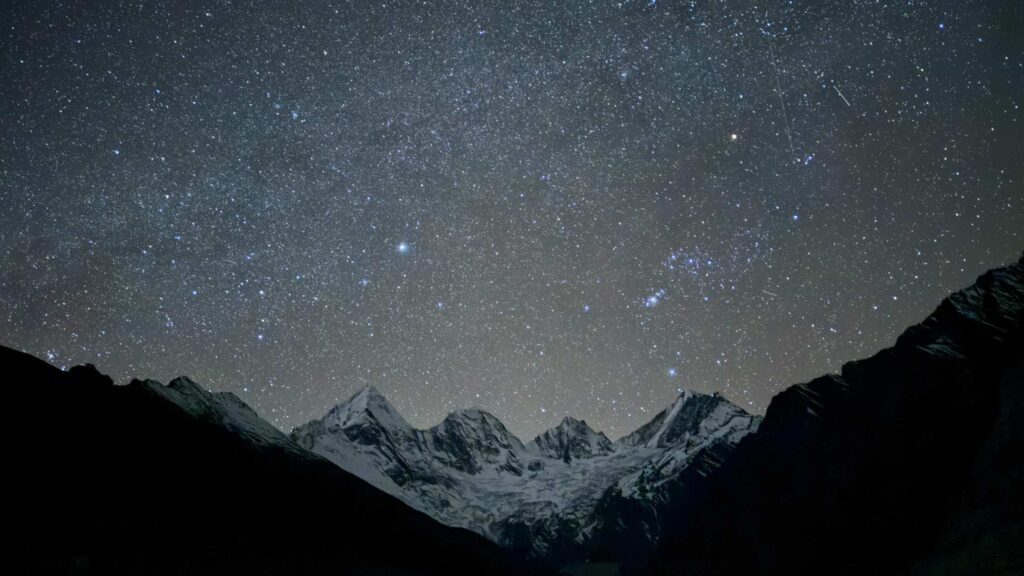
Picture this. You’re lying on your back on cold, rocky ground at 4,300 metres. Your sleeping bag is zipped up to your chin. There’s no sound. Not a car, not a voice, not even wind. And above you, the entire Milky Way is stretched across the sky like someone tore a hole in the darkness and let the light flood through.
That’s Chandratal on a clear night. No exaggeration.
Here’s the quick version for anyone researching this:
- Best time for stargazing at Chandratal: June to September (new moon nights are ideal)
- What you’ll see: Milky Way, shooting stars, constellations, planets
- Altitude: ~4,300 metres with minimal light pollution
- Why it’s special: One of the darkest skies in India, zero artificial light, wide open landscape
- Best for: Milky Way photography, beginners and professionals alike
Now let me explain why this lake in the middle of nowhere has quietly become one of India’s most talked about astrophotography destinations.
Why Chandratal is Perfect for Stargazing
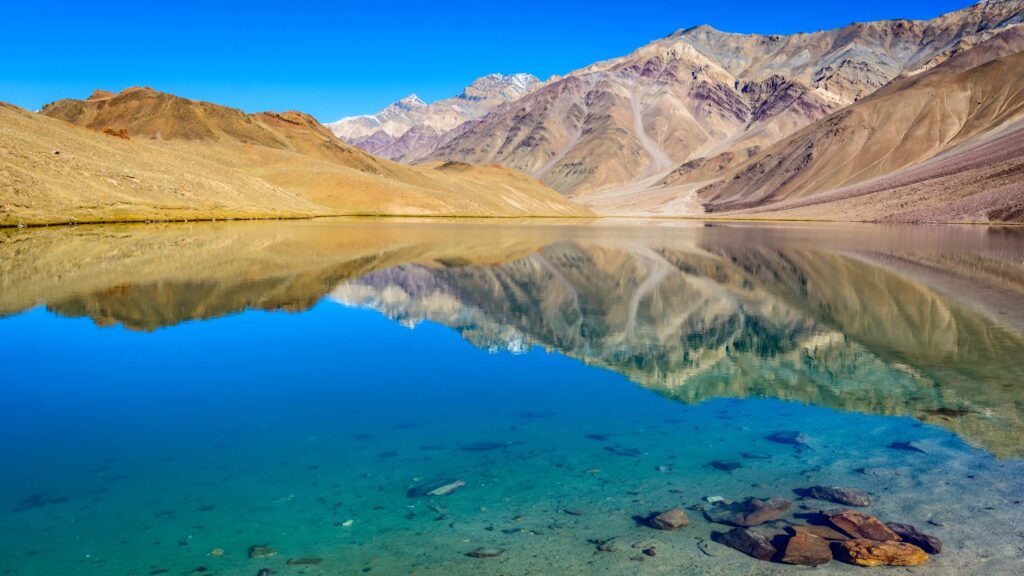
A lot of places in India claim to have “amazing night skies.” Most of them are decent at best. Chandratal is different, and it’s not by accident. The conditions here come together in a way that’s almost engineered for stargazing.
Zero Light Pollution
Chandratal Lake is genuinely remote. There are no towns within 50 km. No street lights. No buildings. No headlights on a highway. The nearest thing resembling civilization is Batal, a handful of dhabas on a cold plain, and even that’s 14 km away.
When the camps turn off their solar lamps for the night, it gets dark in a way most of us have never experienced. Your eyes take 15 to 20 minutes to fully adjust, and when they do, you realise the sky isn’t black at all. It’s dense with light.
High Altitude Advantage
At 4,300 metres, you’re above a significant chunk of Earth’s atmosphere. That thinner atmosphere means less distortion between your eyes (or your camera lens) and the stars. Everything looks sharper, brighter, and more detailed than it would from a hill station at 2,000 metres.
This is also why professional observatories are built at high altitudes. You’re essentially getting the same advantage, minus the billion dollar telescope.
Cold Desert Climate
Spiti Valley is a cold desert. That means low humidity and minimal cloud cover for much of the stargazing season, especially in September. Humid air scatters light and creates haze. Dry air doesn’t. The result is crisp, transparent skies that let you see deeper into space.
Wide Open Landscape
There are no trees at Chandratal. No buildings blocking your view. No hills crowding the horizon. You get a genuine 360 degree view of the sky from almost anywhere around the campsite. For astrophotography, this means you can shoot in any direction without obstructions, which is a luxury most locations simply don’t offer.
Chandratal Night Sky Experience
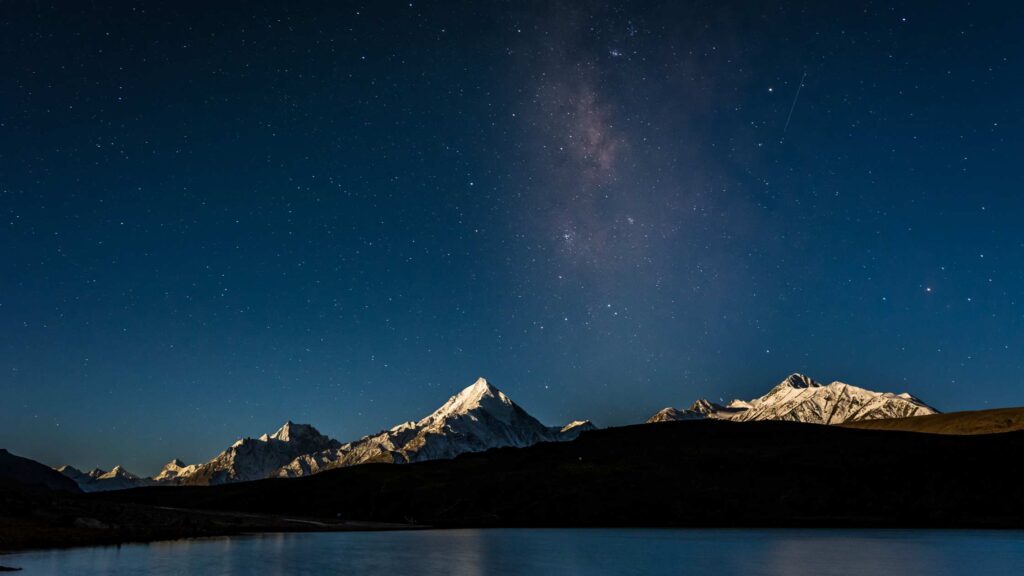
What You Can See
On a clear, moonless night at Chandratal, here’s what’s visible to the naked eye:
- The Milky Way in full, arching glory. Not a faint smudge like you see from cities. A thick, textured band of light with dark dust lanes visible within it.
- Shooting stars without even trying. You’ll spot several per hour during peak months.
- Constellations that are usually washed out by city light. Orion, Scorpius, Sagittarius (which points towards the galactic centre), the Big Dipper, and more.
- Planets like Jupiter, Saturn, Mars, and Venus at various times of the year, shining steady and bright among the twinkling stars.
How the Sky Changes Through the Night
The night sky at Chandratal isn’t static. It shifts and evolves, and each phase has its own character.
Twilight (7 to 8 PM): The sun dips behind the mountains and the sky goes through shades of orange, pink, and deep blue. The first bright stars and planets become visible.
Early night (9 to 10 PM): More stars appear. The Milky Way starts becoming visible low on the horizon. This is a good time to set up your gear and frame your shots.
Midnight (11 PM to 1 AM): The Milky Way reaches its peak position, arching high across the sky. This is the money window for astrophotography. The galactic core is at its brightest and most detailed.
Pre dawn (3 to 5 AM): The sky reaches its maximum clarity. If you’re still awake (and honestly, the cold makes this a challenge), this is when the faintest stars and nebulae become visible. Some of the best shots happen in this window.
The Real Experience
I want to pause the practical stuff for a moment and just describe what it actually feels like.
You finish dinner at camp. Maybe dal and rice, maybe maggi. You step outside and it hits you immediately. The cold, first. Then the silence. Then you look up and your brain takes a second to process what it’s seeing because it doesn’t match anything you’ve seen before.
The Milky Way isn’t a subtle thing here. It’s bold and obvious, stretching from one horizon to the other. You can see the texture in it. Structure. It doesn’t look like a photo. It looks better than a photo because it’s above you in three dimensions, impossibly vast.
If the lake is calm, and it often is, the stars reflect on the surface. You’re standing between two skies. One above, one below. The silence is so complete you can hear your own heartbeat.
People get emotional here. I’m not being dramatic. Something about the scale of what you’re looking at, combined with how small and quiet everything around you feels, just does something to you.
That’s stargazing at Chandratal. It’s not just a visual experience. It’s a feeling.
Chandratal Milky Way Guide
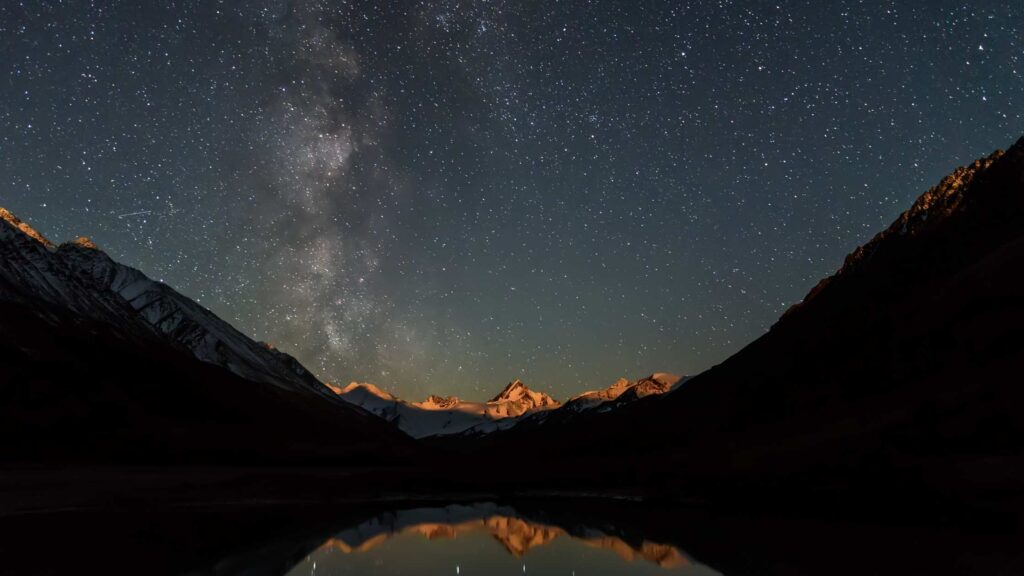
When is the Milky Way Visible?
The Milky Way’s galactic core (the bright, detailed centre) is visible from Chandratal during the summer months, which conveniently overlaps with the only time the lake is accessible.
- Best months: June through September
- Best viewing hours: 10 PM to 3 AM
- Peak visibility: Around midnight when the core is highest in the sky
Best Dates (New Moon Advantage)
Moonlight is the enemy of Milky Way photography. Even a half moon washes out a significant amount of detail in the sky. For the best stargazing at Chandratal, plan your trip around the new moon.
- Check a moon phase calendar before booking your dates
- The 5 days around a new moon (2 days before, the new moon itself, 2 days after) are your best window
- Full moon nights are still beautiful at Chandratal, but the Milky Way will be largely invisible
Milky Way Positioning
From Chandratal, the Milky Way’s core is visible across the southern sky. In June and July, it rises in the southeast and arcs across the south. By September, it shifts slightly westward.
The really special thing? If you position yourself on the northern shore of the lake and shoot south, you can capture the Milky Way arching directly over the water with its reflection on the surface. That’s the shot. That’s the one that ends up on magazine covers.
Chandratal Astrophotography Guide
Camera Settings for Beginners
If you’ve never shot the night sky before, don’t worry. The conditions at Chandratal are so good that even basic setups produce stunning results. Here are starting settings to work with:
- ISO: 1600 to 3200 (higher ISO = more light but also more noise)
- Shutter speed: 15 to 25 seconds (longer than 25 seconds and stars start trailing)
- Aperture: f/2.8 or the widest your lens allows
- Focus: Manual focus set to infinity. Use a live view zoomed in on a bright star to nail the focus.
- White balance: Around 3800K to 4200K for natural looking results
- Format: Shoot RAW if your camera supports it. You’ll want the flexibility in editing.
Start with these, take a test shot, and adjust from there. The beauty of digital is you can check instantly and tweak.
Gear Checklist
- Camera: Any DSLR or mirrorless camera with manual mode. Full frame sensors perform better in low light, but crop sensors work fine too.
- Lens: Wide angle lens (14mm to 24mm) with a fast aperture (f/2.8 or wider). This is the most important piece of gear for astrophotography.
- Tripod: Sturdy and stable. Wind at 4,300 metres can shake a flimsy tripod and ruin long exposures.
- Extra batteries: Cold drains batteries fast. Bring at least 2 to 3 fully charged spares and keep them warm inside your jacket.
- Remote shutter release or timer: To avoid camera shake when pressing the shutter button.
- Headlamp with red light mode: Red light preserves your night vision. White light from a phone screen ruins it for 15+ minutes.
Composition Tips
- Include the lake reflection. This is what makes Chandratal astrophotography unique. The still water mirrors the stars and Milky Way, creating a surreal double sky effect.
- Use foreground elements. Rocks, tent silhouettes, or the curve of the lakeshore add depth and scale to your images.
- Shoot wide. At Chandratal, the sky is the star (literally). Use your widest lens and capture as much of it as possible.
- Try panoramas. Shoot multiple frames across the sky and stitch them together later for ultra wide Milky Way arcs.
Common Mistakes to Avoid
- Shooting during a full moon. The moonlight washes out the Milky Way. Plan around the new moon.
- Not using a tripod. Handheld night sky shots don’t work. Period. Even the steadiest hands can’t hold still for 20 seconds.
- Wrong focus. Autofocus fails in the dark. Switch to manual and carefully focus on a bright star using a live view.
- Forgetting extra batteries. At near freezing temperatures, a fully charged battery can die in 30 minutes. Always carry spares.
- Chimping too much. Constantly checking your LCD screen between shots kills your night vision. Check occasionally, but trust your settings and keep shooting.
Best Time for Stargazing at Chandratal
Best Months
- June: The season just opened. Nights are long and dark. Snow adds an interesting foreground element. The Milky Way core starts becoming visible.
- July and August: Peak tourist season. The Milky Way is prominent and well positioned. But monsoon clouds can occasionally block the sky. Check the weather before going.
- September: The best month overall for stargazing at Chandratal. Skies are the clearest, humidity is the lowest, and the Milky Way core is still visible in the early part of the month. Crowds have thinned out too.
Best Time of Night
- 10 PM to 3 AM is the optimal window
- Midnight is typically the sweet spot when the Milky Way core is highest
- Pre dawn (3 to 5 AM) offers the clearest, most transparent skies but requires serious commitment and warm clothing
Weather Considerations
- Clear skies are essential. Even partial cloud cover ruins astrophotography.
- Check weather forecasts before your trip, though forecasts for this area aren’t always reliable.
- If you get clouds on night one, having a second night as backup is invaluable. This is why a 2 to 3 night stay is recommended.
Chandratal vs Other Astrophotography Locations in India
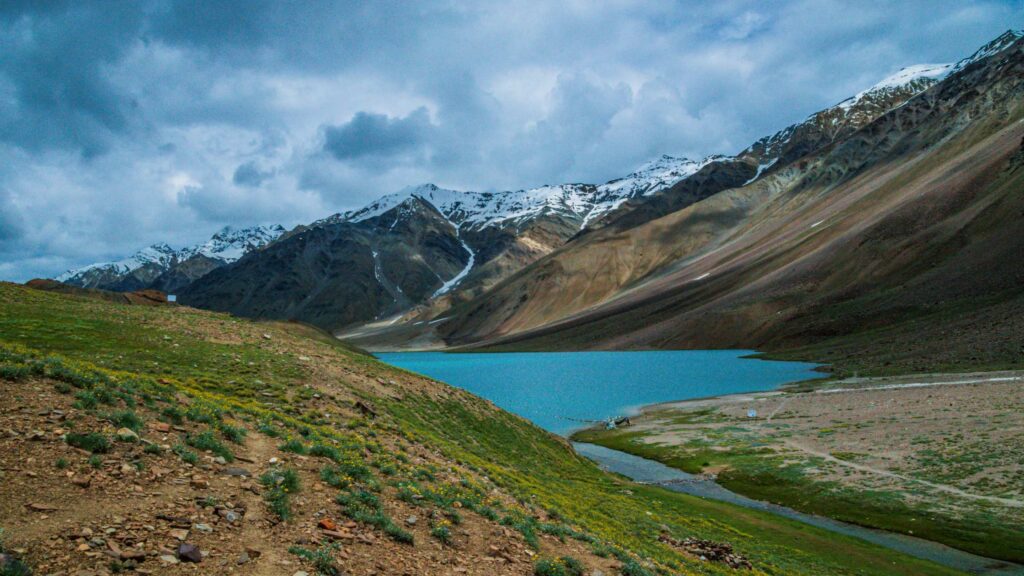
India has a handful of genuinely dark sky locations. Here’s how Chandratal stacks up against the other popular choices.
Chandratal vs Spiti Valley (General)
Spiti Valley as a whole has dark skies, but most towns like Kaza and Key have some ambient light from homes and street lamps. Chandratal, being completely uninhabited, is darker than anywhere in the valley proper. If you’re in Spiti specifically for stars, Chandratal is the spot to be.
Chandratal vs Pangong Lake
Pangong gets a lot of attention because of its movie fame, but for astrophotography, Chandratal wins easily. Pangong has more tourism infrastructure, more vehicles, more ambient light, and more people shining phone flashlights at night. The sky is good there, but not as pristine as Chandratal.
Chandratal vs Hanle
Hanle in Ladakh is home to India’s highest astronomical observatory and is arguably the darkest accessible sky in the country. For pure astrophotography, Hanle has a slight edge. But it’s also significantly harder to reach, requires permits, and has minimal accommodation options. Chandratal offers 90% of Hanle’s sky quality with better accessibility and a more photogenic foreground (the lake).
Quick comparison:
- Chandratal: Very low light pollution. Moderate accessibility. Raw, beautiful, lake reflection shots possible.
- Hanle: Lowest light pollution in India. Difficult to reach. Best for serious professionals.
- Pangong: Moderate light pollution. Easier access. More touristy, less ideal for astrophotography.
How to Plan a Stargazing Trip to Chandratal
Stay Options
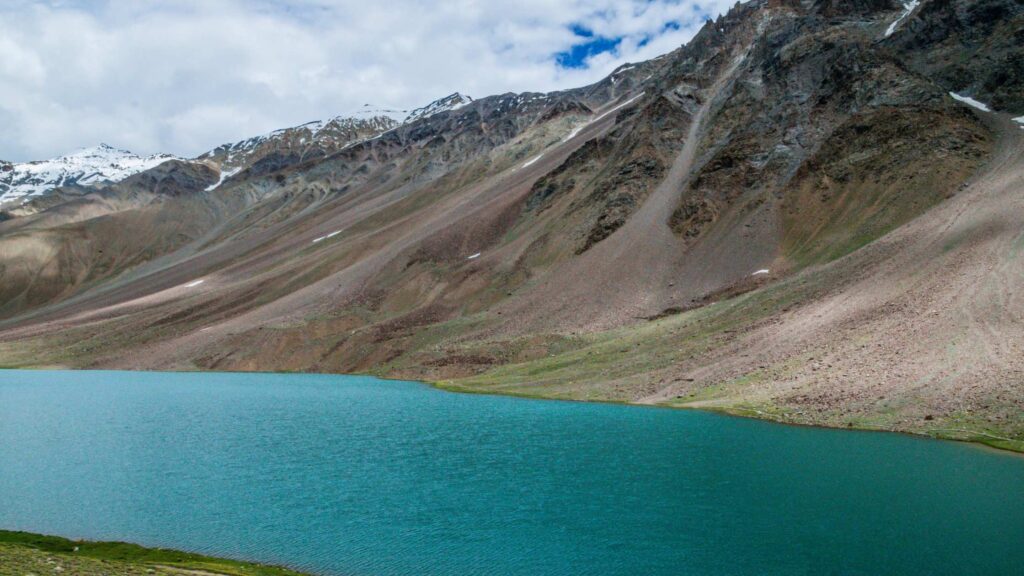
Camping is your only option, and that’s actually perfect for stargazing. You’re sleeping metres away from your shooting location. No commute, no logistics. Just unzip your tent and you’re under the stars.
Best Camps for Stargazing
Not all camps are equal when it comes to night sky viewing. Here’s what to look for:
- Choose camps that are away from other large camps. Fewer neighbours means fewer random flashlights and phone screens ruining the darkness.
- Ask if the camp turns off all lights after a certain hour. Some do, some don’t.
- Camps closer to the lake tend to be better positioned for those reflection shots.
Ideal Trip Duration
If stargazing and astrophotography are your primary goals, stay 2 to 3 nights. Here’s why:
- Night one might have clouds. You need a backup night.
- Your first night is always a learning experience with settings, composition, and getting comfortable in the dark.
- By the second or third night, you’ll know exactly where to set up and what settings work. That’s when the best shots happen.
Safety Tips for Night Photography
Cold Weather Precautions
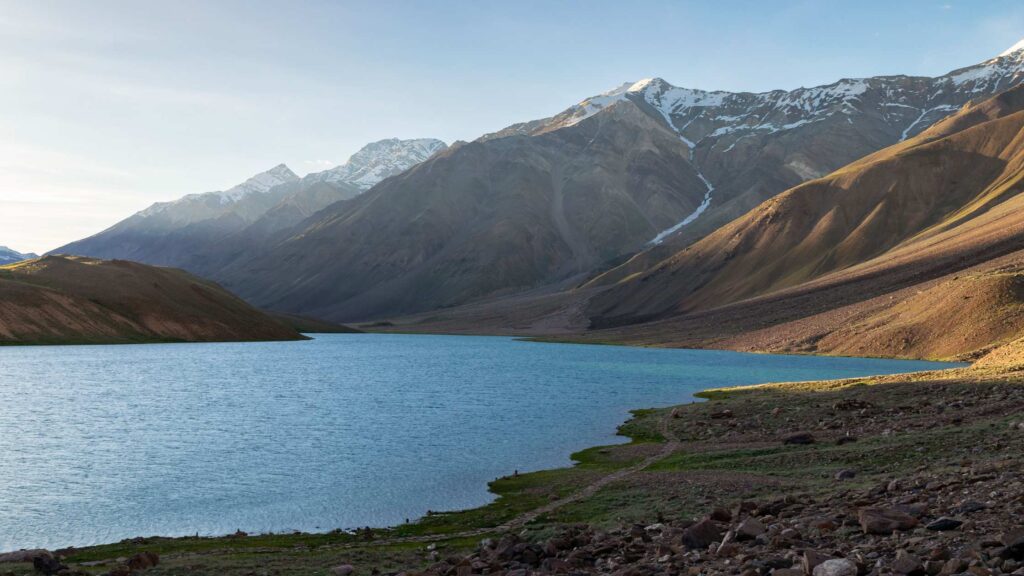
Nights at Chandratal drop to near zero or below, even in summer. Standing still for hours doing photography makes it worse because you’re not generating body heat through movement.
- Wear every warm layer you have
- Hand warmers inside gloves make a real difference
- Keep moving your toes to maintain circulation
- Take breaks inside your tent to warm up
Wildlife Awareness
The area around Chandratal is home to some wildlife, though encounters are rare. Stay near your campsite. Don’t wander too far from camp alone in the dark. A headlamp is essential not just for visibility but for safety.
High Altitude Risks
Spending hours in the cold at 4,300 metres is physically demanding even if you’re just standing around. Make sure you’re properly acclimatised before attempting a full night of photography. Headaches, nausea, or dizziness are signs to stop and rest. No photograph is worth pushing your body into a dangerous situation.
Packing List for Stargazing & Astrophotography
Clothing
- Heavy down jacket or expedition quality winter jacket
- Thermal base layers (top and bottom)
- Insulated gloves (ideally with touchscreen compatible fingertips for camera operation)
- Warm hat or balaclava
- Thick wool socks
- Waterproof boots
Photography Gear
- DSLR or mirrorless camera with manual mode
- Wide angle lens (f/2.8 or faster)
- Sturdy tripod
- Extra batteries (3 minimum, keep them warm in your jacket)
- Remote shutter release
- Lens cleaning cloth (condensation is common)
- Memory cards (you’ll shoot more than you think)
Essentials
- Headlamp with red light mode
- Power bank (20,000 mAh recommended)
- Star chart app on your phone (download it offline before losing network)
- Hand warmers
- Thermos with hot tea or coffee for the night session
- Snacks to keep energy up during long shoots
Chandratal Stargazing Itinerary (2 Days)
Here’s a focused plan if stargazing and astrophotography are your main reasons for visiting Chandratal.
Day 1
- Arrive at Chandratal campsite by early afternoon
- Rest and acclimatise. Don’t exert yourself.
- Scout locations before sunset. Walk to the lake, identify your shooting spots, note interesting foreground elements.
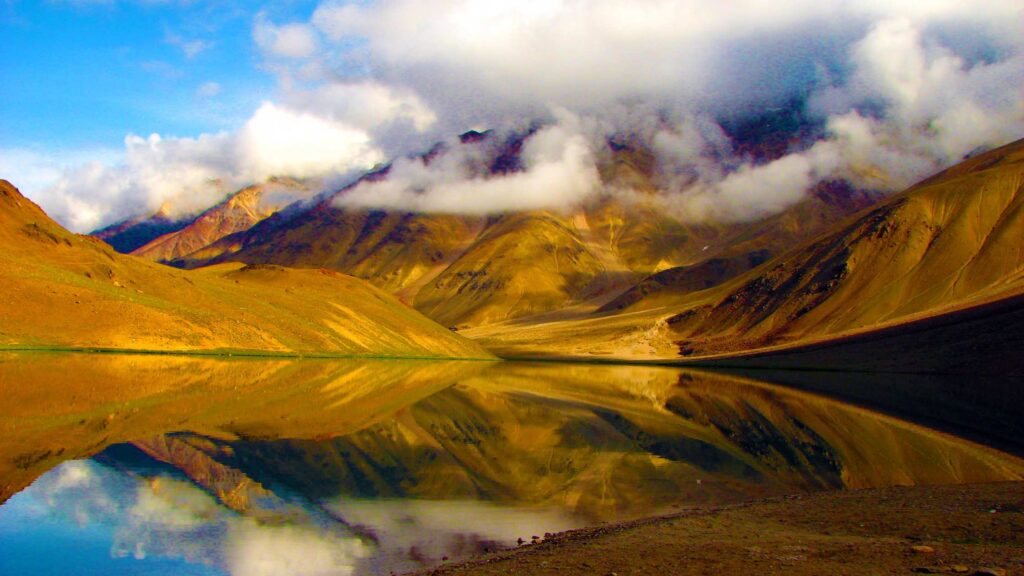
- Watch the sunset. The colours over the lake are incredible and make great golden hour photos.
- Dinner at camp.
Night 1
- Set up your tripod and camera by 9:30 PM
- Start shooting around 10 PM as the Milky Way becomes prominent
- Shoot continuously till midnight, experimenting with settings and compositions
- Take a warm up break in your tent
- If you’re up for it, head back out at 3 AM for the clearest pre dawn skies
Day 2
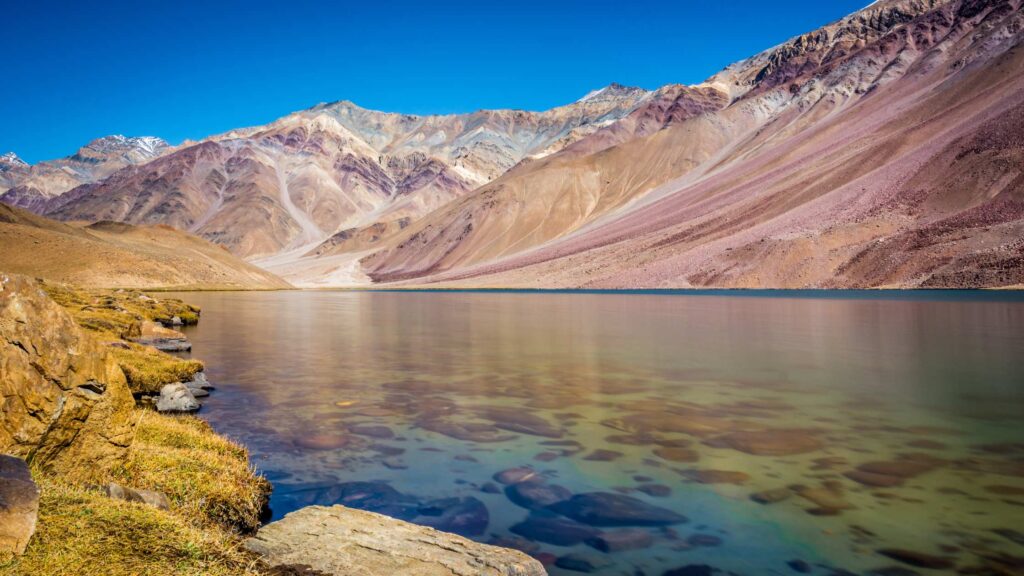
- Sunrise at the lake. The morning light on the turquoise water is absolutely worth waking up for.
- Breakfast at camp
- Review your shots, delete the obvious duds, and feel good about the keepers
- Pack up and begin the drive back
FAQs
Can you see the Milky Way at Chandratal Lake?
Yes. Chandratal offers one of the clearest views of the Milky Way in India. On new moon nights between June and September, the galactic core is visible to the naked eye, stretching across the sky in vivid detail.
Is Chandratal good for astrophotography?
It’s one of the best locations in India for astrophotography. The combination of high altitude, zero light pollution, dry climate, and a photogenic lake for reflections makes it exceptional.
What is the best time for stargazing at Chandratal?
Between June and September, with September offering the clearest skies. Within the night, 10 PM to 3 AM is the best window. Plan around the new moon for optimal darkness.
Do I need professional equipment for astrophotography?
No. A DSLR or mirrorless camera with manual mode, a wide angle lens, and a sturdy tripod is enough to capture stunning shots. Even some modern smartphones with night mode can get surprising results at Chandratal, though dedicated cameras produce far better quality.
Is Chandratal safe at night?
Yes, as long as you stay near your campsite and take basic precautions. Wear warm clothing, carry a headlamp, and don’t wander far from camp alone. Wildlife encounters are rare but possible. The biggest real risks are cold exposure and altitude sickness, both of which are manageable with proper preparation.
The Bottom Line
There’s a moment at Chandratal, usually somewhere around midnight, when you stop adjusting camera settings and checking your screen and just look up. Really look. The Milky Way is so bright it almost doesn’t feel real.
The silence is absolute. The lake behind you reflects everything above you. And for a few minutes, all the bad roads and freezing temperatures and hours of driving just dissolve completely. You’re standing on a tiny patch of rock in the Himalayas, looking at the same galaxy that every human who ever lived has looked at, and somehow it’s never felt this close before.
That’s why people come back to Chandratal. Not for the photos, though those are stunning. For this feeling.
Also read: Chandratal Lake Complete Travel Guide 2026: How to Reach, Best Time, Permits & What to Expect