July is Spiti’s peak-access month for the full circuit, but your plan depends on whether you’re travelling in early July or mid/late July.
We’ve been running trips to Spiti for years from our base in Himachal, and most people mess up because they treat all of July the same. They aren’t. This guide explains what’s usually open, what’s uncertain, and how to plan safely.
Quick verdict
Here’s what you need to know first!
Is Spiti Valley open in July?
Yes. Shimla side is the safer backbone. Manali side depends on pass clearance and road conditions.
- Early July
Shimla route + Kaza core, keep Chandratal optional. First week? Passes might be open but conditions are uncertain.
- Mid/Late July
Full circuit attempt + Chandratal if accessible. Roads are tested, camps operational, actual reports available.
- Biggest mistake
Planning entirely around Manali-Kaza or Chandratal without backup. Build flexibility into your dates.
Is Spiti open in July 2026? (Shimla vs Manali route)
When people ask ‘is Spiti open in July’, they mean the full Manali-Kaza circuit with Chandratal. But Spiti Valley itself is open year-round via Shimla/Kinnaur route through Reckong Peo, Nako, Tabo to Kaza. It’s the Manali side that’s seasonal.
July demand spikes because people want Kunzum Pass and Chandratal. Mid to late July is when that becomes realistic. First 10 days of July? We tell clients: plan Shimla in, keep Manali as ‘maybe’ exit.
First half July: Shimla route is reliable. Second half July: full circuit possible but not guaranteed. Check road status 2-3 days before departure and have plan B.
One important note for the Shimla side in 2026: While the Shimla–Kinnaur–Spiti route is technically year-round, NH-5 took heavy damage during the 2025 monsoon — especially around Nigulsari and the Pooh–Kaurik stretch in Kinnaur. Repair work continues through 2026, so even though the route is your “reliable” backbone, expect single-lane stretches, holding patterns at repair zones, and slower transit times than in pre-2024 years. The route is open and usable. Just don’t assume it’ll be smooth.
Spiti Valley road status in July (how to check)
Check the official Lahaul & Spiti district website (hplahaulspiti.nic.in) Road Status section. It’s maintained by administration and accurate.
‘Open’ means passenger vehicles can go. ‘Partially open’ or ‘4×4 only’ means rough road, water crossings, hatchbacks won’t make it. ‘Landslide blocks’ means wait.
Before leaving Manali or Keylong for Kunzum, check status that morning. Ask drivers, locals, travel groups. Roads change daily.
Manali to Kaza road opening date
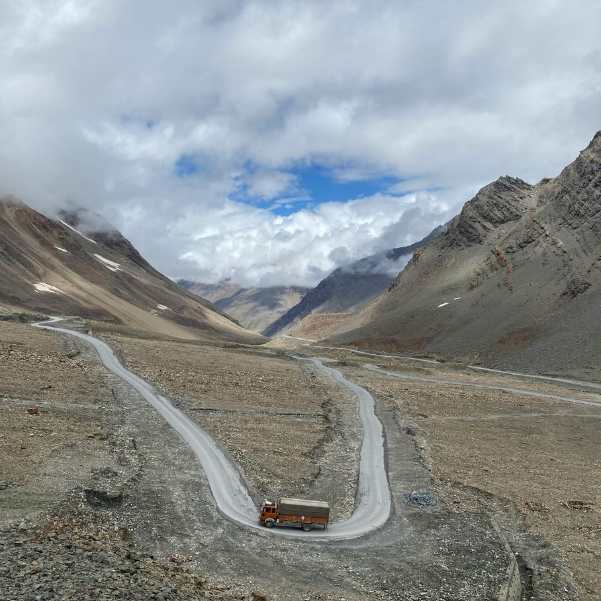
There’s no fixed date for the Manali–Kaza road. The Border Roads Organisation clears Kunzum Pass based on conditions, not calendars, and the date shifts every year. But here’s what’s changed in recent years and what the actual pattern looks like.
The Atal Tunnel changed the timeline. Operational since October 2020, the tunnel bypasses Rohtang Pass entirely — shaving 2 to 3 hours off the drive and, crucially, freeing up BRO crews to focus on Kunzum clearance earlier in the season. The Manali–Kaza route now runs: Manali → Atal Tunnel → Gramphu → Batal → Kunzum Pass → Losar → Kaza (roughly 182 km, 7–10 hours).
The actual recent opening pattern:
- 2022: Opened 3 May (record-early)
- 2023: Opened late May / early June
- 2024: Opened in the first week of June
- 2025: Opened on 24 May for 4×4 vehicles only; full civilian access about two weeks later
By July, the road has been open for at least a month in most years, but expect rough patches especially in the Gramphu–Batal stretch: water crossings, slush, narrow sections, and the occasional landslide hold-up. Drive times can stretch to 10 hours in early July if you hit traffic at a repair zone or a swollen stream crossing. By mid-to-late July, conditions are normally settled and the route runs smoothly — assuming the monsoon hasn’t dropped fresh damage that week.
When does Kunzum Pass usually open?
Kunzum Pass (4,551 m / 14,931 ft) typically opens between mid-May and mid-June, depending on snowfall and BRO clearance speed. Historical pattern: 2022 opened 3 May (record-early), 2024 opened the first week of June, and 2025 opened on 24 May for 4×4 vehicles only with full access following about two weeks later. By July, it has been open for several weeks in most years.
That said, the first 7–10 days after opening are always rough — cold winds, slush, narrow sections, and snow walls on either side of the road. Families with kids or anyone on a tight timeline should avoid those early opening days. By mid-July, the road has been driven on enough times that the surface is dry and conditions are noticeably better.
Can you visit Chandratal in July?
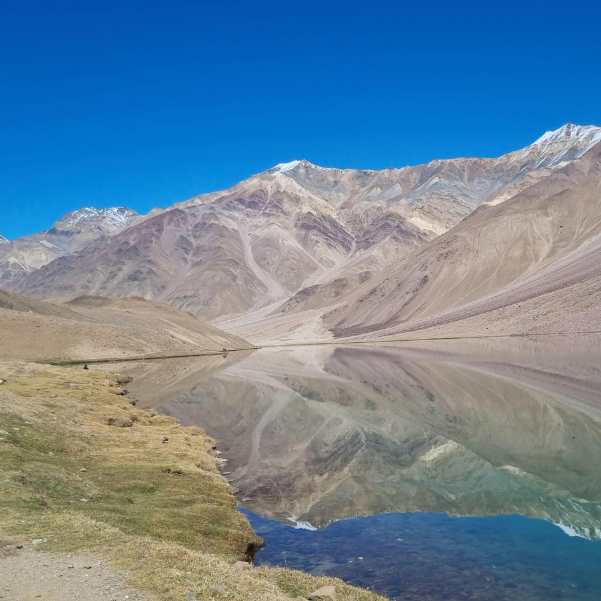
We’ll help you understand –
In Early July
It’s often uncertain or impossible. Batal-Chandratal road might not be cleared, camps not fully set up. Keep optional. Mid/Late July: much better. Camps running, road cleared. Still check status but reasonable to plan.
If Chandratal closed, best alternatives from Kaza
- Key Monastery (biggest in Spiti, sunset views)
- Kibber-Chicham circuit (Asia’s highest bridge)
- Langza-Hikkim-Komic loop (world’s highest post office, Buddha statue)
- Pin Valley/Mudh village (offbeat, peaceful)
- Dhankar Monastery and Lake trek.
Spiti weather in July
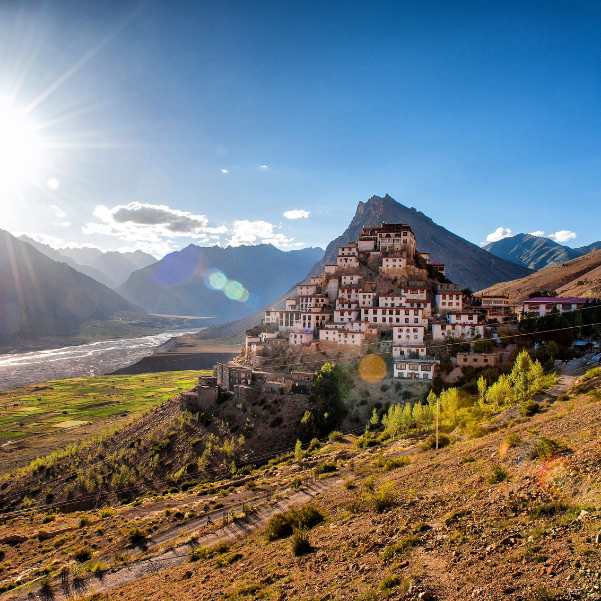
- Daytime in Kaza: 20-25°C, comfortable. Night: 5-10°C, need layers.
- Higher altitudes (Chandratal, Kunzum): day 15-20°C, night 0-5°C or below.
Sun is brutal at altitude. SPF 50 sunscreen, lip balm, sunglasses essential. Wind strong at passes. Pack thermal inners, fleece/down jacket, windproof outer, trekking pants (not jeans), gloves, cap, trekking shoes. No sneakers or jeans as primary gear.
Best Spiti itinerary for July (7 days)

These are the two versions, you could pick the one that best suits you!
Version A: Early July (safer, Shimla route)
- Day 1: Delhi/Chandigarh to Shimla/Narkanda.
- Day 2: Narkanda to Sangla/Chitkul.
- Day 3: Sangla to Kalpa (acclimatization).
- Day 4: Kalpa to Tabo via Nako.
- Day 5: Tabo to Kaza, Key Monastery + Kibber sunset.
- Day 6: Kaza circuits (Langza-Hikkim-Komic + Dhankar). Day 7: Buffer or return route.
Version B: Mid/Late July (full circuit with Chandratal)
- Days 1-5: Same as Version A.
- Day 6: Kaza to Chandratal (if accessible) or Losar as fallback. Book camps advance.
- Day 7: Exit to Manali via Kunzum Pass, Gramphu, Atal Tunnel (7-8 hours).
Spiti trip cost in July
July is peak season. 7-day trip per person from Delhi/Chandigarh:
- Budget (₹18,000-25,000): Shared transport, basic stays, local food. No Chandratal.
- Standard (₹35,000-50,000): Private cab split 4-5 people, mid-range hotels, includes Chandratal.
- Premium (₹60,000-80,000+): Private cab 2-3 people, best hotels, organized camps, more flexibility.
- Private cab full trip: ₹55,000-70,000. Split among 5 = ₹11,000-14,000/person. Split among 2 = ₹27,000-35,000/person. Chandratal camping: ₹2,500-4,000/person/night.
Booking checklist

Have this handy to keep your trip hassle-free:
- Buffer days: Minimum one, two if you can. Roads block unexpectedly in July, especially on the Manali side. If you’re flying back on a non-refundable ticket the same evening you exit Spiti, you’re asking for trouble.
- Acclimatisation: Don’t rush to 4,000m+. Build in a halt at Kalpa or Tabo if coming from Shimla side, or use the first day around Kaza for light activity only. Drink 3–4 litres of water daily, avoid alcohol the first 48 hours, and don’t sleep significantly higher than where you slept the previous night.
- Vehicle: Shimla route to Kaza — a hatchback with decent ground clearance is fine. Manali side via Kunzum — SUV minimum. Chandratal road from Batal — 4×4 strongly recommended; the road is narrow and rocky.
- Cash and ATMs: Last reliable ATMs are at Reckong Peo (Shimla side) and Manali (Manali side). The SBI ATM in Kaza is the most dependable in-valley option, but it frequently runs out of cash or goes offline — don’t bank on it. Carry enough cash in mixed denominations for the entire trip plus a ₹3,000–5,000 emergency buffer.
- Fuel: Fill up at Reckong Peo or Manali before going deep into Spiti. The only reliable petrol pumps on the entire circuit are at Reckong Peo, Tabo, and Kaza. Top up at every single one regardless of how much you have left — there’s nothing between them, and breakdowns happen.
- Network: BSNL postpaid is the only network that reliably works in Spiti. Jio and Airtel become patchy past Reckong Peo and unreliable past Pooh. If you don’t have a BSNL connection, pick up a prepaid SIM in Shimla or Manali. Download Google Maps offline for the entire region. Write important numbers (your driver, hotel, emergency contact) on paper.
- Medicines: Headache relief, anti-nausea meds, ORS sachets, antacids, motion sickness tablets, and any personal prescriptions. Pharmacies in Spiti are scarce — Kaza has one small one, and beyond that you’re on your own. A note on Diamox: it’s a prescription drug for altitude sickness and should only be taken if your doctor advises it — not as a default packing item. Acclimatisation, hydration, and gradual ascent are your real protection.
We’ve been organizing Spiti trips for years from Himachal. If you want help planning July dates, reach out. We’ll build an itinerary matching road reality. WhatsApp: +91-7018537498 or email [email protected]
Frequently Asked Questions (FAQs)
Is Spiti Valley open in July 2026?
Yes. The Shimla/Kinnaur route is almost always open by this time. The Manali route via Kunzum Pass typically opens by mid to late June, making mid to late July the most reliable window for the full circuit.
Is the Manali to Kaza road open in early July?
Usually yes, but with caveats. The road typically opens in late May or early June, so by early July it has been open for a few weeks. That said, you can still encounter slush and narrow sections in the first week of July. Check road status two to three days before you travel and keep a backup plan ready.
What is the typical Manali to Kaza road opening window?
Usually between late May and mid-June, though there is no fixed date. It depends on snow clearance by the BRO, total snowfall that winter, and weather conditions in the weeks leading up to it.
When does Kunzum Pass usually open?
Typically in late May or early to mid-June. In 2025 it opened in mid-June. The first seven to ten days after opening can be challenging with cold temperatures, wind, and slush on the road. By mid-July conditions are considerably better.
Can I do the full Spiti circuit in July?
Yes. Mid to late July is the best window when both the Manali and Shimla routes are fully operational. Early July is possible but the Manali side may have rough sections. Always check current road status before you go.
Is Chandratal Lake accessible in July?
Yes, but timing matters. Early July can be uncertain depending on how quickly the road has cleared that season. Mid to late July is the safer bet, when camps are operational and the road is more reliably passable. Check status from Kaza or Batal before driving up.
Are Chandratal camps open in July?
Yes, fully operational. Camps generally open from mid to late June through September. July is peak season so book in advance. Expect to pay roughly Rs 2,500 to 4,000 per person per night, inclusive of tent and meals.
If Chandratal is closed, what are the best alternatives from Kaza?
There is plenty to work with. Key Monastery, the Kibber to Chicham circuit with Asia’s highest bridge, the Langza to Hikkim to Komic loop where Hikkim has the world’s highest post office, Pin Valley and Mudh village, and the Dhankar Monastery and Lake trek are all strong options.
How cold is Spiti in July?
In Kaza, daytime temperatures sit around 20 to 25°C and nights drop to 5 to 10°C. At higher altitudes, days are 15 to 20°C and nights can go to 0 to 5°C or below. Pack thermal inners, a fleece, and a windproof jacket regardless of how warm the afternoons feel.
Does it snow or rain in Spiti in July?
Snow in July is extremely rare — you might see old snow on high passes like Kunzum, but fresh snowfall is unusual. Rain inside Spiti core (Kaza, Tabo, Pin Valley) is also minimal because the valley sits in a rain shadow.
Is July safe for families and couples in Spiti?
Yes, it is one of the safer months to visit. Roads are open, weather is pleasant, and services are operational. Mid to late July is especially reliable. Follow proper acclimatisation protocol, carry altitude sickness medication, and stay hydrated throughout.
Do I need a 4×4 for Spiti in July?
On the Manali to Kaza route via Kunzum Pass, an SUV is strongly recommended. The Gramphu to Batal stretch has water crossings and rough patches that hatchbacks should avoid.
For Chandratal, a 4×4 is the safest option as the road from Batal is narrow and rocky. Vehicles park at the roadhead, and from there it is a short, easy walk of about 1 to 2 km to the lake. A capable SUV can manage in dry July conditions, but a hatchback should not attempt this route.
Can a hatchback do Spiti in July via the Shimla route?
Yes. A hatchback with decent ground clearance can handle the Shimla route through Kinnaur via Reckong Peo, Nako, Tabo, and into Kaza. The road is paved for most of the way. Drive carefully on the mountain sections and avoid pushing through in poor visibility.
How many days are enough for Spiti in July?
Seven days is the sweet spot if you are starting from Delhi or Chandigarh. It allows for proper acclimatisation, covers Kaza and the main attractions, and builds in a buffer day. Six days works if you are starting from Manali. Eight days is ideal if you want to include Pin Valley or prefer a more relaxed pace.
What should I pack for Spiti in July?
Clothing: thermal inners, a fleece or down jacket, a windproof outer layer, trekking pants, cap, gloves, and sturdy trekking shoes. Sun protection: SPF 50 sunscreen, SPF lip balm, and good sunglasses.
Medicines: Diamox, paracetamol, antacids, and ORS sachets. Essentials: a refillable water bottle, power bank, headlamp, and sufficient cash as ATMs are limited and unreliable in the valley.
What is the approximate cost of a 7-day Spiti trip in July?
Budget travel on shared transport with basic homestays runs around Rs 18,000 to 25,000 per person.
A standard trip with a private cab split between four to five people and mid-range hotels including a Chandratal camp comes to roughly Rs 35,000 to 50,000 per person.
A premium trip with a private cab for two to three people, better hotels, and organised camps can go from Rs 60,000 to 80,000 or more per person.
Making your July Spiti trip actually work
July in Spiti is special, but it needs smart planning. We’ve seen too many travelers show up in the first week of July expecting perfect conditions, only to spend half their trip waiting for roads or dealing with last-minute route changes.
The valley rewards patience and flexibility. Whether you’re coming for the monasteries, the high passes, or just to disconnect from the chaos down in the plains,
Spiti will deliver, but only if you plan around reality, not Instagram posts from last September.
We’re based right here in Shimla, we run these routes year-round, and we know what actually works in July versus what just sounds good on paper. If you want a trip that’s built around actual road conditions, local intel, and real backup plans, we’re here to help.
Also read: Chandratal Lake 2026: When It Opens, How to Reach, Camping Rules, and a Perfect Day Plan