
“Will I even find proper vegetarian or Jain food in Spiti?” If you have typed something close to this into a search bar, you are not alone. It is one of the most common worries among travellers planning a Spiti trip, and honestly, it deserves a straight answer rather than a vague “you’ll manage.”
Spiti is remote. Villages are small. Ingredients are limited by what the last supply truck brought in. And if you follow a Jain diet, the challenge goes a level deeper because onion and garlic are default ingredients in almost every kitchen across the valley. This guide on Spiti for vegetarians and Jains does not sugarcoat any of that. It goes village by village, tells you what you can realistically eat, where things get difficult, and what you need to carry or communicate to make it work.
Quick Answer

Yes, vegetarians can manage in Spiti without serious difficulty. Most cooking in the valley is already vegetarian-leaning, and the staples of dal, rice, roti, and simple vegetables are available at nearly every stop. Jain food is also possible, but it requires advance planning, clear communication with hosts, and backup food for remote stretches.
What you can eat depends heavily on which village you are in, what season you are travelling in, and whether you are eating at a homestay or a cafe. If you are searching for a reliable guide on Spiti for vegetarians and Jains, the most honest one-line summary is this: Kaza is easy. Small villages require flexibility.
Reality Check: Food in Spiti Is Not Like Cities

This needs to be said before anything else. Spiti is not a food destination. It is a remote high-altitude valley where supply chains are fragile, growing seasons are short, and culinary variety is a luxury that geography simply does not support.
In most homestays, you eat what the family cooks. There is no printed menu. The host prepares a fixed meal, usually dal with rice or roti and one or two vegetable dishes, and that is dinner. If the supply truck has not come through recently, the vegetables might be limited to potatoes and cabbage for days.
Cafes with actual menus exist mainly in Kaza and, to a smaller extent, along the main road near Tabo. Everywhere else, food is simple, repetitive, and functional. This is survival and simplicity, not food tourism. Once you accept that reality, the trip becomes much easier to enjoy.
Understanding Jain Food Challenges in Spiti
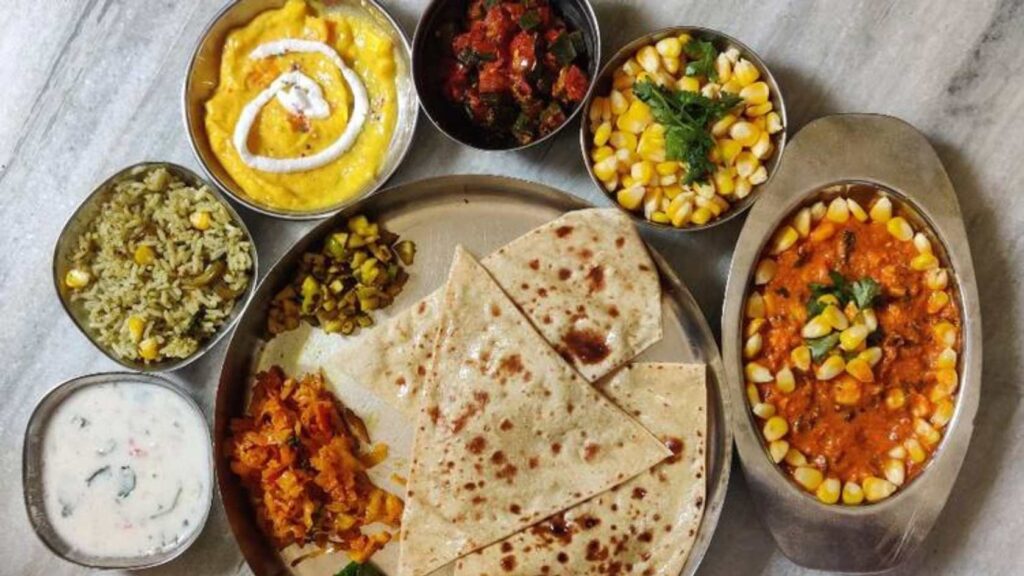
If you follow a Jain diet, Spiti presents challenges that go well beyond the usual vegetarian concerns. Onion and garlic are used as baseline flavouring in nearly every dish across the valley. Dal tadka, vegetable curries, thukpa, even the simplest home-cooked sabzi will almost certainly contain one or both.
There is no concept of Jain cooking in most Spiti villages. Hosts and cooks are unfamiliar with the dietary framework, and the idea of cooking without onion and garlic is not something they encounter in their daily lives. Cross-contamination is also a practical reality. Even if a host agrees to skip onion and garlic for your meal, the same utensils, pans, and cooking oil are being used for everything.
The practical truth is straightforward. If you need strictly Jain meals, you must inform your host or tour operator well in advance. You need to explain your requirements in simple, clear terms. And for the more remote parts of the trip, you should be prepared to guide the cooking yourself or eat from your own supplies.
What Vegetarians Can Eat in Spiti
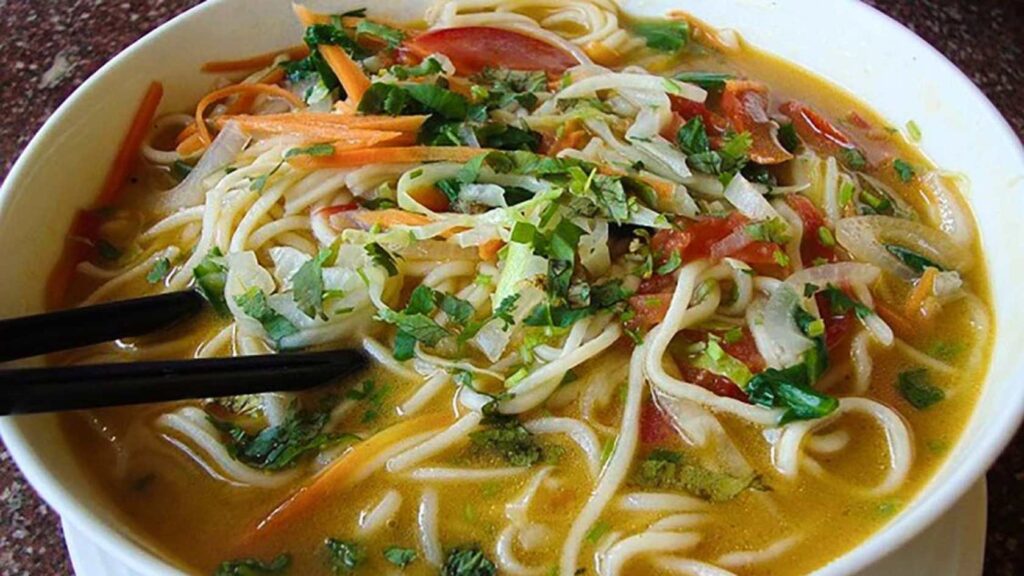
Vegetarians will find enough to eat across Spiti, though the variety will test your patience by the end of the trip. Here is what is realistically and commonly available.
Dal and rice form the backbone of almost every meal in the valley. Whether you are at a homestay in Kibber or a cafe in Kaza, some version of dal with steamed rice will be on offer. Roti and chapati are available at most stops, though in some of the highest villages, rice is more common than wheat-based bread.
Vegetable curries are simple and seasonal. Potatoes dominate, followed by cabbage, peas, and whatever else has arrived with the latest supply run. Thukpa, the Tibetan noodle soup, is widely available in a vegetarian version, but always confirm the broth is not meat-based. Momos are common across the valley, and vegetable momos are standard, though it is worth checking the filling because mixed batches happen.
Maggi is the unofficial emergency meal of every Himalayan trip and is sold at nearly every stop. Bread, butter, jam, and tea are reliable for breakfast. Eggs are available at most places for those who include them. The honest summary is this: variety is limited, the same dishes will repeat daily, but the food is filling and adequate.
Village by Village Food Guide
This is the section that matters most for real planning. Food availability in Spiti shifts dramatically from one village to the next, and knowing what to expect at each stop saves you genuine frustration.
Kaza: The Food Hub of Spiti

Kaza is the easiest place in the entire valley for vegetarian and Jain travellers. As the main town and sub-divisional headquarters, it has a small but functional cluster of cafes, restaurants, and general stores. You can find places serving proper vegetarian meals with some actual variety, including pasta, fried rice, pancakes, and Indian thali alongside the usual dal and roti.
For Jain travellers, Kaza is where you have the best chance of getting meals prepared without onion and garlic. Several cafes are accustomed to tourist requests and can adjust if you ask clearly. It is not guaranteed at every single place, but it is possible here in a way that it simply is not anywhere else in the valley.
In our experience, travellers who use Kaza as a base for two or three nights and do day trips to surrounding villages have a significantly easier time with food than those who move to a new remote village every single day.
Tabo: Simple but Manageable

Tabo has a handful of homestays and a couple of small roadside eateries. The food is mostly fixed homestay meals, with dal, roti, rice, and a basic sabzi being the standard. Menu-based flexibility is rare, but the quality of home-cooked food here is generally decent and portions are filling.
If you need Jain-friendly food or specific adjustments, inform your host before you arrive. Requesting plain dal without garlic tempering, boiled vegetables, and plain roti is realistic at Tabo, but only when the host has advance notice. Showing up and explaining your needs at dinner time puts the family in a difficult position with limited supplies.
Dhankar: Very Limited Options

Dhankar is a small village with very few homestays and no restaurant culture at all. You eat what is cooked, and the options are basic. There is no menu, no choice of dishes, and no realistic way to customise meals on the spot.
For Jain travellers, Dhankar is one of the harder stops. Without a specific request made well before arrival, the food will almost certainly contain onion and garlic. If Dhankar is on your itinerary, communicate your dietary needs at the time of booking your stay. Better yet, carry enough of your own food to cover at least one full meal here.
Kibber: Better Than the Most Remote Villages

Kibber gets a reasonable flow of tourists, and this has pushed food availability slightly above the baseline of more isolated villages. Basic vegetarian meals are available, and some homestays here are more accustomed to handling traveller preferences than those in the highest settlements.
That said, it is still not cafe-level flexibility. You will get dal, rice, roti, and whatever vegetables are in stock. Jain-specific adjustments are possible with advance notice but should not be assumed. Kibber is manageable, not comfortable.
Langza, Hikkim, Komik: Highest Villages, Lowest Food Options

These are the villages that travellers visit for their dramatic altitude and stark, otherworldly beauty. They are also the places where food becomes most limited. Only homestays operate in these settlements. Vegetables are scarce, especially early and late in the season. There is no customisation available on the spot.
This is where Jain travellers face the greatest difficulty. Cooking is done with whatever ingredients are on hand, onion and garlic are used by default, and asking a host to prepare a completely separate Jain meal in a tiny village kitchen with minimal supplies is genuinely unrealistic. Our team has seen travellers go hungry at these stops because they assumed the food would be adaptable. It usually is not.
The smartest approach is to visit Langza, Hikkim, and Komik as day trips from Kaza and return to your base for meals. If you must stay overnight, carry enough of your own ready-to-eat food to cover at least one or two full meals independently.
Pin Valley: Mudh and Nearby Villages
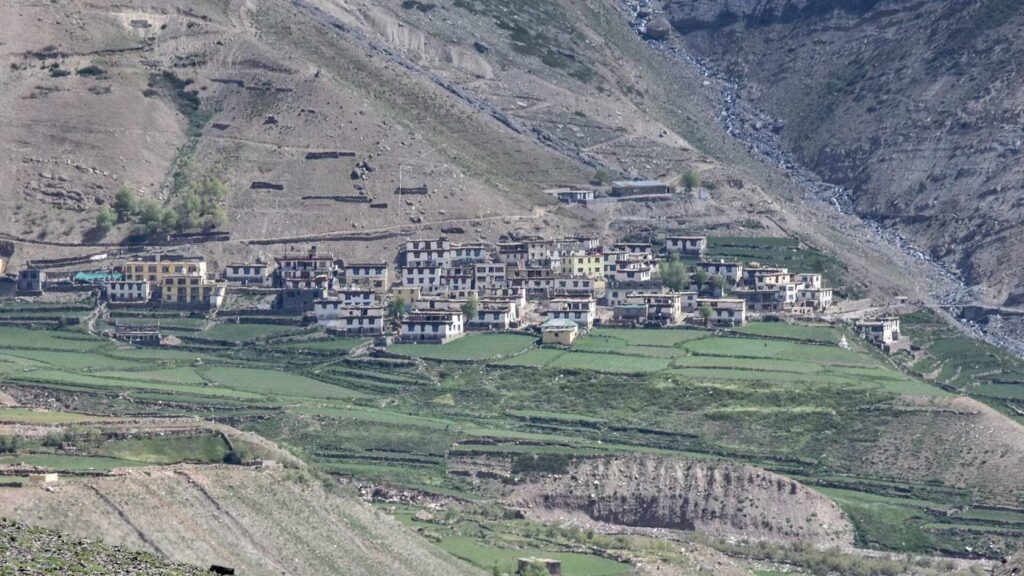
Pin Valley is stunning but extremely basic when it comes to food. Mudh and the surrounding villages have minimal tourist infrastructure, and food availability depends on what the household has in stock that particular week. It changes unpredictably with supply cycles and season.
Carry backup food if Pin Valley is part of your plan. This applies to all vegetarian travellers, not just Jain ones. A few packets of ready-to-eat meals and some dry snacks can be the difference between a comfortable overnight stop and a genuinely hungry one.
Chandratal Area

If your itinerary includes Chandratal, the only accommodation option is tented camps. Most camps serve a fixed buffet-style meal, and while vegetarian dishes are usually part of the spread, Jain-specific food is almost impossible to get without arranging it with the camp operator in advance.
If you follow a strict Jain diet and Chandratal is on your route, contact the camp before your trip, explain your needs clearly, and still carry your own food as a safety net. Relying entirely on the camp menu is risky.
Homestays vs Cafes: Where You Get Better Control

This choice has a bigger impact on your food experience than most travellers expect.
Homestays serve fixed meals. You eat what the family eats, cooked in their kitchen, at their timing. The food is authentic, made with care, and usually vegetarian by default. But the scope for dietary customisation is limited. You cannot swap ingredients, choose between dishes, or request a completely different preparation style without advance notice.
Cafes, which are concentrated almost entirely in Kaza, give you order-based control. You see a menu, specify what you want, and make requests about ingredients. For Jain travellers, this is a significant advantage because you can ask for dishes without onion and garlic and watch them being prepared separately.
The clear takeaway is this: if food control is a priority for you, structure your itinerary so that Kaza is your main base. Limit your nights in remote homestay villages to what is necessary, and plan those nights with proper food preparation.
What You Should Carry
Packing the right food backup is one of the smartest moves a vegetarian or Jain traveller can make for Spiti. This is not about overloading your bag with an entire kitchen. It is about having enough to fill gaps when local food does not work for you.
Ready-to-eat meal packets are lightweight, shelf-stable, and can serve as a proper meal when nothing else is available. Thepla and khakhra are reliable travel staples that last well and need no preparation. Instant poha or upma sachets that only require hot water work well for breakfast at homestays where the morning offering is too basic. Dry fruits and trail mix provide energy on long driving days. If you care about seasoning, a small pouch of cumin, turmeric, and salt can help you add flavour to plain food at remote stops.
We usually recommend packing enough backup food to cover three to four meals. You may not need all of it, but having it in your bag removes the anxiety entirely and lets you focus on the trip instead of worrying about the next meal.
How to Request Jain Food Properly
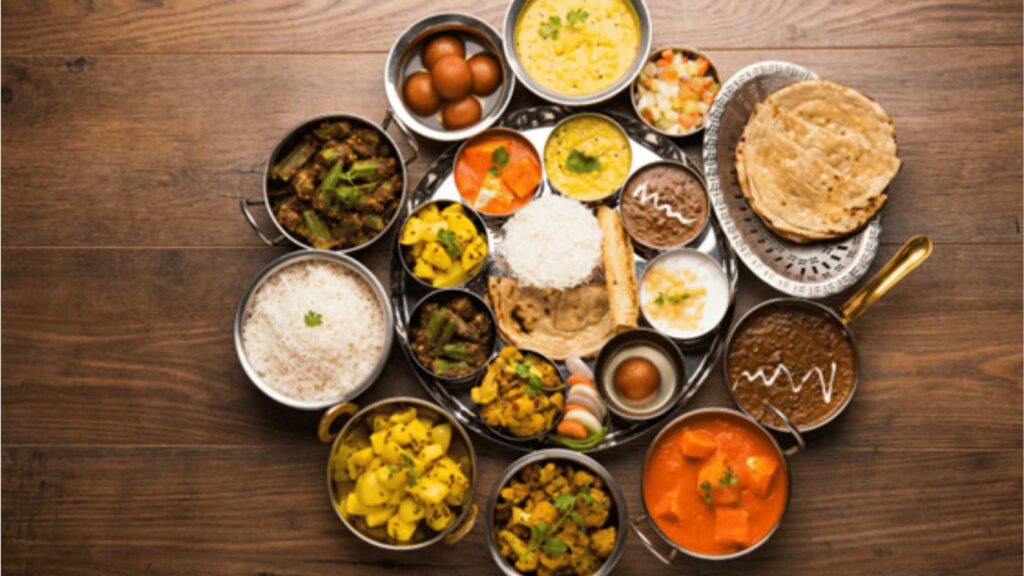
Most guides skip this topic entirely, but getting it right makes a real difference to your experience. The good news is that Spiti’s locals are hospitable and genuinely willing to help if you approach the conversation with clarity and respect.
Inform your host or tour operator before arrival, not when you sit down for dinner. Give them time to plan, buy ingredients if needed, and understand what you are asking for. When explaining your needs, keep it specific and simple. Say “no onion, no garlic” rather than using the term “Jain food,” which may not translate. If separate preparation matters to you, ask politely whether a different pan or pot can be used, but understand that in a small village kitchen, this may not always be realistic.
In our experience, locals across Spiti respond well when travellers approach dietary requests with patience and gratitude rather than as non-negotiable demands. A sincere thank-you after a meal, or a small gesture of appreciation, goes a long way in these communities.
Best Places to Stay for Vegetarian and Jain Travellers
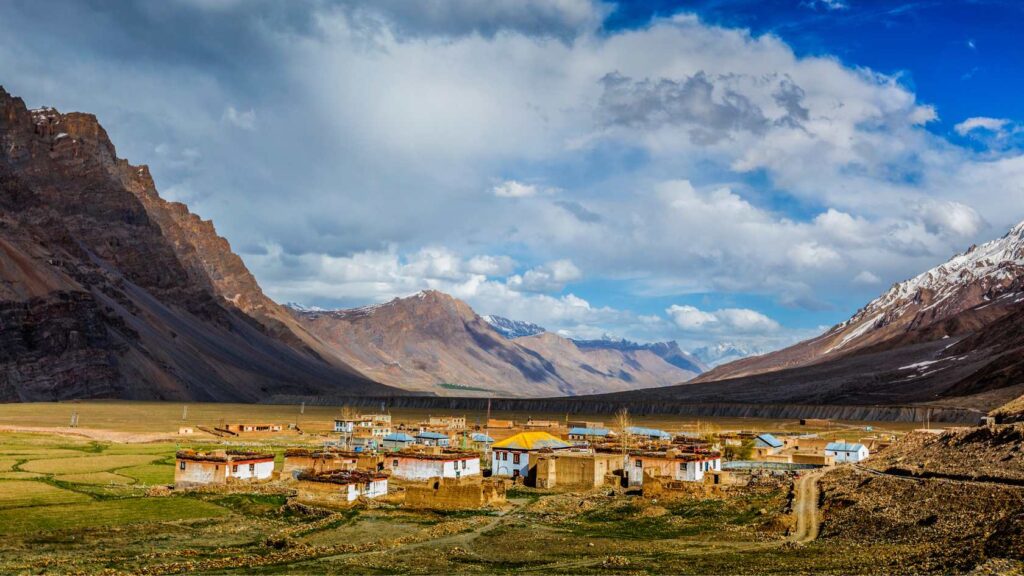
If food is one of your primary concerns, your accommodation choices should be guided by that concern as much as by scenery or sightseeing convenience.
Kaza should be your primary base. It has the widest food options, the most accommodating cafes, and the best realistic chance of getting customised Jain meals. Planning two or three nights here and using Kaza as a hub for day trips to Kibber, Chicham, Key Monastery, and the high villages is the most food-friendly itinerary structure.
Tabo and Kalpa are also reasonable choices for vegetarian travellers, with homestays that serve simple but adequate meals. For Jain travellers, these stops work well enough if hosts are informed in advance.
When booking stays, ask specifically about meal flexibility. Some homestays have built a reputation for being accommodating to dietary requests because they host tourists regularly. A knowledgeable tour planner can match you with these specific properties, which makes the entire food experience smoother from day one.
Common Mistakes Vegetarians Make in Spiti

The most common mistake is assuming restaurant-level variety will be available beyond Kaza. It will not. Outside the main town, the food landscape is basic and repetitive, and expecting anything more leads to disappointment that could have been avoided with honest preparation.
The second mistake is not informing hosts in advance. Arriving at a homestay at dinner time and then explaining that you cannot eat onion or garlic puts the host in a position where they have already cooked and have limited ability to change course. A message or call a day before changes everything.
The third mistake is not carrying backup food. Even if every single meal works out perfectly, having a few snacks and ready-to-eat packets in your daypack gives you confidence and removes the low-level food anxiety that can shadow an otherwise beautiful trip.
And the fourth mistake is stacking too many remote village stays in a row. If you plan consecutive nights in Dhankar, Langza, and Mudh, you are looking at three or more days of extremely limited food options with no reset in between. Break up remote stops with nights in Kaza or Tabo where food access is easier.
Best Route Strategy for Food Comfort
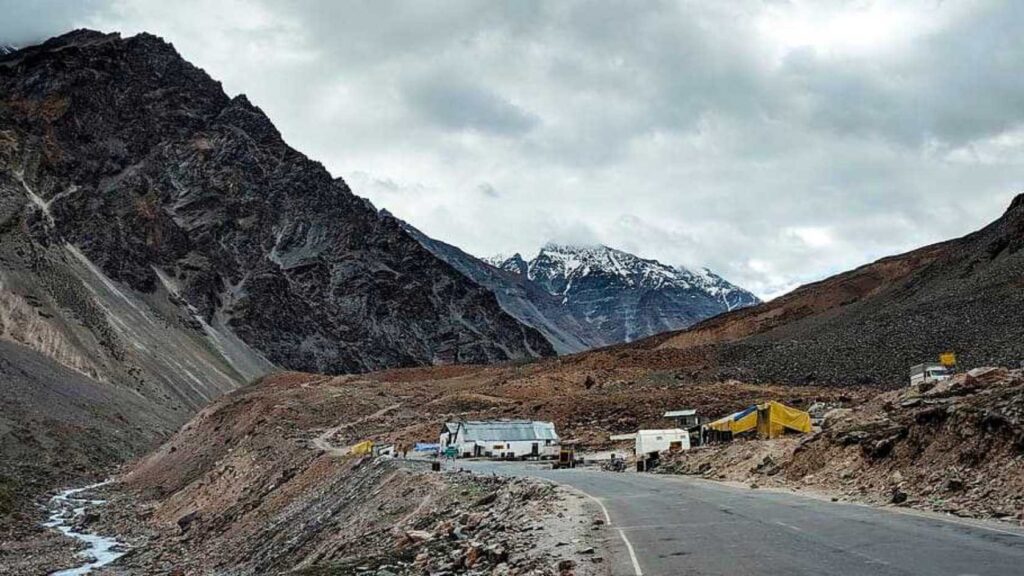
Your entry route into Spiti has a direct impact on food comfort, and this is something every guide on Spiti for vegetarians and Jains should mention. Most travellers do not think about route choice in terms of food access until they are already on the road.
The Shimla entry via Kinnaur is the better route for food access. You pass through larger towns like Narkanda, Rampur, and Reckong Peo where supplies are more available, eating options are more varied, and you can stock up on snacks and essentials before entering the more remote parts of the valley. The gradual altitude gain on this route also helps keep your appetite more stable.
If you enter via Manali, food options thin out sharply once you cross into the Spiti side, and there are long stretches with virtually nothing available. This is manageable for travellers who have packed well, but it catches unprepared vegetarians and Jain travellers off guard.
Regardless of your route, the golden rule is to avoid too many consecutive nights in remote villages without a food-friendly stop in between. Alternate between well-connected bases like Kaza or Tabo and more isolated ones like Langza or Dhankar.
Final Verdict: Can Vegetarians and Jains Travel Spiti Comfortably?
Vegetarians: yes, easily. The default diet across Spiti is vegetarian-friendly, and with basic flexibility, you will eat adequately throughout the trip. It will not be exciting food, but it will be honest, filling, and sufficient.
Jains: yes, but with planning. You need to communicate your requirements in advance, carry your own backup food for remote stretches, base yourself in Kaza as much as possible, and accept that perfection is not realistic in a remote Himalayan valley. With the right preparation, a Jain traveller can absolutely enjoy Spiti without going hungry or compromising the experience.
Spiti is not difficult for food, but it rewards prepared travellers. The bottom line on Spiti for vegetarians and Jains is simple: pack smart, communicate early, set realistic expectations, and your trip will be remembered for the mountains and monasteries, not for meal stress.
FAQs
Is Jain food available in Spiti Valley?
Jain food is not available by default anywhere in Spiti. However, you can get meals without onion and garlic in Kaza at certain cafes if you request it, and at homestays across the valley if your host is informed well in advance. For remote villages and camps, carrying your own food is the safest approach.
Can pure vegetarians survive in Spiti?
Yes, comfortably. Most everyday cooking in Spiti is vegetarian by nature. Dal, rice, roti, seasonal vegetables, Maggi, bread, butter, and tea are available at nearly every stop. The variety is limited, but you will not go hungry as a vegetarian traveller.
Which village has the best food in Spiti?
Kaza has the best food options by a clear margin. It is the only place in the valley with a genuine selection of cafes and restaurants offering menu-based meals, and it provides the most flexibility for dietary preferences including Jain requirements.
Is onion and garlic free food available in Kaza?
Yes. Several cafes in Kaza can prepare dishes without onion and garlic when you ask. It is not the default style of cooking, so you need to request it specifically, but Kaza is the one place in Spiti where this is consistently achievable.
What food should I carry to Spiti?
Carry ready-to-eat meal packets, thepla or khakhra, dry fruits and trail mix, instant poha or upma sachets, biscuits, and glucose tablets. Pack enough to cover three to four meals as backup, especially if you are visiting remote villages or following a Jain diet.
Are there restaurants in Spiti Valley?
Restaurants and cafes with printed menus exist mainly in Kaza and to a smaller extent near Tabo. In all other villages, food is available only through homestays or very small roadside dhabas, and there is no menu-based dining.
Can I get Jain food in homestays?
It is possible if you inform the host well before arrival and explain clearly that you need food prepared without onion and garlic. Most hosts are genuinely willing to try if they understand the request and have time to plan. Do not expect this to happen without advance communication.
Also read: Stargazing & Astrophotography at Chandratal Lake: Why It’s India’s Best Dark Sky Destination