
If you’re sitting somewhere in Delhi, Mumbai, or Bangalore right now, scrolling through Instagram and dreaming of riding alone through Spiti Valley, you’re not the only one. Every season, hundreds of riders ask us the same question, and the honest answer needs more than a yes or no.
Every season, hundreds of riders ask us the same question: can solo travellers join a Spiti bike trip safely, and the honest answer needs more than a yes or no.
So let’s actually talk about it the way we’d talk over chai at a Kaza homestay. This guide comes from years of running rides in this region. We’ve watched solo riders pull it off beautifully, and we’ve also seen solo trips go badly wrong. Both stories matter if you’re planning yours.
Quick Answer
Yes, solo travellers can join a Spiti bike trip safely, but mostly when they ride with a proper group rather than going completely alone. Riding solo through Spiti is doable for experienced motorcyclists who understand high altitude biking, carry the right gear, and travel between May and October.
For everyone else, joining an organised group with a backup vehicle and a local trip captain is the safer call. The valley is rewarding but unforgiving, so safety planning matters more here than on almost any other Himalayan route.
Is Solo Spiti Bike Trip Safe in 2026
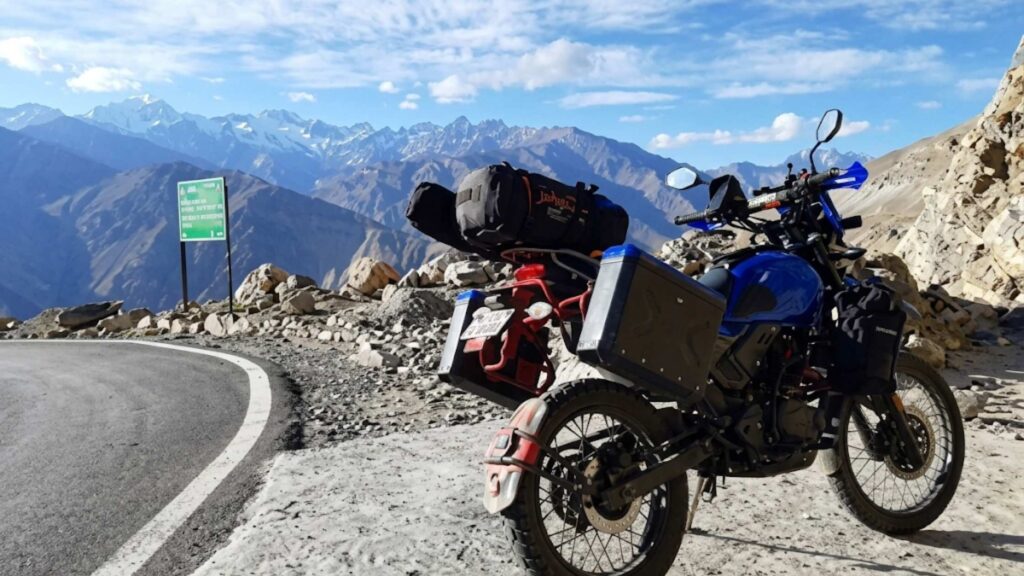
Spiti has changed quite a bit over the last few years. The roads from Shimla side are in much better shape than they used to be, mobile networks have improved slightly in pockets like Kaza and Tabo, and homestays now line almost every village along the way.
So on paper, a solo Spiti bike trip in 2026 is more accessible than it was even five years back. But the valley itself hasn’t changed. Altitudes still touch 3,800 to 4,500 meters, weather still flips without warning, and certain stretches between Losar and Kunzum still have zero help if your bike breaks down.
In our experience running rides every season, solo travel in Spiti is safe for riders who already have multiple long distance Himalayan trips behind them, who know basic bike repair, and who don’t panic when things go sideways.
It’s genuinely risky for first timers, riders who haven’t crossed altitudes above 3,000 meters before, and anyone travelling on a tight schedule. The honest truth is that Spiti rewards preparation and punishes overconfidence equally.
A 25 year old who’s done Ladakh twice will breeze through. A weekend rider whose biggest trip so far is Lonavla will struggle, and that’s not about skill, that’s about exposure.
Why Solo Travel in Spiti Feels Risky
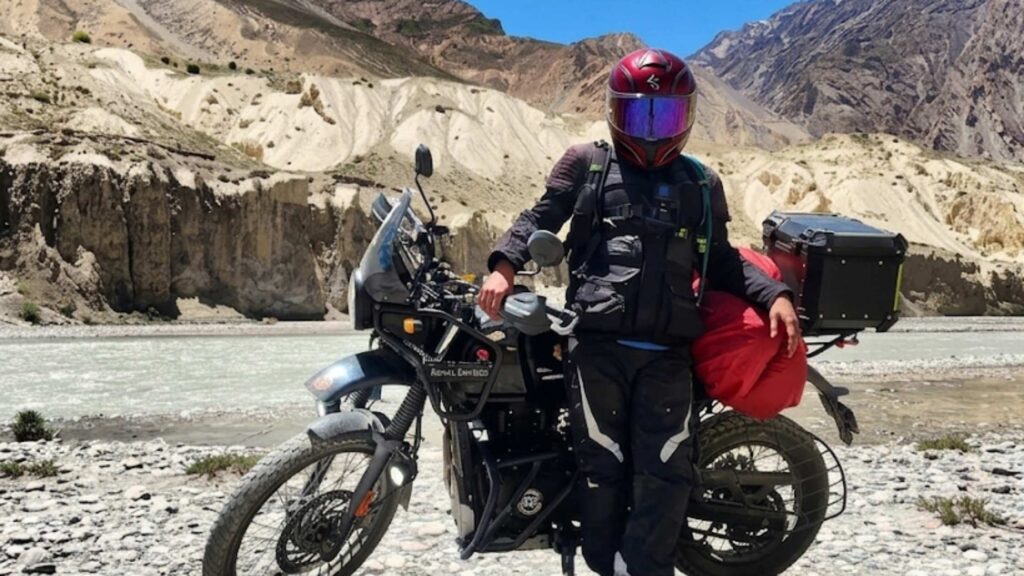
The first thing that hits you in Spiti is the silence. You can ride for an hour and not see another vehicle on stretches like Tabo to Dhankar in the off peak shoulder months. That isolation is beautiful when everything is going right, and terrifying when something breaks.
Most of the route sits above 3,500 meters, with passes climbing to 4,500. Your body is working harder than usual even when you’re just standing still. Add a bike, throttle control, focus on broken roads, and the strain doubles.
Help availability is the part most riders underestimate. Between Kaza and the Manali side, you might find one mechanic in Losar who handles whatever turns up, and that’s pretty much it.
From Shimla side, you have small workshops in Reckong Peo and Tabo, but parts for Royal Enfields are limited and parts for KTMs or other bikes are almost nonexistent. We’ve seen even confident riders get rattled by their first night in a remote homestay with no signal, no other guests, and a sudden snowfall outside. Spiti tests the mind as much as the body.
Real Risks Solo Riders Face
Acute Mountain Sickness is the most common problem, and it’s also the most ignored one. AMS doesn’t care about your fitness or how many trips you’ve done before. It can hit a marathon runner just as hard as someone who hasn’t trained in years.
Symptoms start as a headache, then nausea, then breathlessness, and if ignored at altitudes above 4,000 meters, it can turn dangerous fast. Bike breakdowns are the second risk. Carburettor issues, flat tyres on rocky stretches near Chicham bridge, chain problems, or simply a dead battery in cold mornings.
A solo rider with a broken bike at Kunzum Pass at 4 PM is in a real situation, because traffic thins after that hour and most help is hours away. Weather is the wild card. Even in July, you can get sudden hailstorms near Losar or flash floods on the Manali side.
Roads close without notice. We’ve seen riders stuck for two days at Batal because Kunzum got a fresh dump of snow in late September. Navigation looks easy on Google Maps, but offline reality is different.
Once you cross Kalpa, GPS gets confused on smaller diversions, and signboards are limited. Solo riders without offline maps downloaded properly often take wrong turns and lose hours.
Network issues are real, and not just for Instagram. Only Jio and BSNL work in most of Spiti, and even those drop completely between Nako and Tabo, between Kaza and Losar, and the entire stretch over Kunzum. So you can’t always call for help when you need it.
Best Time for a Safe Solo Spiti Bike Trip
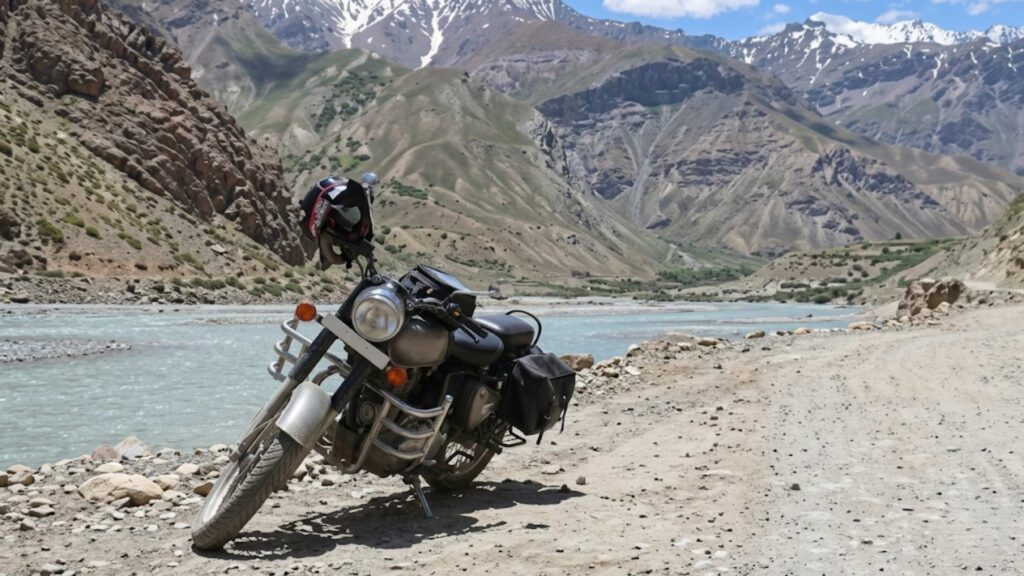
This part really matters for solo riders, more than for groups. The window of May to October is the broad safe season, but inside that window, certain months are far better for someone riding alone.
May is when the Shimla route opens fully, and the lower stretches are dry and warm. The Manali side is still under snow. Solo riders in May should stick to the Shimla–Kaza–Shimla loop and skip Kunzum because it’s not yet open.
June is when the Manali route starts opening up, usually by mid to late June depending on snowfall. Roads are still patchy on the Manali side in early June, so solo riders should wait till the last week.
July and August are peak season, and honestly, these are the safest months for solo travel because traffic is highest, help is easier to find, and homestays are fully open. The downside is sudden monsoon spillover from Kullu side, which can flood the Manali approach. Shimla side stays mostly dry because Spiti is a cold desert.
September is our favourite month for solo riders. Crowds thin, weather is stable, skies are crystal clear, and the valley shows its best colours. Network is the same as July, and most homestays are still open. We genuinely recommend this month if you have flexibility.
October starts shutting things down. By mid October, Kunzum closes, homestays start packing up, and night temperatures drop below freezing. Solo riders shouldn’t plan their first solo Spiti trip in October.
For solo riders who want to travel in the safest season without figuring everything out alone, explore our Spiti Valley bike trip packages.
Safest Route for Solo Riders
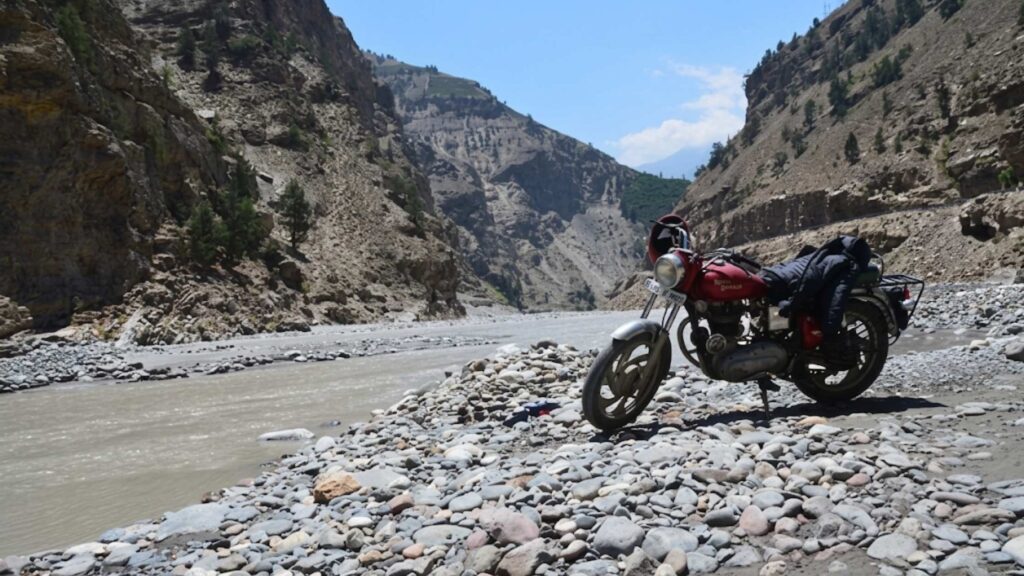
There are two ways into Spiti, and they’re not equal in difficulty for solo riders.
The Shimla route goes through Narkanda, Rampur, Reckong Peo, Nako, and Tabo before reaching Kaza. It climbs gradually over five to six days, giving your body time to acclimatise. Roads are mostly tarred till Pooh, and the first night above 3,000 meters happens around day three.
The Manali route is shorter but brutal. You leave Manali at 2,000 meters and within one day you’re at Batal at 3,800 meters and crossing Kunzum at 4,500. That kind of jump is asking for AMS, especially for solo riders who can’t monitor each other.
In our experience, solo riders should always enter via Shimla and exit via Manali if the route is open. The gradual ascent is not just comfortable, it’s a safety feature. Acclimatisation isn’t optional in Spiti, it’s the difference between a good trip and a hospital visit at Keylong.
For riders who want a safer, better-planned Spiti experience without guesswork, explore our Spiti Valley travel plans.
Solo vs Group Travel in Spiti
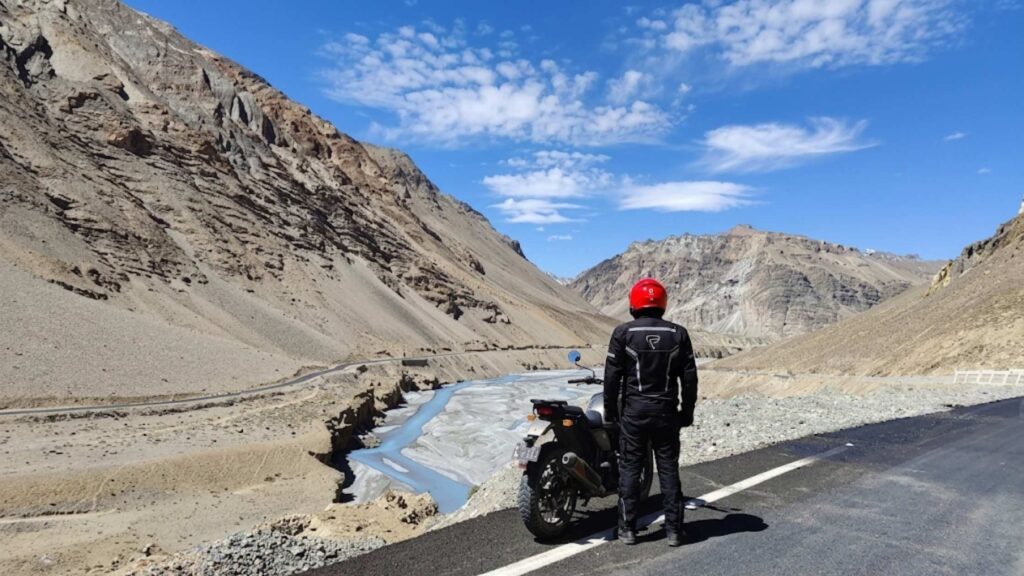
Solo travel gives you freedom. You stop where you want, you stay longer where you like, and you don’t deal with anyone else’s schedule. That’s the romance of it, and it’s real.
Group travel gives you safety nets. Backup vehicle for breakdowns, oxygen cylinders for AMS, a trip captain who knows the road, fellow riders who can help if you fall, and a fixed homestay arrangement so you’re not searching at 8 PM. Both are valid choices.
The mental load of solo travel in Spiti is heavier than people expect. You’re constantly making decisions about fuel, weather, accommodation, road conditions, your own body’s signals. After three days, that decision fatigue catches up with most riders. In a group, that load is shared.
We’ve seen solo riders join our groups in Manali after riding alone from Shimla because the loneliness and stress got to them by day four. There’s no shame in it, but it’s worth knowing this happens often enough that we always have one or two solo joiners on most departures.
Can You Do Spiti Completely Solo
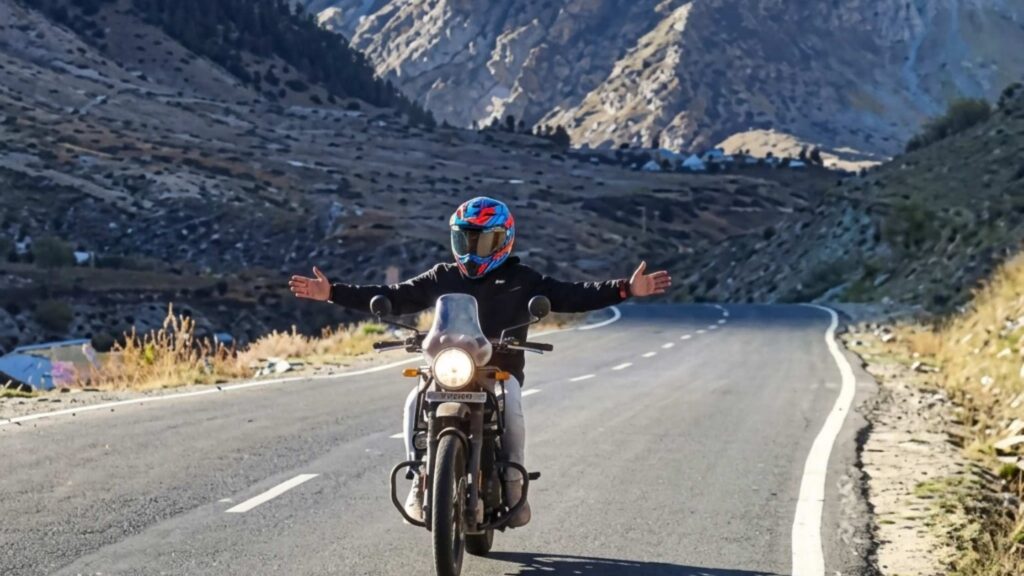
Honest answer, yes, but with conditions. Completely solo means no group, no support vehicle, no companion, just you and your bike.
This works when you have at least three previous high altitude trips on your record, ideally Ladakh or Zanskar. When you’re carrying spare parts, tools, and a basic first aid kit including Diamox.
When you have 8 to 10 days of buffer time so you can wait out bad weather. When you’ve downloaded offline maps for the entire route. And when you’re mentally comfortable spending nights alone in remote homestays.
It doesn’t work for first timers, riders with health conditions like asthma or heart issues, anyone on a tight schedule, or those who haven’t ridden above 3,500 meters before. We’ve seen these riders try and end up either turning back at Pooh or getting stranded somewhere needing rescue.
If you’ve never done a Himalayan ride before, please don’t make Spiti your first solo attempt. Start with Manali to Leh in a group, do one Sach Pass run, and then come back to Spiti. Your future self will thank you.
For riders who want the Spiti experience without the risks of going completely solo, check our Spiti Valley tour options.
Safety Tips for Solo Riders
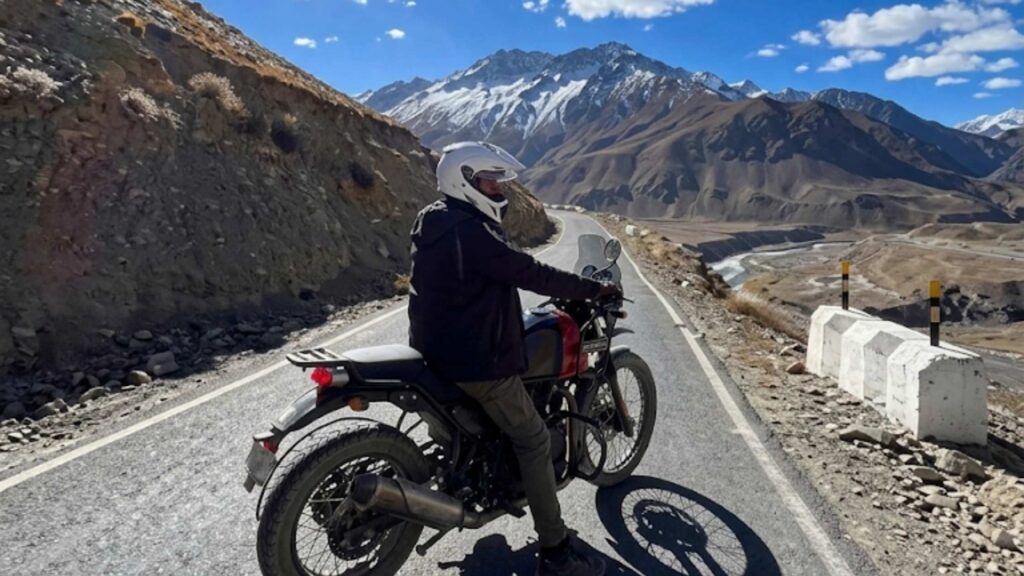
If you’ve decided to ride solo despite everything we’ve said, here are the things that actually matter on the road.
Always inform someone about your daily route and expected arrival point at each stage. Send a text or call when you reach. Even a basic check in system saves lives because if you go missing for 24 hours, someone knows where to start looking.
Carry a Jio and BSNL combo. Postpaid Jio works in pockets even in central Spiti, BSNL works in Kaza and Tabo. Without one of these, you’re properly cut off from the world.
Start your day early. Try to be on the road by 7 AM and off the road by 4 PM. Mountain weather flips after 3 PM, and most accidents happen in the late afternoon when riders are tired and visibility drops.
Carry Diamox as advised by your doctor, ideally starting 24 hours before crossing 3,000 meters and continuing till you’re back below that altitude. For healthy adults, Diamox is a proven help against AMS, but always check with a physician first.
Keep your fuel tank above half at all times after Reckong Peo. Petrol pumps are at Kaza and Tabo, and that’s it for the central stretch. Carry a 5 litre canister as backup if you’re going beyond Kaza towards Manali.
Don’t ride after sunset. Period. The roads have no lighting, animals cross without warning, and broken bridges or landslides aren’t visible at night.
>>WhatsApp us and ride Spiti with a solid plan in place
Common Mistakes Solo Travellers Make
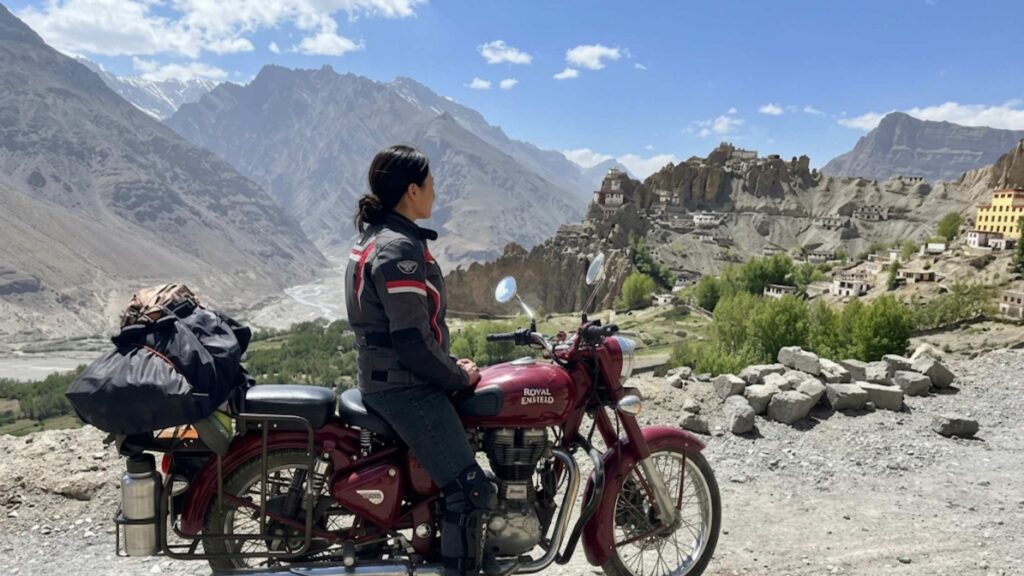
The biggest mistake is rushing the itinerary. We’ve seen riders try to do Spiti in five days because they couldn’t get more leave. Spiti needs 7 to 10 days minimum for a solo rider to do it safely.
Compressing the schedule means skipping acclimatisation days, riding longer hours, and ignoring early AMS symptoms. The second mistake is overconfidence about Indian roads. People who’ve ridden across Rajasthan or Kerala assume they can handle Spiti. The terrain, altitude, and isolation combine to make this completely different.
Skill matters less than experience with conditions. Skipping Diamox is a classic error. Riders read one blog saying it’s not needed, decide to skip it, and then get hit at Hikkim or Komic. By that time, descending is the only fix, and your trip is effectively over.
Carrying too little gear is another one. Solo riders often pack light to save weight, then realise at Tabo that their gloves aren’t warm enough or their tent doesn’t actually fit on the rear rack. Bring proper gear, even if it’s heavier.
Ignoring locals’ advice is the final big mistake. If a homestay owner in Nako says don’t ride to Kaza tomorrow, that’s not over caution. It’s based on weather and road updates they get on local groups. Trust them.
Bike Preparation & Backup Planning
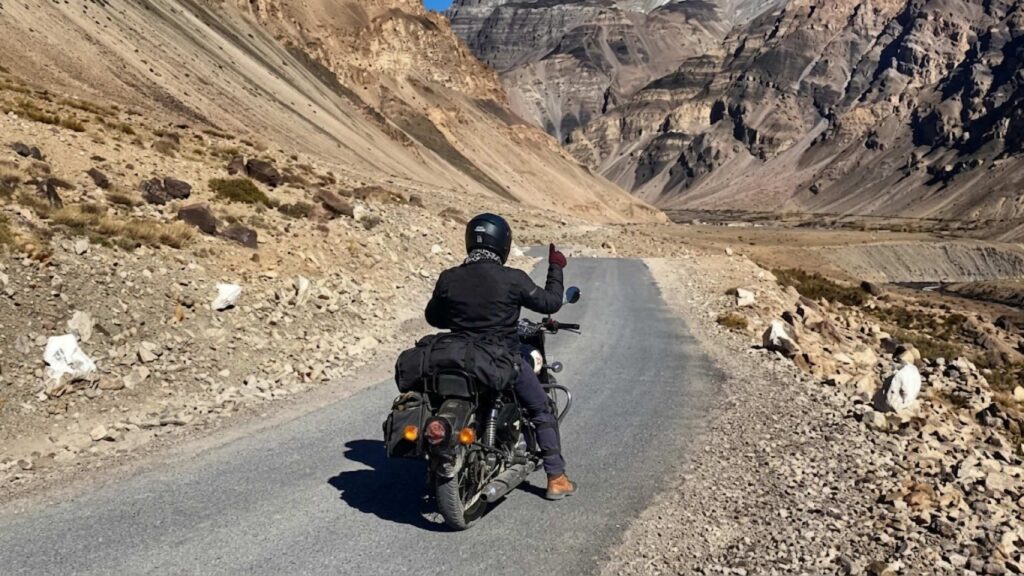
Before leaving for Spiti, get your bike serviced at a workshop you actually trust, not a roadside one. Replace tyres if tread is below 60 percent. Check brake pads, cables, chain tension, and the air filter.
Carburettor tuning matters above 3,500 meters because the air is thin, so an experienced mechanic should handle that. Carry these spares regardless of bike type.
A spare clutch cable and accelerator cable, a puncture kit with at least three patches and tubeless plugs, an extra spark plug, basic tools including a 12 mm spanner, screwdrivers, and a tyre pressure gauge, fuses, and a small can of chain lube.
Petrol planning is non negotiable. The biggest stretch without fuel is Reckong Peo to Kaza, which is roughly 200 kilometres on rough roads. From Kaza, the next pump in either direction is far. Fill up fully, carry a canister, and don’t trust mobile pumps that may not be operating on the day you arrive.
Our team always advises a backup plan that includes a phone number of a Kaza based mechanic or hotel owner, contact details of one of our local guides if you’ve spoken to us, and the address of the nearest medical post which is at Kaza Civil Hospital at around 3,800 meters altitude.
Health & Fitness for Solo Riders
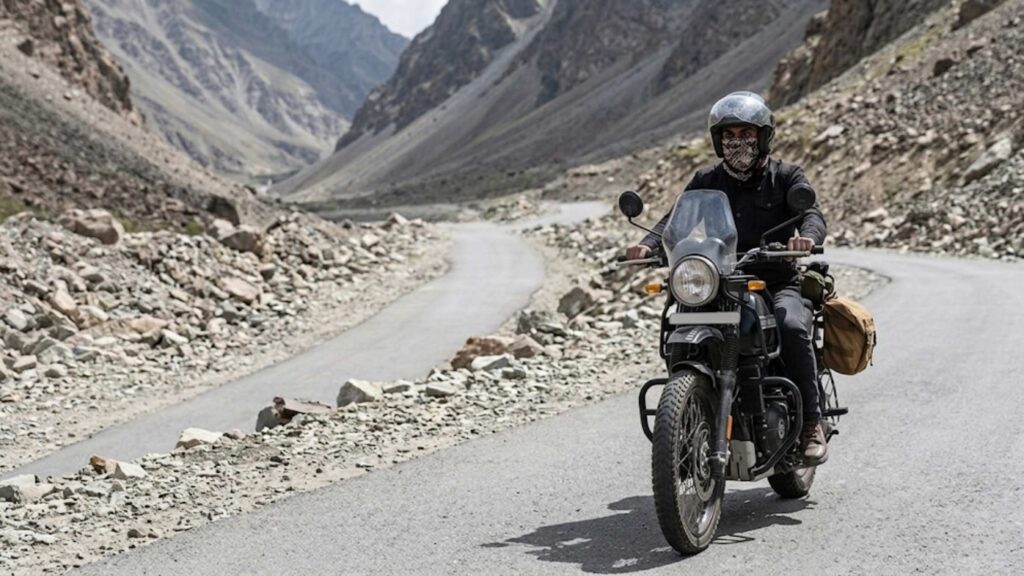
You don’t need to be a marathon runner, but basic cardiovascular fitness helps a lot. Two weeks before the trip, start walking 30 minutes daily and add some breathing exercises. Pranayama style deep breathing trains your lungs to handle thin air better.
Hydration is your single biggest tool against AMS. Drink 3 to 4 litres of water daily in Spiti, even if you don’t feel thirsty. Altitude suppresses thirst, so you’ll get dehydrated without realising it.
Skip alcohol at altitude, especially the first three nights above 3,000 meters. Alcohol amplifies AMS and ruins your sleep, which your body needs for acclimatisation.
When to stop is the most important call you’ll make. If you have a persistent headache that doesn’t go away with paracetamol, nausea, breathlessness while resting, or a feeling of mental fog, stop ascending.
Stay at the same altitude for 24 hours, hydrate, and if symptoms get worse, descend. Do not push through. Solo riders who push through AMS end up needing evacuation, and from Komic or Langza, that’s a serious operation.
We’ve helped evacuate riders over the last few seasons, and in almost every case the warning signs were there a day before. They just chose to ignore them. Don’t be that rider.
Network, Stay & Food Reality
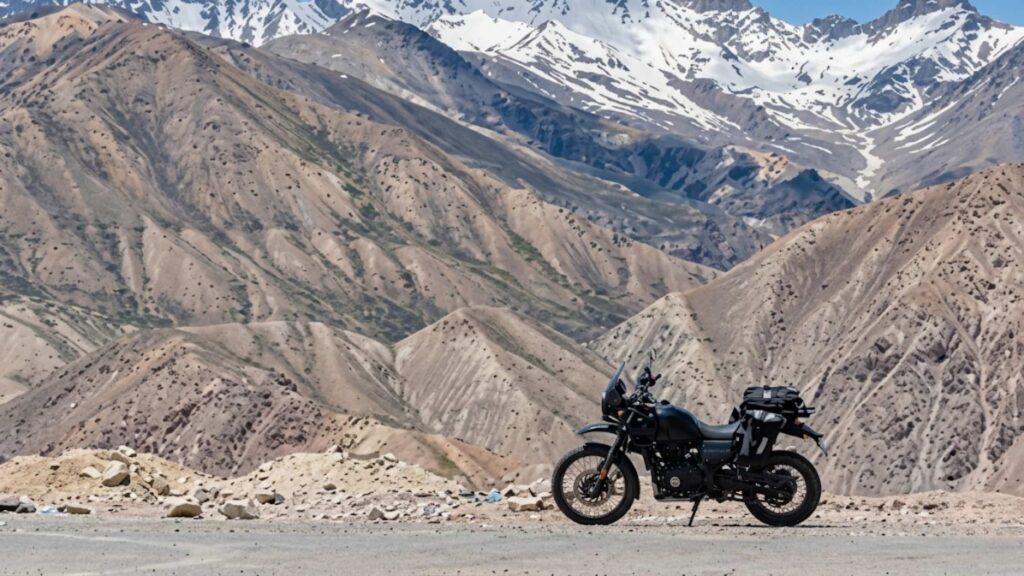
Network coverage in Spiti is a patchwork. Jio works in Kaza, Tabo, parts of Nako, and around Hikkim if you’re standing in the right spot. BSNL covers slightly more, including Losar and the highway. Airtel and Vi essentially don’t exist beyond Reckong Peo. Plan accordingly.
Stay options have improved a lot. Kaza has dozens of homestays from ₹500 to ₹1,500 per night, plus mid range hotels at ₹2,000 to ₹3,500. Tabo, Nako, and Kibber all have multiple homestays.
Smaller villages like Langza, Komic, and Hikkim have basic homestays running at ₹900 to ₹1,500 with meals included.
Food is simple and homely. Most homestays serve dal, rice, rotis, basic sabzi, and momos. Kaza market has cafes serving thukpa, Tibetan bread, pancakes, and decent coffee. Don’t expect variety, expect warmth and decent vegetarian options. Non veg is rare and expensive in this region.
Pre booking matters in peak months of July and August. In September and June, walk ins work fine. Solo riders should always confirm the night’s stay before 4 PM so you’re not searching with a tired body and dropping light.
Why Joining a Group Can Be Safer
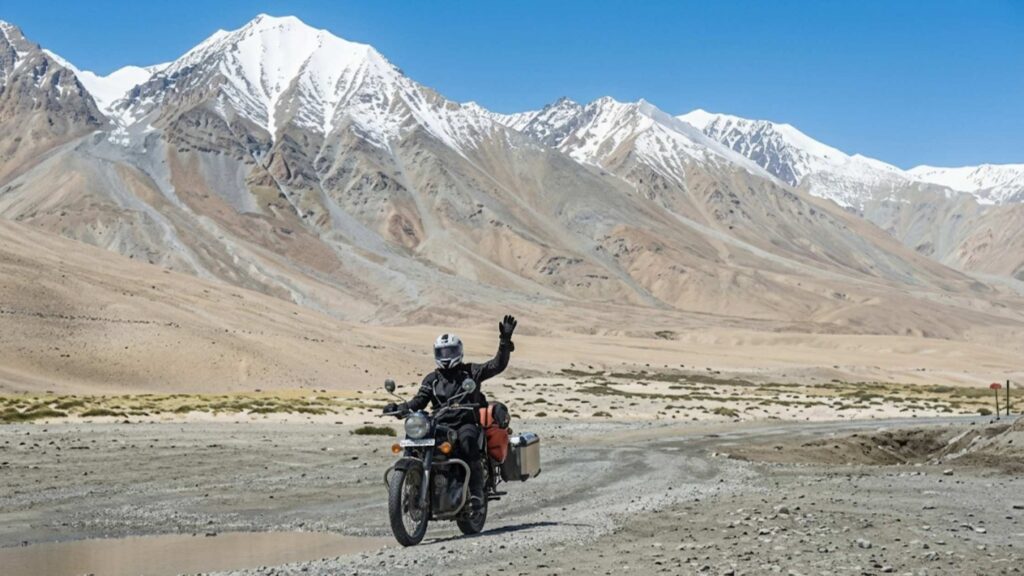
The math is simple. With a group, you have a backup vehicle following you which carries luggage, oxygen cylinders, first aid, and most importantly, can carry your bike if it breaks down. Solo riders don’t have that.
A trip captain rides at the front who knows every turn, every potholed stretch, every safe stopping point. They’ve done this route dozens of times. Their judgment about weather and road conditions saves hours of guesswork.
You have fellow riders watching out for you. If you fall behind, someone notices. If you look unwell, someone asks. If you need help with a flat, three people stop to help. That community is real, and it’s invaluable in Spiti.
Local expertise is the bigger advantage. Our trip captains know which homestay in Kaza has hot water, which mechanic in Reckong Peo can be trusted with your KTM, which short stretch near Gue holds up in case of rain. That knowledge can’t be Googled.
We’ve run Spiti valley bike tour packages for years now, and the safety record speaks for itself when compared to solo attempts we hear about every season.
Recommended Option for Solo Travellers
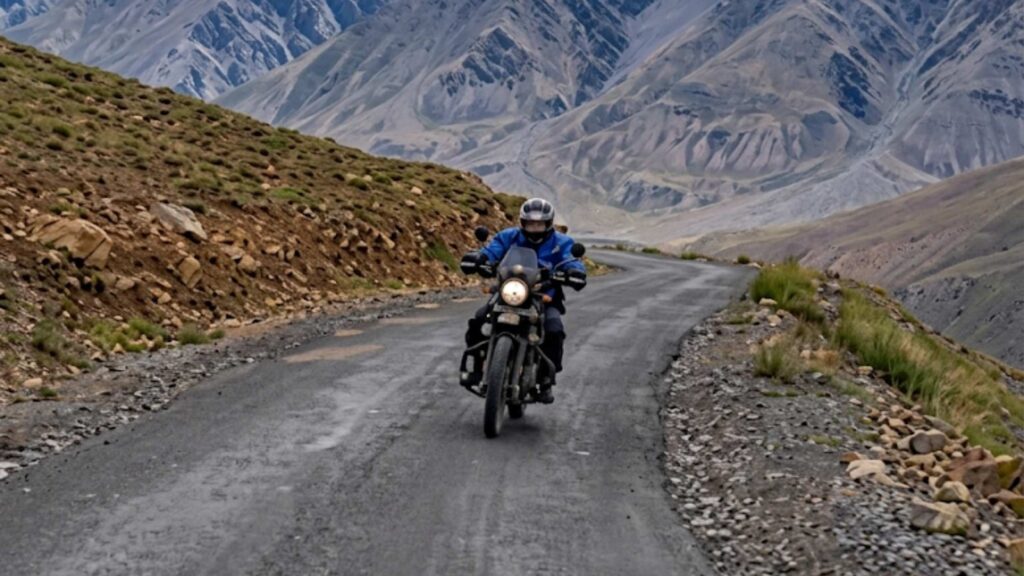
If you’ve read this far and you’re still nervous about going completely alone, our group bike trips are designed exactly for riders like you. Most of our departures have 6 to 12 riders, and on average two or three are solo joiners. So you’re not the odd one out.
Every trip has a trip captain who’s a local from Himachal, a backup vehicle that follows the group throughout, oxygen and first aid kits, pre booked homestays so you don’t search for stays, and a daily route brief so you know what’s coming.
Our team recommends our 7 to 10 day Shimla–Spiti–Manali bike trip for solo joiners because it covers the full circuit with proper acclimatisation, includes both rest days and exploration days, and the group dynamic reduces the mental fatigue that hits solo riders by mid trip.
You ride your own bike, but you’re not alone on the road. That balance, freedom plus safety net, is what most solo travellers actually want without realising it. Trip cost typically falls in the ₹20,000 to ₹30,000 range depending on duration and inclusions.
>>WhatsApp us for expert guidance on your Spiti road trip
Our Honest Verdict
Solo travel in Spiti is doable, but it’s not the right starting point for most riders. The valley is beautiful, but it’s also remote and unforgiving. If you’ve done Ladakh, Zanskar, or Sach Pass before and you know your own body well at altitude, go solo and enjoy it.
If this is your first big Himalayan ride, or your second, joining a group will give you the same scenery, same memories, same Instagram shots, with about a tenth of the risk. There’s no medal for doing it the hard way. The valley doesn’t care how you got there.
Either way, prepare properly, ride within your limits, and respect the altitude. Spiti is one of those rare places that gives back exactly what you put in, and a little more.
FAQs
Is solo bike trip in Spiti safe for women?
Spiti is generally considered one of the safer regions in India for women riders. Locals are warm and respectful, homestays are family run, and there’s no hostility we’ve seen towards solo women travellers. That said, the physical risks of altitude, weather, and breakdowns apply equally, so most solo women riders we know prefer joining a group for the safety net rather than for any social reason.
What’s the minimum experience needed for solo Spiti?
Ideally, at least one prior trip above 3,500 meters and a few thousand kilometres of touring on the same bike you plan to ride. Without that base, solo Spiti is too steep a jump for most riders.
Can I rent a bike in Manali or Shimla and do Spiti solo?
Yes, both cities have rental options. Manali has more variety including Royal Enfield Himalayans and KTMs. Shimla has fewer options but they exist. Make sure the rental includes a permit clause and check the bike thoroughly before signing.
How much does a solo Spiti trip cost in 2026?
A solo trip without group support typically costs ₹20,000 to ₹30,000 depending on whether you own the bike, your fuel use, food choices, and how many days you stretch. Group trips usually fall in a similar range with everything included.
Is Diamox safe to take for the whole trip?
For most healthy adults, Diamox is generally well tolerated for the duration of an altitude trip. But you should consult your doctor before the trip, especially if you have allergies to sulfa drugs, diabetes, or kidney issues. Dosage should always be set by a physician.
Can I do Spiti solo on a Royal Enfield Classic 350?
Yes, but the Himalayan and Bullet 500 are better suited to the terrain. Classic 350 works fine, but you’ll feel the weight on rocky stretches. Tyre choice and tuning matter more than the model itself.
What if I get AMS in the middle of nowhere?
The protocol is to stop ascending immediately, hydrate, and start descending if symptoms worsen. From most points in central Spiti, descending to Tabo at around 3,280 meters brings relief within hours. If you can’t ride yourself down, flag a passing vehicle. Most locals will help without question.
Are there ATMs in Spiti?
Kaza has a couple of ATMs but they often run out of cash, especially in peak season. Carry enough cash from Reckong Peo or earlier. Aim for ₹15,000 to ₹20,000 in cash for a full trip to be on the safer side.
Is online booking trustworthy for homestays?
Booking.com and Airbnb work for Kaza and a few villages. For smaller villages, calling directly through phone numbers shared on travel forums is more reliable. WhatsApp confirmation is standard practice in Spiti.
How do I handle a breakdown if I’m completely alone?
Don’t panic. Most stretches see at least one vehicle every couple of hours. Flag down trucks, taxis, or other riders. Most will help with calls or take you to the next village. Carry a power bank and the contact numbers of mechanics in Kaza, Reckong Peo, and Manali in advance.
Should I take a satellite phone?
Not really necessary in 2026. A Jio postpaid plus a BSNL prepaid covers most of the populated stretches. Satellite phones are expensive and overkill for the standard tourist circuit.
Can I join a group trip mid route if my solo plan goes wrong?
Yes, this happens often. Riders who’ve struggled solo from Shimla often join us in Kaza or Manali for the rest of the journey. Reach out on WhatsApp ahead of time and we’ll see what works for the dates you’re around.
Can Solo Travellers Join a Spiti Bike Trip Safely without prior experience?
Solo travellers can join a Spiti bike trip safely only if they have some prior high-altitude riding experience. For beginners, joining a group is a much safer option.
Also read: Is Spiti Bike Trip Good for Couples? Honest Guide Before You Book