
The shoe you choose to wear while traveling to Spiti Valley could either make your experience easy or very difficult. In Spiti Valley, you will encounter a lot of snow and ice along with extremely dry cold, rough rocky trails, and frozen village streets.
Because shoes are likely more important than jackets, this guide is designed to be a buying decision guide to help you make a good choice of shoes based on what really works.
Quick Answer:
In short, when visiting Spiti Valley during the winter (December through February) and/or if you plan on spending time in snowy or icy conditions, you will want to wear waterproof and insulated shoes that are over your ankle and have a good grip.
When visiting Spiti Valley during the endless summer you are better off with waterproof trekking boots.
It’s a very simple fact: low cut athletic shoes will be too slippery, soak through, and freeze to your feet in Spiti Valley. Avoid wearing low cut shoes in Spiti Valley.
As we plan your sightseeing, we will take into account how your shoes perform in relation to the conditions of the roads and ice.
Why Footwear Matters More In Spiti Than Most Places
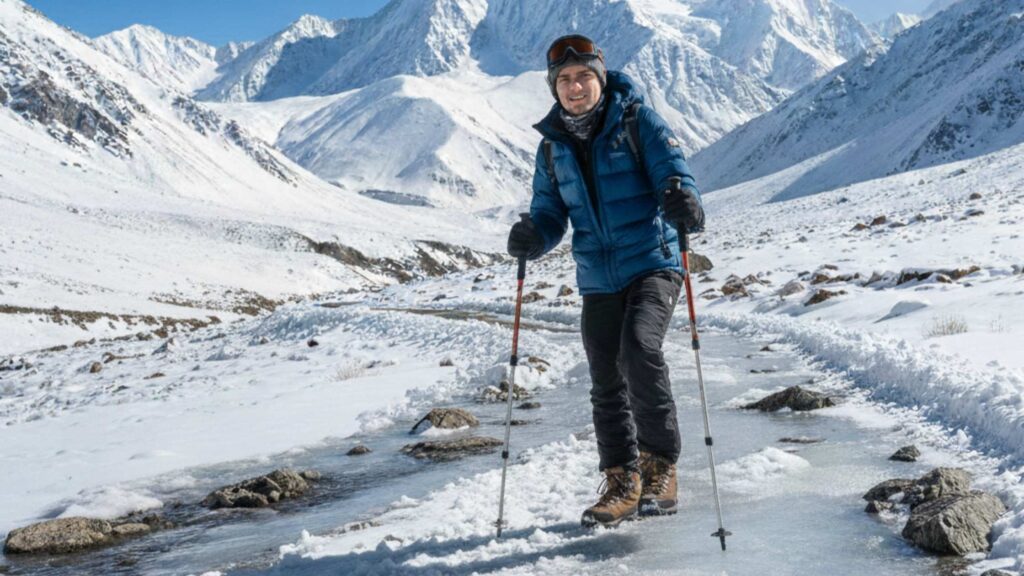
Spiti is not just cold, it is cold and dry, it is cold and windy, and there are many times when there are icy patches and/or uneven terrain.
1) Ice hides rocks and roots → There are many places in Spiti where ankle injuries can easily occur without proper footwear support.
2) The village paths in Spiti freeze at night, so there is a very real risk for slipping on them.
3) Wet feet = cold feet → In the winter, there are serious discomfort and safety issues when your feet are cold.
Therefore, when looking for footwear for the winter season in Spiti, you should always prioritize: grip, waterproofing, and support for your ankles, rather than the style of the shoes.
4) There are many injuries that can occur due to slips, and falling in Spiti can lead to serious injuries.
Snow boots vs trekking boots (simple decision chart)
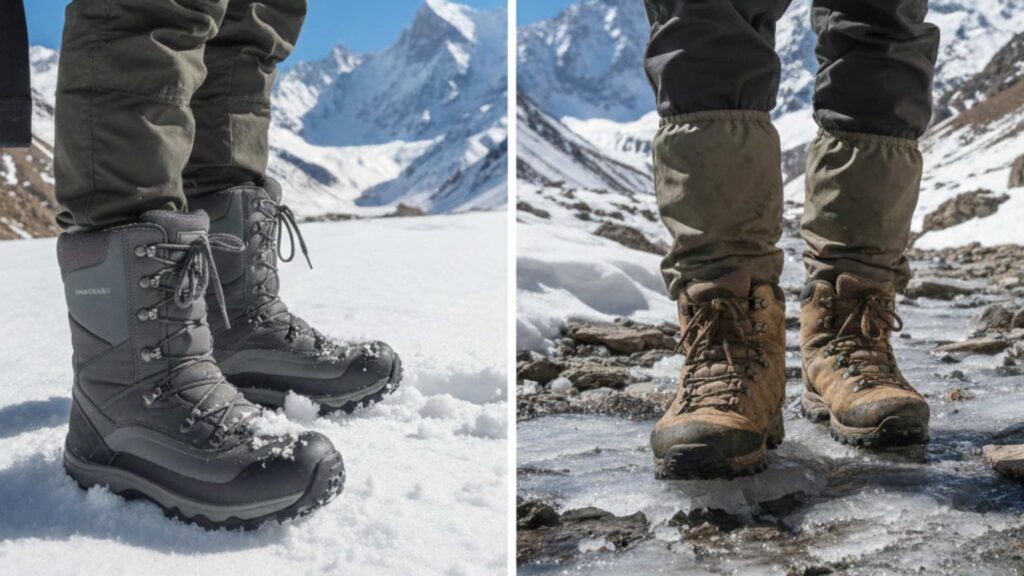
Choose snow boots when:
- The time of year is December-February
- Walking daily on snow/ice
- You will be staying in villages where the pathways/roads may freeze
- You want insulation, waterproofing, and traction in one footwear
Select trekking boots if:
- You will be traversing mixed types of terrain (dry trails and sporadic snow)
- You want the best foot comfort over long distances
- You will be using Spiti winter socks and Spiti insoles to add warmth
General rule of thumb: If uncertain, go with waterproof high-ankle trekking boots and only upgrade to Spiti snow boots during heavy snowfall.
What to look for in the best shoes for Spiti

1) Waterproofing
- True waterproofing – use a waterproof membrane or treated leather
- Water-resistant does not mean waterproof
2) Grip/Outsole
- Deep lugs for holding on to snow and ice
- Rubber remains pliable in cold weather conditions
3) Ankle Height
- Mid to high ankle.
- Do not use low cut shoes for walking on snow-covered trails
4) Toe/Heel
- Offer protection from injuries caused by fall when walking on frozen and icy paths
5) Socks
- Buy at least half size or a full size bigger than your normal shoe size if using wool socks
- Tight shoes will constrict your foot circulation resulting in cold feet
These defining features provide adequate ankle support for the best footwear conditions in Spiti while reducing slip potential in icy conditions when wearing Spiti footwear.
3 Spiti Scenarios (Choose Based on Itinerary)
Scenario A: Spiti Winter Road Trip (Base & Village Info)
- Footwear: Prioritize Waterproof, Insulate, Grippy
- Frequent Surface Frozen: Areas surrounding lodges and side of road filled with snow.
- Footwear Of Choice: The best boot for the Spiti Valley winter.
Scenario B: Spiti Shoulder Season (April/October)
- Footwear: Prioritize Waterproof Trekking Shoes For The Spiti Valley
- Insulate: Optional, but still adhesion crucial.
Scenario C: Spiti Summer + Chandra-Tal Additions
- Footwear: Prioritize Trekking Shoes For The Spiti Valley
- Focus on comfort, support, and water resistance
Socks, Insulet’s, Gaiters
- Wool Socks – Rotating pairs helps to stay dry.
- Thermal Inlet – Adding insulation provides comfort.
- Gaiters For Spiti – Having gaiters means not going home with leg frostbite.
Upgrading Normal Footwear to Perform as Winter Ready Footwear
Common mistakes (that ruin Spiti trips)

- Sneakers or Sport shoes – Functions: Wet, Cold, and Slippery
- Worn For The First Time – The Pain of Brand New Boots.
- Using Water-Resistant vs. Waterproof Boots.
- Purchasing Boots That Are Too Tight = Poor Circulation = Cold Feet.
Avoid all of the above for proper Shoe Performance In Spiti.
Budget vs Standard vs Premium footwear picks

Budget
- Mid-ankle waterproof trekking shoes (e.g. Merrell Moab 2)
- Thick wool socks (e.g. Smartwool PhD)
- Basic gaiters
Standard
- Mid-high ankle waterproof trekking boots (e.g. Salomon X Ultra 3)
- Good traction outsoles
- Warm (thermal) insoles + thick wool socks (e.g. Smartwool PhD)
Premium
- Insulated snow boots (e.g. The North Face)
- Aggressive grip outsoles (e.g. Merrell Moab 2)
- Warm (thermal) insoles + thick wool socks (e.g. Smartwool PhD)
- Gaiters (if snowfall expected)
Notes: Waterproof snow boots are great for walking in deep snow but can be too bulky for long distance walking on dry trails. Therefore, select based on your planned itinerary.
Footwear “What to Pack” Checklist

You will need:
- Primary pair of waterproof or insulated snow boots.
- 3-5 pairs of thick wool socks plus 1 thick night pair.
- Thermal insoles.
- Gaiters (for expected snowfall).
- Flip-flops for use in your hotel bathroom.
FAQ’S
What type of footwear is best for Spiti Valley?
Waterproof high-top trekking boots have the best grip on wet and slippery surfaces. Snow boots are typically reserved for winter weather.
When would I need snow boots in Spiti Valley?
Mainly from December to February, and in areas where snow is deep around villages or along travel routes. Snow boots are not required in summer.
When do I wear snow boots versus trekking boots while traveling in Spiti Valley?
During peak times of the year when snow depths are highest, you would wear snow boots. During spring, fall, and summer, you may wear trekking boots.
What types of shoes are appropriate for wearing in Spiti during January?
Choosing boots that provide insulation, a waterproof exterior, have a high ankle support, and possess the necessary grip is essential. Sneakers and regular sneakers should be avoided.
Do you need waterproof footwear when visiting Spiti Valley?
Yes, because melting snow and ice can make non-waterproof shoes uncomfortable to wear and may expose you to injury risks.
Should I buy a pair of high-ankle boots to bring to Spiti?
Yes, when traversing uneven or icy surfaces, wearing properly fitted boots with good ankle support will reduce the chances of sustaining an ankle injury.
What features should I look for in shoes that provide traction while walking on the snow?
Look for shoes with a lug pattern that provides traction, made of a rubber compound flexible in cold weather, and a sole designed to provide traction in winter weather conditions.
What is the best type of sock for a cold winter trip to Spiti (wool sock or thermal sock)?
Wool socks are the best type to wear; wear them in combination with either a liner sock or a thermal insole for added insulation.
Should I take gaiters with me to Spiti?
If snow is expected during your stay in Spiti, it is highly recommended to wear gaiters. They help to keep snow out of your boots and therefore help to keep your feet dry.
Can you wear sneakers when visiting Spiti during winter?
No. Sneakers provide poor traction on icy terrain, can easily become soaked from melting snow, and provide little or no insulation.
How do I break-in trekking boots before visiting Spiti?
You should wear trekking boots while taking short walks and hikes on different terrains for 1-2 weeks before you go to Spiti; you should never break-in new boots once you arrive in Spiti.
Also read: What to Wear in Spiti Valley (Winter 2026): Layering Formula + Exactly What to Buy